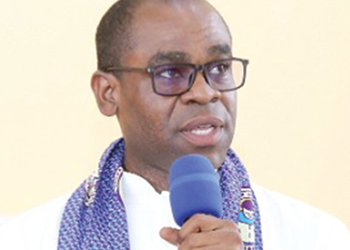

Special Prosecutor Kissi Agyebeng has mounted a robust defence of the Office of the Special Prosecutor, arguing that its work since inception has delivered value far exceeding the public funds invested in it.
In the Office’s 2025 second-half year report, Mr Agyebeng stated that the OSP has saved the nation more than twenty times the total amount of money released to it from its establishment in 2018 through December 2025, a record he said directly contradicts claims that the institution has underperformed or become a burden on the public purse.
“The Office does not avoid accountability. It welcomes scrutiny – as attested to by its assiduous attendance to the business of the relevant oversight committees in Parliament, and accountability institutions; and the openness with which it conducts its activities.”
Special Prosecutor Kissi Agyebeng
In his view, the calls that emerged in 2025 for the abolition of the Office were advanced without a serious examination of its actual performance and measurable impact.
The Special Prosecutor argued that by the time a private member’s bill was introduced in Parliament seeking to abolish the Office and subsume its mandate under the Attorney General, the OSP had already built a strong performance record.
This, he noted, was achieved despite the fact that the Office was still in a formative stage and continued to face significant budgetary and resource constraints. He described the Office’s investigations and corruption risk analyses as ultra-high profile and groundbreaking, with tangible financial benefits to the state.

Central to Mr Agyebeng’s argument is the assertion that the OSP has fully paid for itself many times over. He wrote that through investigations, prosecutions, and preventive interventions, the Office has saved the Republic sums far above the resources committed to its establishment and operations.
“Therefore, it cannot be maintained by any form of argument that the Office has not performed as expected and that it is a drain on national resources.”
Special Prosecutor Kissi Agyebeng
Key Interventions and Savings
Among them is the 2020 assessment of corruption risks associated with the Agyapa Royalties transaction. Mr Agyebeng noted that this intervention saved the nation billions of dollars and prevented a potential loss of sovereignty over Ghana’s natural resources.
He presented the OSP’s intervention in the Agyapa Royalties transaction as an early demonstration of the preventive value of corruption risk analysis, even before losses are fully incurred.
Another major intervention cited is the 2022 investigation into customs advance rulings. According to the report, measures instituted by the Office led to the reversal of discretionary discounts applied to the free on board value of goods and the home delivery value of used vehicles.
This effectively closed avenues for discretionary markdowns by officers of the Customs Division of the Ghana Revenue Authority, removing opportunities for corruption and saving the nation millions of cedis.
The Special Prosecutor also pointed to reforms in auction sales at the ports following a 2023 investigation. That process led to the introduction of an electronic auction platform for seized vehicles and goods.
Mr Agyebeng stated that the e-auction system resulted in an average monthly increase of about twelve percent in revenue from auction sales, adding millions of cedis to national coffers and improving transparency in the process.
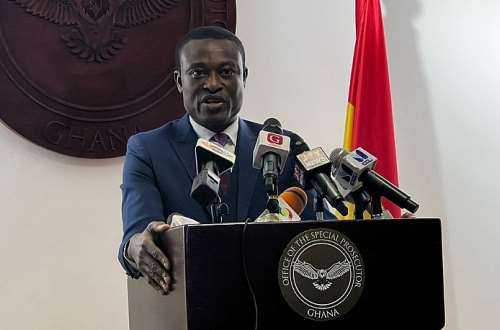
Perhaps the most financially significant intervention referenced in the report is the investigation into procurement contracts awarded by the Ghana Revenue Authority and the Ministry of Finance to Strategic Mobilization Ghana Limited.
Conducted between 2023 and 2025, the investigation led to the cancellation of the contracts and, according to the OSP, saved the state an aggregated sum of five billion seven hundred and thirty million nine hundred and seventy five thousand cedis.
In 2025, the Office also carried out a corruption risk assessment of disinfection services at Ghana’s ports of entry involving the Ghana Health Service and LCB Worldwide Ghana Limited. Mr Agyebeng estimates that this intervention alone saved the Republic about three hundred and forty five million cedis.
Deterrent Effect of OSP’s Work
Beyond financial recoveries and savings, the report stressed the broader deterrent effect of the Office’s work. At a time when the OSP was being criticised in some quarters, it was actively prosecuting thirty three persons in criminal courts across the country.
It had secured notable cash recoveries, seized and managed tainted movable and immovable assets, intensified corruption prevention initiatives and was investigating more than one hundred cases.
“No person now engages in corruption lightly as such acts have become costly as a result of the operations of the OSP. And the daily savings accruing to the Republic from the corruption prevention work of the OSP are substantial.”
Special Prosecutor Kissi Agyebeng
The Special Prosecutor likens the early years of the Office to the difficult process of raising a newborn institution. He argued that if the Office is perceived as imperfect in its formative years, abolition is not the solution.
Instead, he called for patience, careful nurturing, enhanced powers, removal of operational handicaps, and assurance of adequate resourcing. In his words, condemnation and dismantling will not win the fight against corruption.
Mr Agyebeng also rejected the argument that consolidating anti-corruption prosecutorial authority under the Office of the Attorney General would improve efficiency.

He said this view runs counter to the collective wisdom underpinning Ghana’s national ethics and anti corruption framework, which recognises the importance of an independent institution insulated from political influence.
He noted that the same thinking informed recommendations by the Constitution Review Commission in December 2025 for the creation of an independent Anti Corruption and Ethics Commission with prosecutorial powers separate from the Attorney General.
In a pointed conclusion, the Special Prosecutor argued that resistance to the Office is driven largely by individuals under investigation and those who fear future scrutiny. He cautions that such interests should not be allowed to undermine an institution designed to protect the public interest.
For Mr Agyebeng, strengthening rather than dismantling the OSP remains the only credible path toward sustained accountability and an effective national fight against corruption.
READ ALSO: Ghana Champions Regional Value Chains to Industrialize Africa