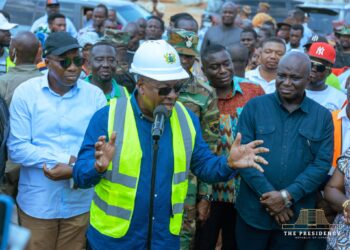
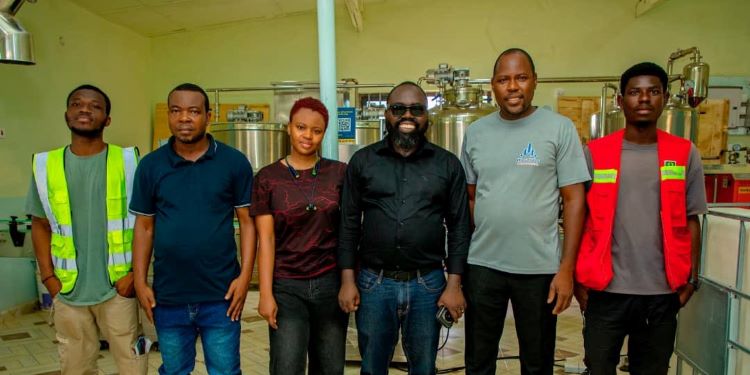
The dusty horizons of the Upper East Region are traditionally associated with subsistence farming and seasonal resilience. However, a quiet but profound shift is occurring in the suburbs of Bolgatanga, where the raw potential of the Savannah is finally being distilled into high-value consumer goods.
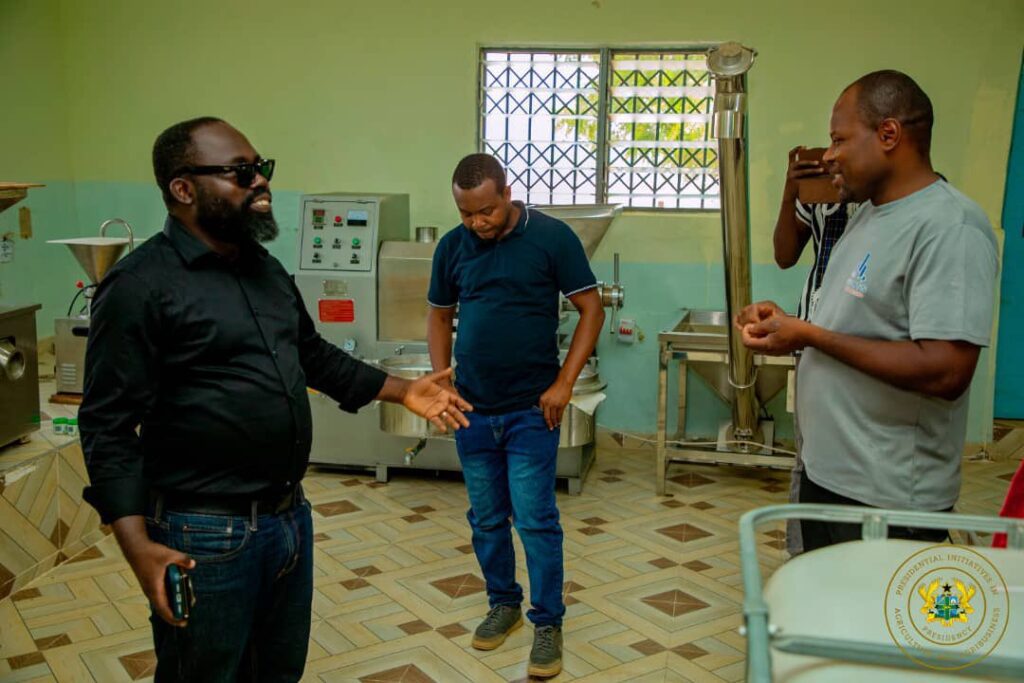
During a recent high-profile working tour, Dr. Peter Boamah Otokunor, Director of the Presidential Initiative on Agriculture and Agribusiness (PIAA), spotlighted a localized industrial success story that signals a broader national strategy.
His visit to Heights Enterprise, a specialized agribusiness SME, served as a functional validation of the administration’s focus on “modernized cottage-sized” industries as the true engines of regional economic stability.
“I visited the Heights Enterprise, an agribusiness SME that is producing various cold-pressed vegetable oils ranging from groundnut oil, soya bean oil, sesame oil, and many others. This agribusiness operates from a suburb of Bolgatanga in the Upper East Region, with Matthew Akayeti Naanmlebna as CEO”
Dr. Peter Boamah Otokunor, Director of the Presidential Initiative on Agriculture and Agribusiness
According to Dr. Otokunor, unlike industrial refining processes that often use high heat and chemical solvents, the cold-pressed method at Heights Enterprise preserves the nutritional integrity and natural flavor of the crops, fundamentally altering the value proposition of the Upper East’s agricultural output.
The strategic significance of Heights Enterprise lies in its scale and location, as the Ghanaian industrial narrative has been centered on massive, centralized factories in Tema or Kumasi. The PIAA is now drawing attention toward a more decentralized model where relatively small industries act as localized economic anchors.
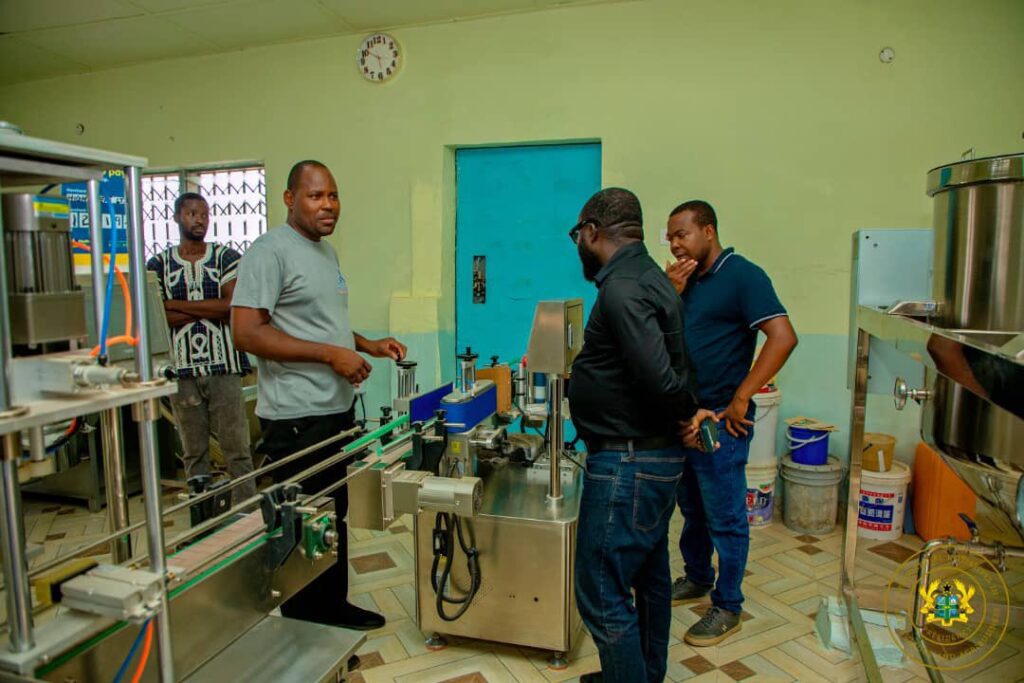
These enterprises are vital because they create immediate demand for the surrounding smallholder farmers. When a Bolgatanga SME processes sesame and soya locally, it eliminates the middleman costs of transporting raw grains to the south, ensuring more capital stays within the northern regional economy.
Dr. Otokunor’s analysis of the site emphasized that the sustainability of the local economy is tied to the commercialization of these products. It is no longer enough for an SME to produce for the immediate neighborhood.
To survive in a 2026 economy, these cottage industries must be equipped by the government to compete on the national stage and eventually the export market. This requires a transition from manual, low-output methods to the modernized infrastructure seen at Heights Enterprise, where quality control and efficiency are prioritized.
Coordinated Institutional Quartet
What makes this initiative different from previous agricultural schemes is the deliberate “building block” approach involving a quartet of state institutions.
The PIAA is not acting in isolation; it is leveraging the specific mandates of the Ghana Enterprises Agency (GEA), the Ghana Export Promotion Authority (GEPA), the Ghana Investment Promotion Centre (GIPC), and GEXIM Bank. This institutional synergy is to catch an SME at every stage of its growth cycle.
The GEA provides the foundational business support and capacity building, while GEXIM Bank offers the patient capital required for equipment upgrades – like the cold-pressing machines that define Naanmlebna’s operation. As the company scales, GEPA steps in to facilitate “market development,” finding international buyers for high-end oils like sesame, which are in high demand in the European and Asian health-food sectors.
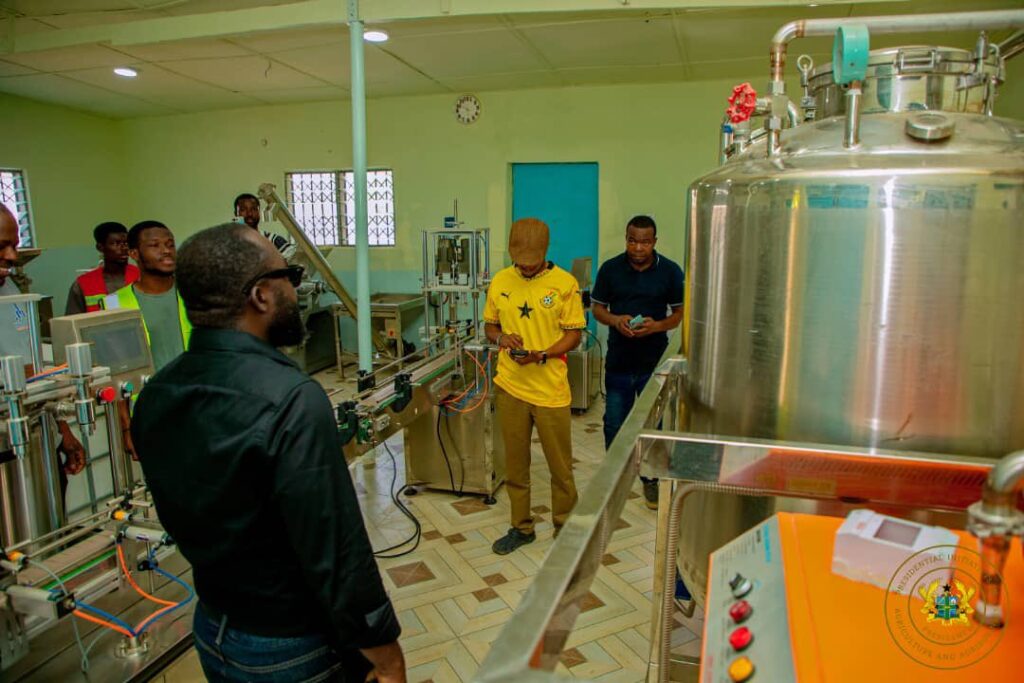
Finally, the GIPC ensures that the investment climate remains attractive for further private sector participation. This is the mechanical reality of the “agro-industrialized economy” that Dr. Otokunor described – a system where the state provides the scaffolding, and the entrepreneur provides the production.
The PIAA boss noted that the overarching goal of the Mahama administration remains the aggressive pursuit of job creation. In the Upper East, where unemployment can often lead to youth migration to the southern cities, the expansion of agribusinesses like Heights Enterprise offers a viable alternative.
Every cold-pressing machine installed requires technicians, every bottle of oil requires a packaging team, and every gallon sold requires a logistics network. Through support for Matthew Akayeti Naanmlebna and his peers, the PIAA hopes to create a job multiplier effect that ripples far beyond the factory floor.
This commitment to SMEs was broadly framed as a “tool for agro market development,” signifying a focus shift from simply growing more food to making food more valuable.
Dr. Otokunor argued that when Ghana exports raw groundnuts or soya beans, it exports potential jobs. When it exports cold-pressed oils, it exports a finished product that commands a premium price, retaining the industrial value and the associated employment opportunities within the country.
“The government of President John Dramani Mahama is committed to supporting the small and medium-scale agribusiness enterprises,” he added. For the PIAA boss, the success of Heights Enterprise proves that high-quality, modernized agro-processing is possible even in the most remote suburbs, provided the right institutional blocks are in place.
As Dr. Otokunor continues his working tour, the focus remains on identifying more modernized champions who are ready to bridge the gap between rural farming and industrial excellence.
For the Upper East, this isn’t just about vegetable oil; it’s about a new industrial identity, turning the Savannah’s harvest into cold-pressed gold. Entrepreneurs like Naanmlebna are showing that Bolgatanga is no longer just a source of raw materials; it is a hub of production.
READ ALSO: Ghana Fintech Boom Faces Reality Test