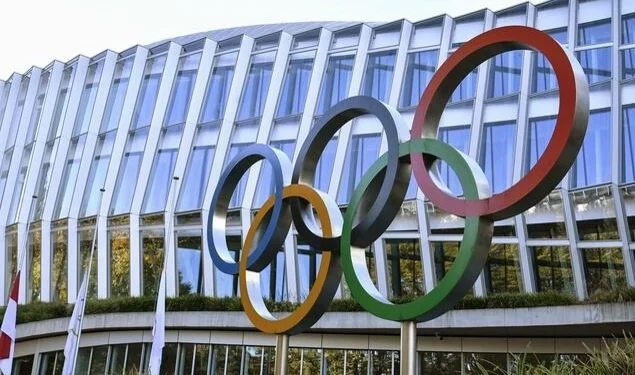
The International Olympic Committee’s latest attempt to reintegrate Belarus into global sport has exposed growing divisions among international federations, with World Athletics emerging as one of the strongest opponents to easing sanctions linked to the war in Ukraine.
On Thursday, the IOC executive board formally recommended that Belarusian athletes and teams be allowed to return to international competition under their national flag, arguing that the country’s Olympic committee remains compliant with Olympic regulations.
The move marks a significant shift in tone from the Olympic body, which suspended both Russia and Belarus from Olympic competition in 2022 following Russia’s invasion of Ukraine.
Belarus was included in the sanctions due to its close political and strategic alliance with Moscow during the conflict.



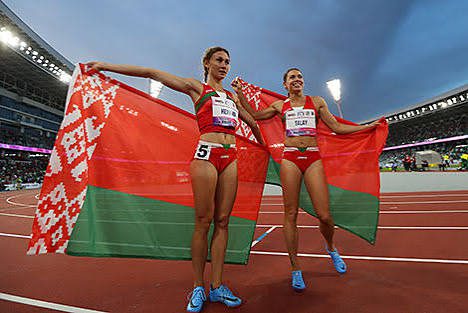
Although athletes from both nations were later allowed to compete as neutral athletes beginning in 2023, the IOC now appears prepared to treat Belarus differently from Russia ahead of the Los Angeles 2028 Olympic Games cycle.
World Athletics Rejects IOC Recommendation
Despite the IOC’s recommendation, World Athletics has refused to soften its position, insisting that sanctions against Belarusian and Russian athletes remain justified until there is visible progress toward ending the war. “As a consequence of Russia’s invasion of Ukraine, World Athletics sanctions implemented in March 2022 excluding Belarusian and Russian athletes, officials and supporting personnel from competition remain in place,” a spokesperson for the governing body said.
The federation added that its council would only reconsider the ban when there is “tangible movement towards peace negotiations.” “We all hope this will be soon, but until that happens the council continues to be united in standing behind the decision it made in March 2022 and revisited in 2023 and 2025,” the statement added.
The standoff highlights a widening disagreement inside international sport over whether athletes should continue paying the price for political conflicts involving their governments.
The IOC defended its recommendation by pointing to Belarus’ compliance with Olympic rules and the successful participation of Belarusian athletes as neutrals at recent events.
According to the IOC, athletes with Belarusian passports competed at the Paris 2024 Olympic Games and the Milano Cortina 2026 Winter Olympics “without any incident on or off the field of play.”
The Olympic body also reiterated its long-standing principle that athletes should not be excluded because of the political actions of their countries. It stated that “athletes’ participation in international competition should not be limited by the actions of their governments, including involvement in a war or conflict.”
The timing of the debate is significant, with qualification periods for both the LA28 Olympic Games and the Dolomiti Valtellina 2028 Winter Youth Olympic Games beginning later this year. While athletics has chosen to maintain strict sanctions, several other sports have gradually moved toward reintegration.
The International Paralympic Committee lifted restrictions on Belarusian and Russian athletes for the Winter Paralympics earlier this year, while World Aquatics has already permitted competitors from both countries to compete under their national flags.
FIFA could also be moving in a similar direction. Earlier this year, FIFA president Gianni Infantino suggested football authorities may eventually reconsider Russia’s suspension from international competition, a proposal Ukraine sports minister Matvii Bidnyi criticised as “irresponsible” and “infantile.”
Russia, however, continues to face separate challenges linked to doping violations. The IOC confirmed that the Russian Olympic Committee remains suspended while legal reviews continue.
The Olympic body also expressed concern over fresh scrutiny surrounding Russia’s anti-doping system after the World Anti-Doping Agency revealed that more than 300 sanctions had been imposed on Russian athletes following investigations into data obtained from the Moscow laboratory in 2019.
READ ALSO: Godfred Dame Lacks Credibility As Lawyer In Ghana — Solomon Owusu