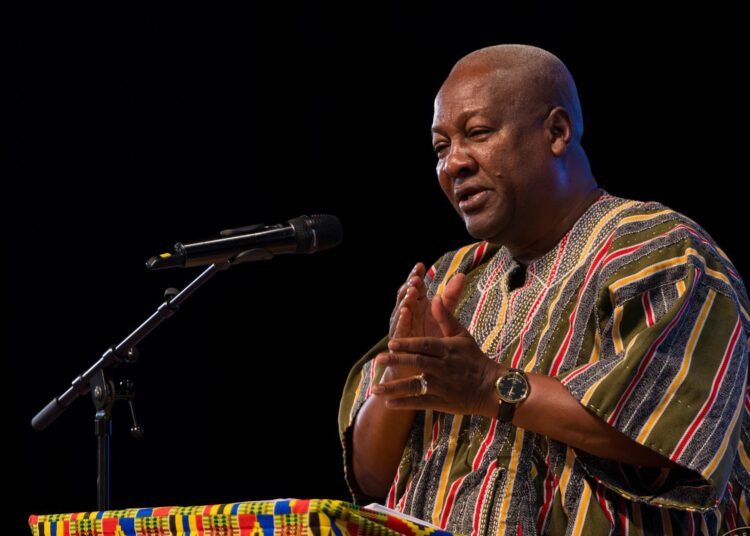
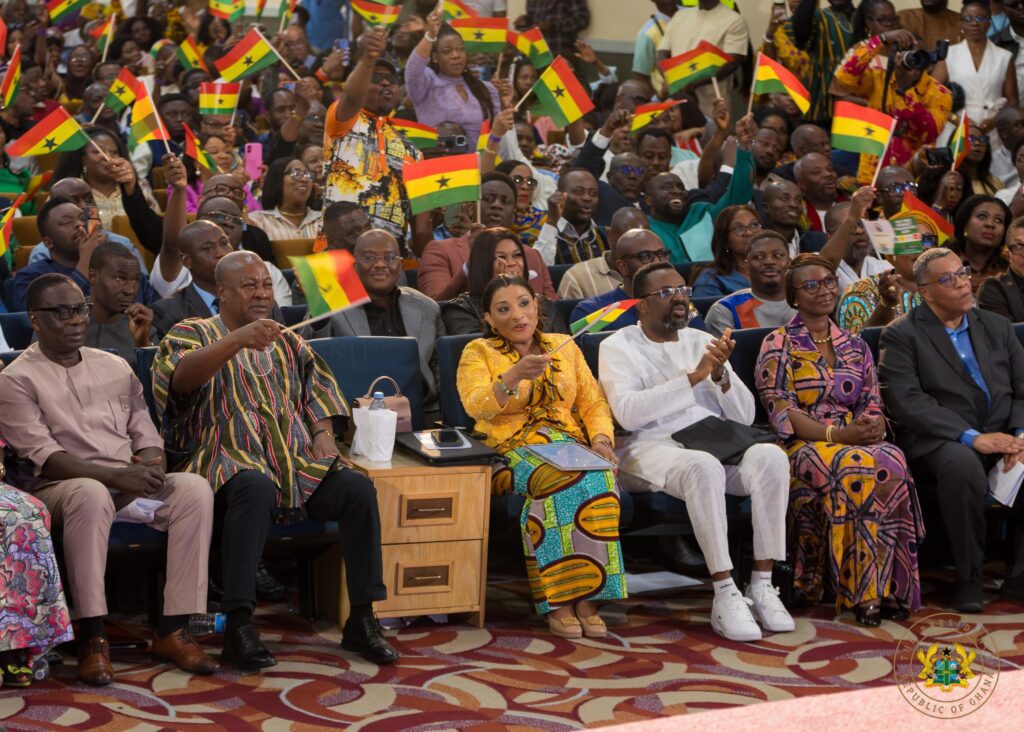
President John Dramani Mahama has reaffirmed his government’s commitment to strengthening accountability systems and institutional reform during a Diaspora Townhall meeting with the Ghanaian community in London.
The engagement took place as part of his official visit to the United Kingdom, where he addressed issues relating to governance, public trust, and the management of state resources.
The meeting provided a platform for members of the Ghanaian diaspora to raise concerns and seek clarity on government efforts to improve transparency and ensure responsible leadership. The President used the opportunity to outline ongoing reforms and reinforce his administration’s stance on accountability in public service.
Ongoing investigations and public service responsibility
President Mahama disclosed that several investigations are currently underway as part of efforts to strengthen accountability within the public sector. He noted that the administration is actively pursuing cases involving suspected misconduct, with approximately 36 investigations in progress.
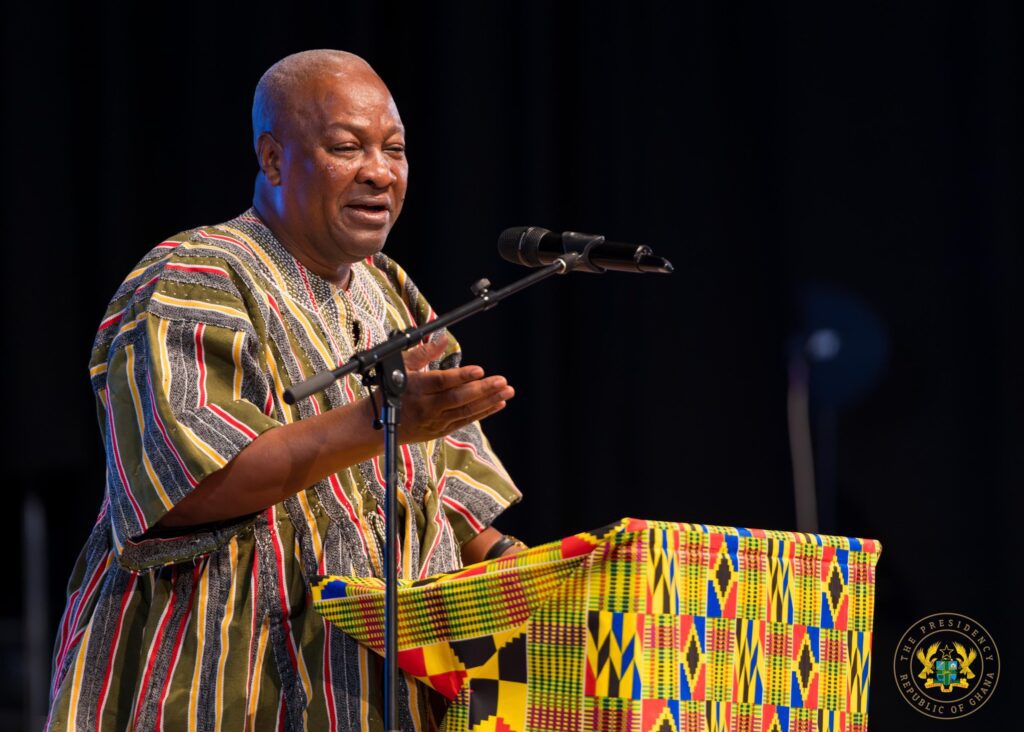
He emphasized that public office is a position of trust granted by citizens, and those who accept such roles are expected to act responsibly and remain answerable for their decisions. According to him, the authority to govern is derived from the people, and it must always be exercised in their best interest.
He further stressed that when individuals in public office misuse their positions, it undermines confidence in governance systems and must be addressed through appropriate legal and administrative action.
His remarks underscored the principle that accountability should be applied consistently, regardless of political affiliation or status.
Addressing the cycle of delayed accountability
A major focus of the President’s message was the need to end the recurring pattern in which allegations of misconduct are not investigated until a change in government occurs.
He expressed concern that this practice has contributed to delays in justice and weakened institutional continuity in addressing corruption and abuse of office. He explained that in many cases, alleged wrongdoing during one administration is left unexamined, with little or no prosecutorial action taken at the time.
It is often only when a new government assumes office that such cases are revisited and investigations initiated, a situation he described as problematic for governance and public trust.
He said his administration has made it clear to public officials that accountability will be enforced without political bias. Individuals found to have abused public office will be subject to the same scrutiny and consequences applied to previous administrations.
This, he noted, is intended to ensure consistency and fairness in the application of rules governing public conduct.
Strengthening systems and prevention of corruption
Beyond investigations, the President highlighted the importance of preventive systems designed to reduce the risk of corruption before it occurs. He said government is working to strengthen institutional frameworks so that oversight is more effective and misconduct is deterred at earlier stages.
He also referenced cultural expressions used in Ghana to illustrate accountability principles, noting that public expectations for fairness and discipline in leadership are deeply rooted in societal values.
These references, he suggested, reinforce the idea that accountability is not only a legal obligation but also a moral and cultural expectation. He emphasized that modern governance requires stronger internal controls and improved administrative systems to ensure that public resources are managed responsibly and transparently.
Digital reform and financial management upgrades
A key element of the reform agenda, according to the President, is the use of technology to enhance transparency and efficiency in public financial management. He explained that digital systems are increasingly central to reducing manual inefficiencies and limiting opportunities for financial mismanagement.
He noted that the government’s existing financial management platform, known as GIFMIS, is no longer adequate for current demands and requires significant upgrading.
Plans are therefore underway to modernize the system to improve its effectiveness in tracking public expenditure and supporting accountability mechanisms across institutions.
The upgrade, he indicated, forms part of a broader strategy to strengthen governance structures through technology, ensuring that financial processes are more transparent and easier to monitor.
President Mahama’s engagement with the Ghanaian community in London reflected a broader policy direction centered on accountability, institutional reform, and technological modernization.
By emphasizing ongoing investigations alongside preventive reforms, he outlined an approach aimed at both addressing misconduct and reducing its occurrence.
His message focused on ending delayed accountability tied to political transitions and reinforcing the principle that public office carries an obligation of continuous scrutiny.
The proposed upgrades to financial management systems further signal an effort to strengthen governance structures and improve transparency in public administration.
READ ALSO: President Mahama Declares Energy Sector Stable Amid Grid Upgrade