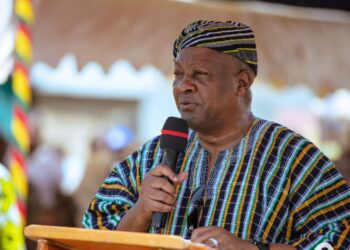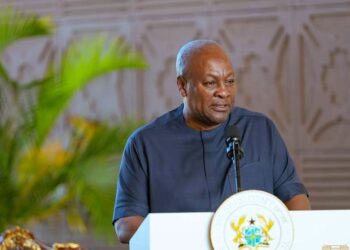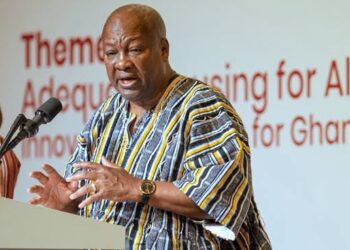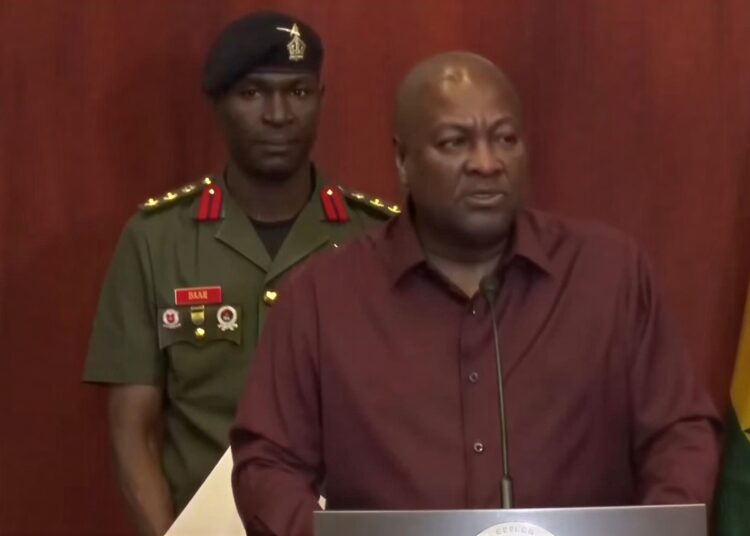
His Excellency John Dramani Mahama has reaffirmed a major education reform agenda aimed at eliminating the double track system in senior high schools by 2027. He explained that the policy direction is geared at improving access, quality and equity in education delivery across the country.
Speaking to stakeholders from the Bono Region following a courtesy call by the Bono Regional House of Chiefs, President Mahama placed strong emphasis on education as a national priority. He indicated that the elimination of the double track system remains central to government’s broader development agenda.
“We have announced that we are ending double track in all schools across the country. There will be no school doing double track by the end of 2027. We have raised some money from the World Bank, 300 million dollars, and we are raising 30 category B schools to category A status.”
His Excellency John Dramani Mahama
He further noted that ongoing investments are focused on expanding classrooms, dormitories and laboratories to support the reform agenda. According to him, the objective is to ensure that no learner is placed in an under resourced school by the end of 2027.
In addition, he outlined a broader education expansion plan that includes the establishment of a public university in every region. He referenced existing institutions such as the University of Health and Allied Sciences and the University of Energy and Natural Resources as part of the national framework guiding that vision.
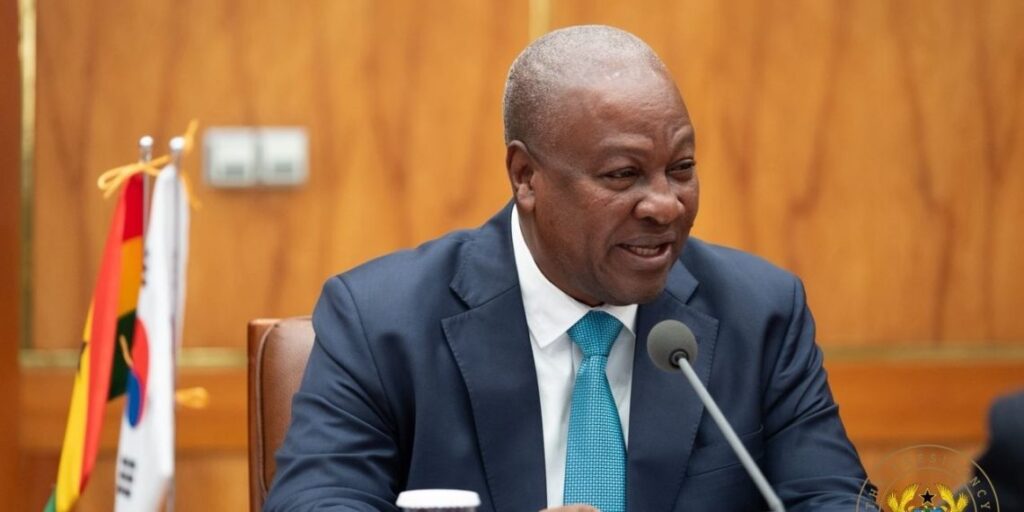
He also explained that these commitments are being supported through infrastructure development under the government’s Big Push programme. While education remains a key priority, he noted that the first phase of the programme is focused largely on road infrastructure due to the poor state of major transport corridors.
President Mahama stated that the Big Push programme has been structured in phases to address urgent national needs. He said, “We have decided that for Phase 1 of the Big Push, we will focus principally on roads,” adding that other critical sectors are also being captured progressively.
He added that several road projects have already been included under the programme, with the Bono Region receiving a significant share of allocations. He further indicated that additional works are expected in the next phase to improve connectivity and support economic activity.
“We are building new regional hospitals for the six new regions. We are also building sports stadia and expanding them in phases across the country.”
His Excellency John Dramani Mahama
He emphasised that the combined investments in education and infrastructure are intended to fully eliminate the double track system. He stressed that sustained improvements in facilities remain central to delivering quality education across all regions.
Government Clarifies Chieftaincy Role While Backing Traditional Institutions In Governance Stability
His Excellency John Dramani Mahama also addressed the evolving dynamics of chieftaincy administration and its impact on national development. He stated that traditional leadership remains central to governance stability, even as internal disputes continue to require structured resolution.
He observed that succession patterns within royal families have changed over time, noting that modern family structures have altered earlier traditional selection practices. “Today, that time has passed,” he remarked, highlighting the shift in how leadership transitions are now determined.
He further explained that unresolved chieftaincy disputes continue to slow development in several traditional areas. According to him, government development efforts are often constrained in environments affected by insecurity and prolonged succession disagreements.
Additionally, he referenced constitutional provisions that limit direct government involvement in chieftaincy matters. He noted that intervention is only possible when law and order are threatened, in which case security agencies step in to restore calm.
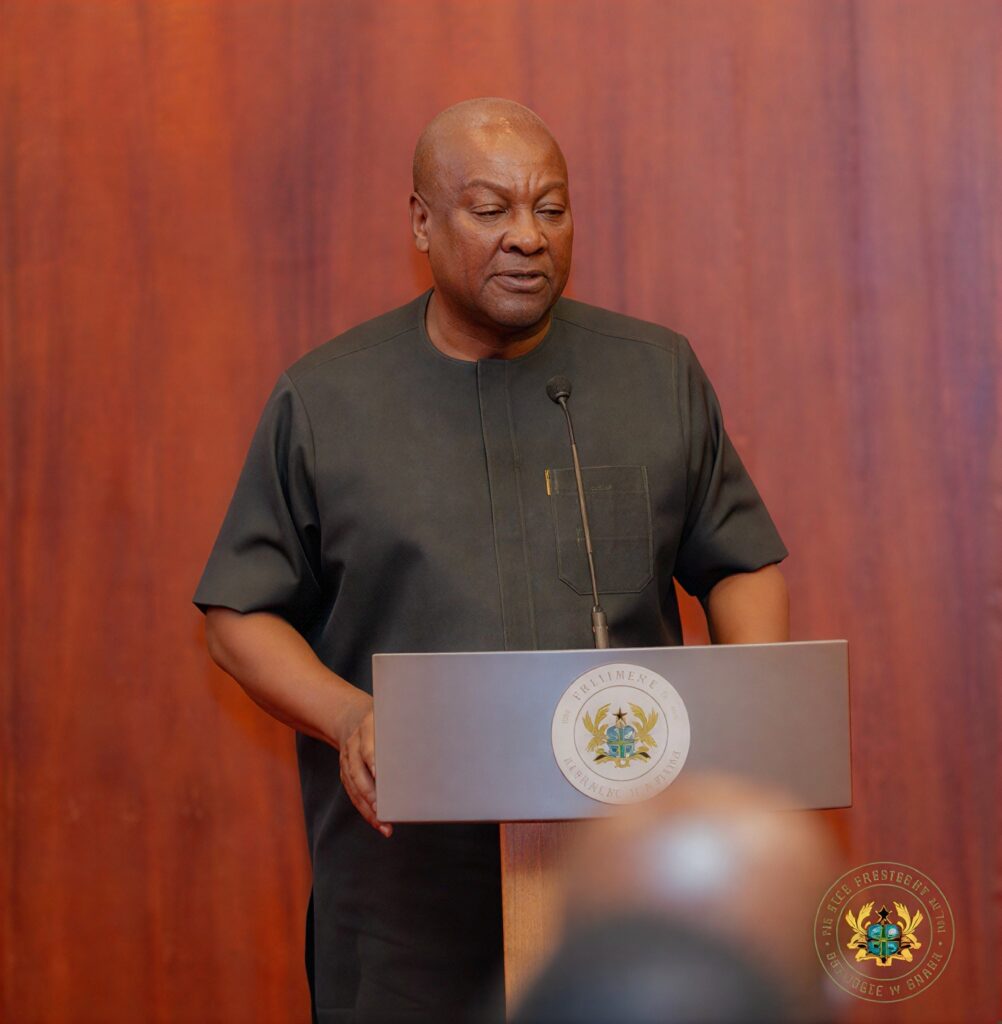
Following such interventions, he explained that Judicial Committees within traditional councils are responsible for determining rightful successors. He therefore urged the Bono Regional House of Chiefs and other regional authorities to strengthen internal adjudication processes to resolve disputes more efficiently.
“I just want to use this opportunity to appeal through the Bono Regional House of Chiefs and other Regional Houses of Chiefs. Government will continue to support you and provide resources so that we can speed up the adjudication of chieftaincy matters.”
His Excellency John Dramani Mahama
He emphasised that resolving these disputes remain essential for accelerating development in affected communities. He added that stable traditional governance structures are necessary to support sustained infrastructure growth and social investment.
Similarly, he assured that government will continue to collaborate with traditional institutions while respecting constitutional boundaries. He noted that stronger dispute resolution systems will enhance peace and promote development across traditional jurisdictions.
Meanwhile, he reiterated that the partnership between the state and traditional leadership is vital for national progress. He stressed that improved coordination will ensure development projects are implemented effectively without disruption.
READ ALSO: BoG Converts Rural Banks Into Community Banks After 50 Years of Rural Banking