France has confirmed its first case of Ebola, in a doctor who had returned from a humanitarian mission in the Democratic Republic of Congo.
This is the first Ebola case to have been confirmed in Europe, although an American doctor who tested positive in DR Congo was treated at a German hospital last month.
The French health ministry said in a statement that the healthcare worker was operating in one of the areas where the virus was circulating. It added that the doctor was “immediately admitted to a specialised facility” and is in a stable condition. “All precautionary measures, including the patient’s isolation, were taken upon his arrival in the country, with transfer to the hospital under secure conditions to prevent any risk of contamination,” the statement said.
DR Congo announced an Ebola outbreak last month. The World Health Organization declared the outbreak on 15 May, and two days later declared a public health emergency of international concern.
Experts believe the virus was circulating in the DRC undetected for weeks before, however, and that the scale of the outbreak there is likely to be much larger than the confirmed cases suggest.
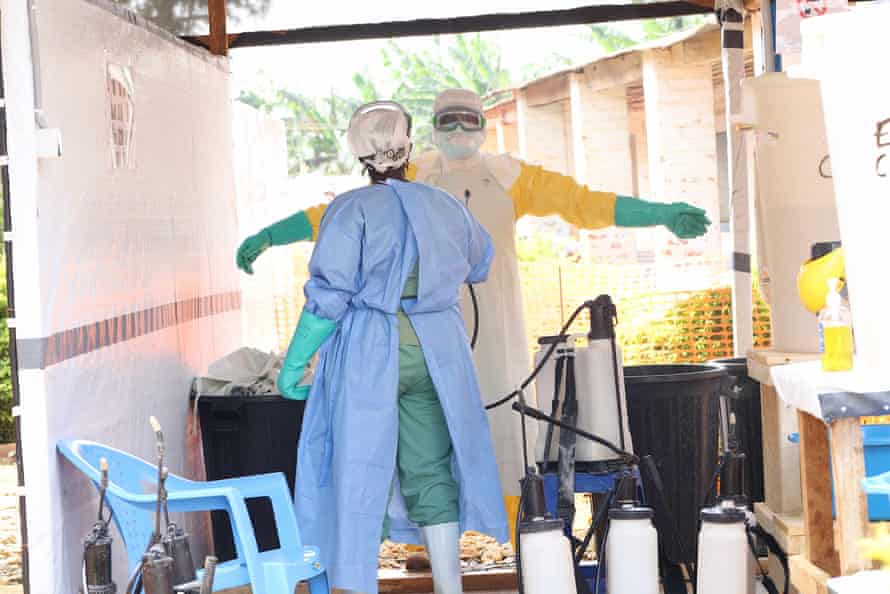
More than 260 people are confirmed to have died from the virus in the central African country, while 1,000 people have been infected.
DR Congo’s neighbour, Uganda, has also confirmed Ebola cases. The World Health Organization (WHO) says 20 people are known to have been infected there and two deaths have been confirmed.
Healthcare workers are especially at risk from Ebola, which is spread through bodily fluids. Last week, WHO said that 17 of the 75 health workers who had caught Ebola in DR Congo had died.
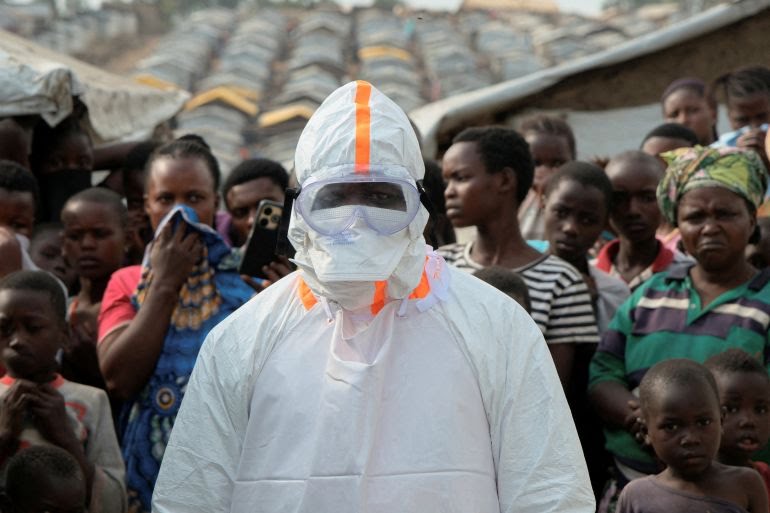
The current Ebola outbreak was caused by the Bundibugyo species of the virus, for which there is currently no vaccine.
According to both Africa’s Centres for Disease Control and Prevention (Africa CDC) and US public health authorities, the current Ebola outbreak has the potential to be one of the largest ever. In DR Congo, cases are currently concentrated in the eastern provinces of Ituri, South Kivu and North Kivu. Ituri remains the main centre of transmission, accounting for more than 90% of confirmed infections.
The WHO has warned that conflict in eastern DR Congo is making it more difficult to tackle the Ebola outbreak. The humanitarian response has been complicated by aid cuts and conflict in North and South Kivu provinces, to the south of Ituri, where the Rwanda-backed M23 rebel group operates and Ebola cases have also been detected.
WHO official Abdirahman Mahamud said yesterday that the outbreak had the largest number of confirmed cases within the first month of any Ebola outbreak. Mahamud said local resistance to the response in DRC, which had included hospitals and treatment centres being burned down, was waning. “More and more communities are aware of the risk of Ebola and are asking for tools to support and protect themselves,” he said.
Modelling by the US Centers for Disease Control and Prevention suggested the outbreak could be the biggest on record. The previous largest outbreak was in west Africa from 2014 to 2016, during which more than 28,000 people were infected and more than 11,000 died.
Low Risk Of Ebola Outbreak
In its statement, France’s health ministry stressed that the risk to the population was “very low.” It added that the European Centre for Disease Prevention and Control (ECDC) has assessed the risk of infection as low for European residents and travelers to areas of active transmission, and very low for the general European population.
It added that authorities were working to trace people who may have been in contact with the doctor. “A thorough epidemiological investigation is underway to identify individuals who may have been in contact with the patient,” it said, adding that these individuals will be contacted without delay by the regional health agency, will undergo 21 days of home isolation, and will be closely monitored during this period.
The health ministry also said that France has set up a “dedicated monitoring system” for aid workers returning from DR Congo.
READ ALSO: Maintain Transparent Public Updates on Gold Purchases and Foreign Exchange – Data Analyst to GoldBod