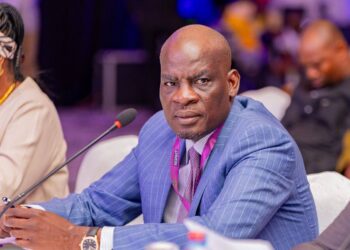
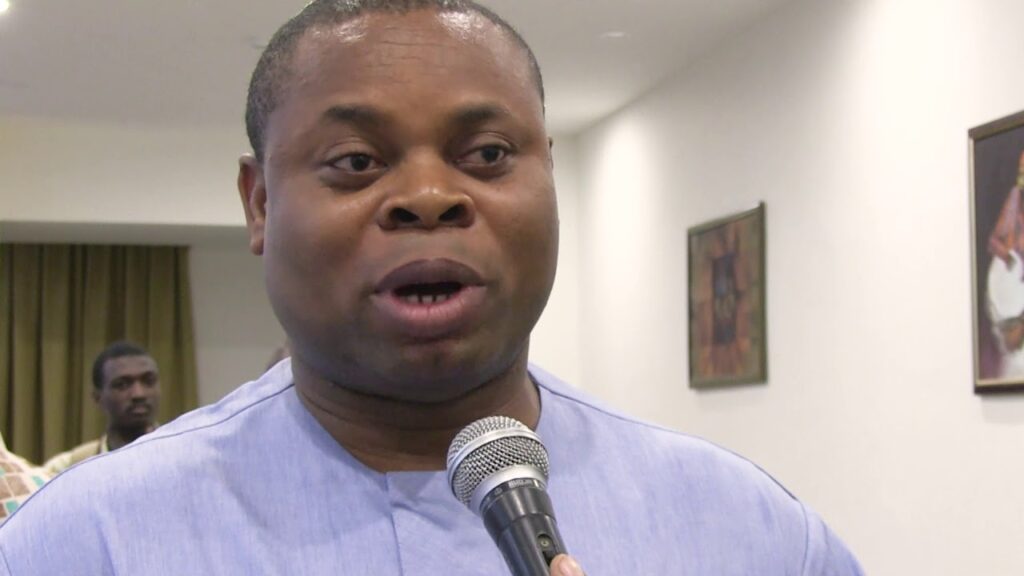
Founding President of IMANI Centre for Policy and Education, Franklin Cudjoe, has defended the Mahama government’s handling of the Greater Accra Resilient and Integrated Development (GARID) Project.
Mr Cudjoe argued that the current administration has not delayed funding but has instead redirected the remaining resources toward the programme’s original purpose of flood prevention and mitigation.
His comments come in response to reports suggesting that fiscal controls introduced by the Ministry of Finance had slowed implementation of the World Bank funded project.
According to the World Bank’s implementation update released in May 2026, the GARID Project’s implementation performance was downgraded to “Moderately Unsatisfactory” after the institution cited persistent funding constraints despite the project remaining fully financed.
“The implementation of GARID has been significantly constrained by fiscal measures introduced by the Ministry of Finance during 2025,” the World Bank stated in its report.
However, Mr Cudjoe contended that the available evidence presents a different picture. He argued that the current administration has deliberately repositioned the project to ensure that remaining funds are spent exclusively on flood mitigation infrastructure rather than on activities unrelated to its central objective.
Review of Previous Spending
According to Mr Cudjoe, records show that between 2019 and 2024, the previous administration drew down approximately US$103.8 million from the World Bank’s US$350 million GARID facility.
He said only a small fraction of that amount was invested directly in flood prevention works, despite the project being established primarily to strengthen flood resilience across Greater Accra.
Mr Cudjoe’s review indicates that about US$22.1 million, representing 21 percent of the expenditure, went into training activities. A further US$7.9 million, or 7 percent, was spent on consultancy services.
The largest share of the funds, amounting to US$60.8 million or 59 percent of total disbursements, was redirected toward COVID-19-related expenditure, while approximately US$1.68 million, representing about 2 percent, covered other costs, including the purchase of vehicles.
According to his assessment, only US$11.4 million, equivalent to roughly 11 percent of the total amount withdrawn, financed actual flood prevention and mitigation works. He described the spending pattern as a significant departure from the original purpose of the project.
“Just US$11.4 million, barely 11 percent of the entire loan, was actually spent on flood prevention and mitigation works. Put plainly, nearly US$9 out of every US$10 went to things other than protecting Ghanaians from floods. Only US$1 out of every US$10 was used for the project’s core purpose”.
Franklin Cudjoe, Founding President of IMANI Centre for Policy and Education
Government Refocused Remaining Funds
Mr Cudjoe said the situation changed after the Mahama administration assumed office. According to him, the Ministry of Finance reviewed the status of the project and engaged the World Bank to ensure that remaining funds would be used strictly for the objectives for which the loan had originally been secured.

He explained that the government reached an agreement with the World Bank to repurpose the outstanding balance of the facility, directing future spending exclusively toward flood prevention infrastructure. He maintained that this decision should not be interpreted as a funding delay.
“That isn’t a delay. That is a deliberate, responsible decision to make sure the money does what it was always supposed to do, offer lasting protection to communities that have suffered for too long”.
Franklin Cudjoe, Founding President of IMANI Centre for Policy and Education
He argued that the decision reflects a commitment to restoring the integrity of the project and ensuring that future expenditures directly address recurring flooding challenges in Greater Accra.
Flood Mitigation Spending Increases
Mr Cudjoe also pointed to recent expenditure figures as evidence that the refocused approach is already producing results. According to him, the government spent approximately US$3 million on flood mitigation works under the GARID Project during 2025.
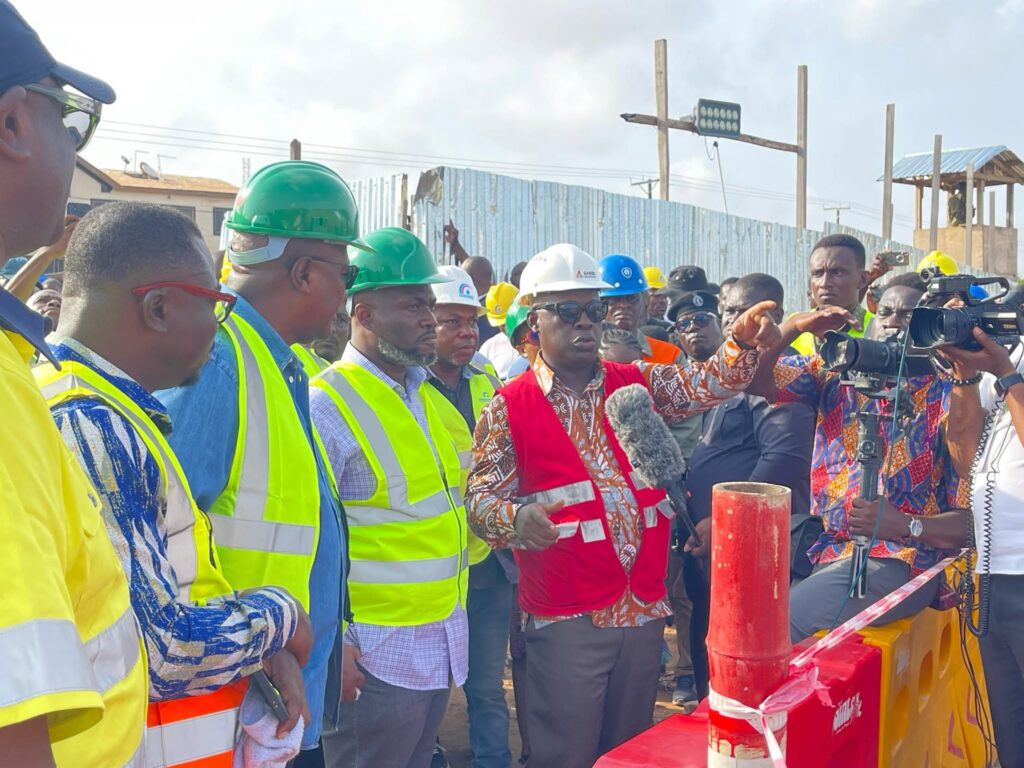
He added that about US$10.52 million has already been released for similar works in 2026. Combined, the two years account for approximately US$13.52 million in direct flood mitigation expenditure.
He noted that this amount already exceeds the US$11.4 million spent on flood prevention over the entire six-year period between 2019 and 2024. The figures, he argued, demonstrate that the current administration has placed greater emphasis on implementing the project’s intended infrastructure works than previous spending patterns reflected.
More Funding Approved for Infrastructure
Looking ahead, Mr Cudjoe disclosed that the Ministry of Finance has approved the cedi equivalent of more than US$76 million under the GARID Project for flood mitigation infrastructure during 2026 and 2027.
He said the approved funding is intended to accelerate drainage improvements and other infrastructure designed to reduce the impact of perennial flooding across vulnerable communities in the capital.

He further indicated that, unlike previous years, no additional project resources were allocated in 2025 or 2026 to training programmes, consultancy services, or vehicle purchases.
Instead, he said every available dollar has been directed toward physical flood control infrastructure. According to Mr Cudjoe, this marks a significant shift in the implementation strategy and aligns expenditure with the project’s original objectives.
Response to World Bank Assessment
Mr Cudjoe’s remarks follow public discussion sparked by the World Bank’s latest implementation assessment of the GARID Project.
While the Bank attributed implementation challenges partly to fiscal measures introduced by the Ministry of Finance during 2025, Mr Cudjoe believes the government’s actions should be viewed within the broader context of ensuring proper use of project resources.
His position is that the administration chose to prioritise accountability and long term impact rather than continue spending under earlier expenditure patterns.
He insists that the decision to renegotiate how remaining funds would be applied was necessary to guarantee that communities vulnerable to flooding receive the intended benefits of the World Bank financed programme.

Focus Returns to Flood Protection
Mr Cudjoe concluded that claims suggesting the government delayed the GARID Project do not accurately reflect developments surrounding the programme.
He maintained that the Ministry of Finance and the government have instead redirected the project toward its original purpose by concentrating resources on flood mitigation infrastructure.
“The Ministry of Finance and the Government have not delayed the GARID Project. What they have done is refocus it, ensuring that every dollar now goes toward what it was originally borrowed for, protecting lives, property, and communities from the devastation of flooding”.
Franklin Cudjoe, Founding President of IMANI Centre for Policy and Education
His intervention adds a new dimension to the debate over the implementation of one of Ghana’s flagship urban resilience programmes, with attention now likely to remain on how the approved funding for 2026 and 2027 translates into visible flood control infrastructure across Greater Accra.
READ ALSO: Human Rights Watch Raises Alarm Over Libya’s Migrant Crackdown