Ghana’s informal cross border trade has reached an astonishing milestone, exposing the enormous scale of commercial activity taking place beyond formal trade channels.
New figures released by the Ghana Statistical Service (GSS) show that informal trade with Ghana’s three neighbouring countries generated GH¢31 billion during the first three quarters of 2025, significantly surpassing the GH¢20.1 billion recorded through formal trade channels over the same period.
The revelation has reignited discussions about the true size of Ghana’s informal economy and the urgent need for policies that encourage traders to transition into the formal sector without undermining their livelihoods. The findings also highlight the critical contribution of thousands of small scale traders who continue to drive regional commerce despite operating outside conventional regulatory systems.
Informal trade outpaces official commerce
According to the GSS report, informal cross border trade accounted for 6 percent of Ghana’s total trade between the first and third quarters of 2025, underscoring its growing influence on the country’s economy.
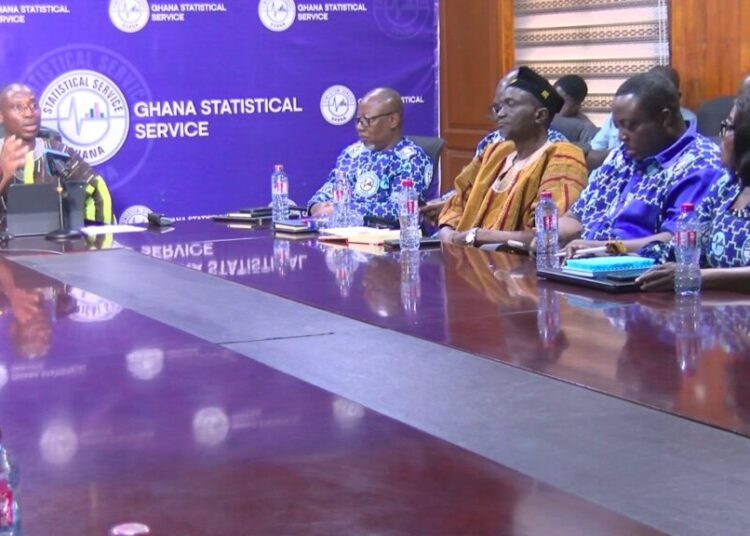
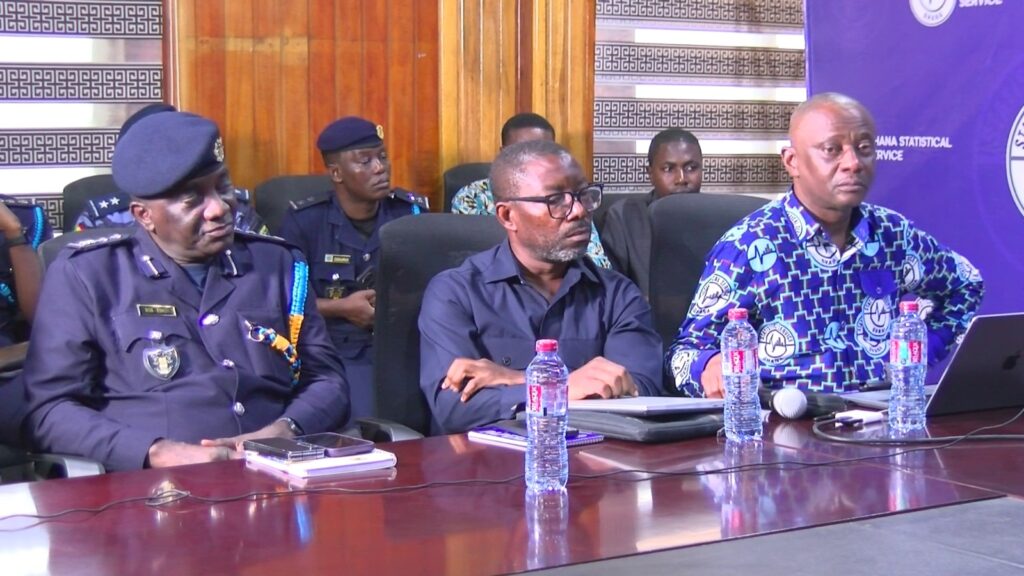
Speaking during the presentation of the report, Government Statistician Dr. Alhassan Iddrisu emphasised the significance of the figures.
“Total Informal Cross-Border Trade (ICBT) across the first three quarters of 2025 was GH¢31 billion. This represents 6% of total trade for the period Q1-Q3 2025.”
Dr. Alhassan Iddrisu
He further highlighted the remarkable gap between informal and formal trade with Ghana’s neighbouring countries. “Informal trade amounted to GH¢31 billion compared to GH¢20.1 billion in formal trade,” he added.
The data confirms that the informal sector remains one of the strongest drivers of regional economic activity, despite receiving far less institutional support than the formal sector.
Ghana maintains trade surplus despite changing trends
Although Ghana continued to record trade surpluses in both formal and informal trade throughout the period, the report revealed changing dynamics across the quarters.
The country’s informal trade surplus climbed to GH¢665.3 million during the second quarter before falling sharply to GH¢49.3 million in the third quarter. While the decline raises questions about changing market conditions and regional demand, Ghana still maintained a positive balance in informal trade.
The report also showed that the country’s non food trade surplus narrowed from GH¢1 billion in the first quarter to GH¢800 million by the third quarter.
At the same time, Ghana’s food trade deficit with neighbouring countries worsened significantly, doubling from approximately GH¢400 million in the first quarter to GH¢800 million by the third quarter. The figures point to increasing dependence on imported food products within the sub region.
Togo dominates informal trade activities
Among Ghana’s neighbours, Togo emerged as the country where informal trade was most dominant.
The GSS found that the share of informal trade with Togo increased steadily from 70.5 percent during the first quarter to 77.8 percent by the third quarter. Formal trade with Togo briefly improved to 33.8 percent in the second quarter before declining to 22.2 percent in the third quarter.
Despite the high level of commercial activity, Ghana’s trade deficit with Togo widened consistently, rising from GH¢725.5 million in the first quarter to GH¢994.1 million in the third quarter.
Meanwhile, informal trade also remained the dominant form of commerce with Côte d’Ivoire, accounting for more than three fifths of total trade throughout the reporting period.
Burkina Faso presented a different picture. Formal trade represented nearly 58 percent of total trade during the first quarter, but informal trade overtook official commerce in both the second and third quarters, accounting for more than 52 percent of total trade.
Agricultural exports remain strong
The report also sheds light on the products driving cross border trade.
Burkina Faso remained Ghana’s biggest destination for agricultural exports, receiving an average of 62.9 percent of agricultural products exported through informal channels.
Togo emerged as the largest destination for Ghana’s fuel exports, accounting for an average of 44.1 percent. The country also received an average of 38.1 percent of Ghana’s food and beverage exports.
On the import side, Burkina Faso remained Ghana’s primary source of livestock, while Côte d’Ivoire supplied most agricultural raw materials. Togo continued to dominate imports of several other commodities.
Cooking oil remained the single largest informal import throughout the three quarters, although its share declined slightly from 16.3 percent in the first quarter to 14.4 percent by the third quarter.
GSS calls for practical reforms instead of punishment
Rather than using the findings to intensify enforcement against informal traders, the Ghana Statistical Service is urging policymakers to create an environment that encourages gradual formalisation.
The report recommends simplifying registration and licensing procedures for small scale traders, improving infrastructure at major border posts, integrating border data systems across government institutions and expanding financial as well as business support services.
It also calls for increased investment in local production of key commodities such as rice, cooking oil and livestock to reduce import dependence.
Beyond Ghana, the GSS wants regional partners to harmonise customs procedures, strengthen data sharing under the African Continental Free Trade Area and institutionalise quarterly digital monitoring of informal trade.
Dr. Iddrisu stressed that the findings should guide inclusive policy making rather than punitive action.
“The findings should not be used to target informal traders but rather to inform policies that encourage formalisation, improve livelihoods and create employment opportunities within the sector.”
Dr. Alhassan Iddrisu
As Ghana works to deepen regional integration under AfCFTA, the latest figures demonstrate that informal traders remain indispensable to the country’s economic future. The challenge now is to transform this thriving GH¢31 billion shadow economy into a stronger, more productive and better supported pillar of national development.
READ ALSO: GSE Bulls Stay Firm as Market Adds GH¢200 Million