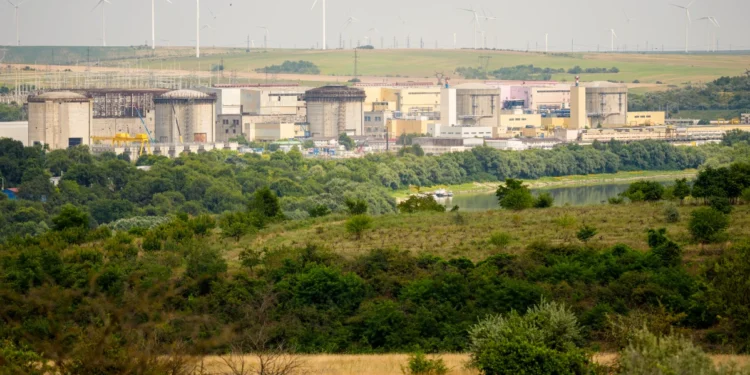
Romania has begun a controlled shutdown of the second reactor at the Cernavoda nuclear power plant as severe drought and record-low water levels on the Danube continue to affect the country’s energy infrastructure.
The shutdown of Unit 2 follows the closure of Cernavoda’s first reactor in late July, leaving Romania’s only nuclear power plant with both reactors offline. The facility normally generates about 20 percent of the country’s electricity when operating at full capacity.
Cernavoda relies on water from the Danube to cool its two reactors. However, exceptionally low rainfall and prolonged high temperatures across Europe have caused the river’s water levels to fall sharply, creating difficulties for the plant’s operations. “The decision to carry out a controlled shutdown of Unit 2 was determined by the continued significant decrease in the level of the Danube River,” state-owned plant operator Nuclearelectrica said in a statement addressed to the Bucharest Stock Exchange.
The company said that both reactors would remain in a safe shutdown condition and stressed that the move would not compromise nuclear safety. “Maintaining both units in a safe shutdown state has no impact on nuclear safety parameters, including personnel, the environment and the population,” Nuclearelectrica said.
The shutdown nevertheless presents an additional challenge for Romania’s electricity system at a time when extreme weather has already placed pressure on energy infrastructure across parts of Europe.
Alternative Power Sources to Cover Demand
Romania’s Ministry of Energy said that the country would be able to meet electricity demand through alternative sources and imports following the shutdown of the second reactor. “Estimates show that the electricity supply will be fully covered by alternative sources and imports,” the ministry said in a statement.
The government has taken several measures in recent weeks to try to prevent the Cernavoda plant from losing access to sufficient cooling water. Acting Prime Minister Ilie Bolojan declared a nationwide state of alert in the energy sector on July 31 for August, reflecting the seriousness of the situation and the potential impact of prolonged drought on electricity production.
Romanian authorities also attempted to influence the flow of the Danube near the plant. Last week, the Romanian military used explosives to clear the Bala Canal, a section of the river considered important for directing water towards Cernavoda. Authorities subsequently began sinking four barges loaded with rock in the area. The barges were intended to create an underwater barrier that would redirect more water through the river’s main channel and towards the nuclear plant.
The measures, however, were ultimately unable to prevent the Danube from falling below the level considered necessary for continued operation of Cernavoda’s second reactor. The development illustrates the extent to which the prolonged drought has begun affecting critical infrastructure beyond agriculture and water supplies.
Danube Drought Spreads Energy Concerns
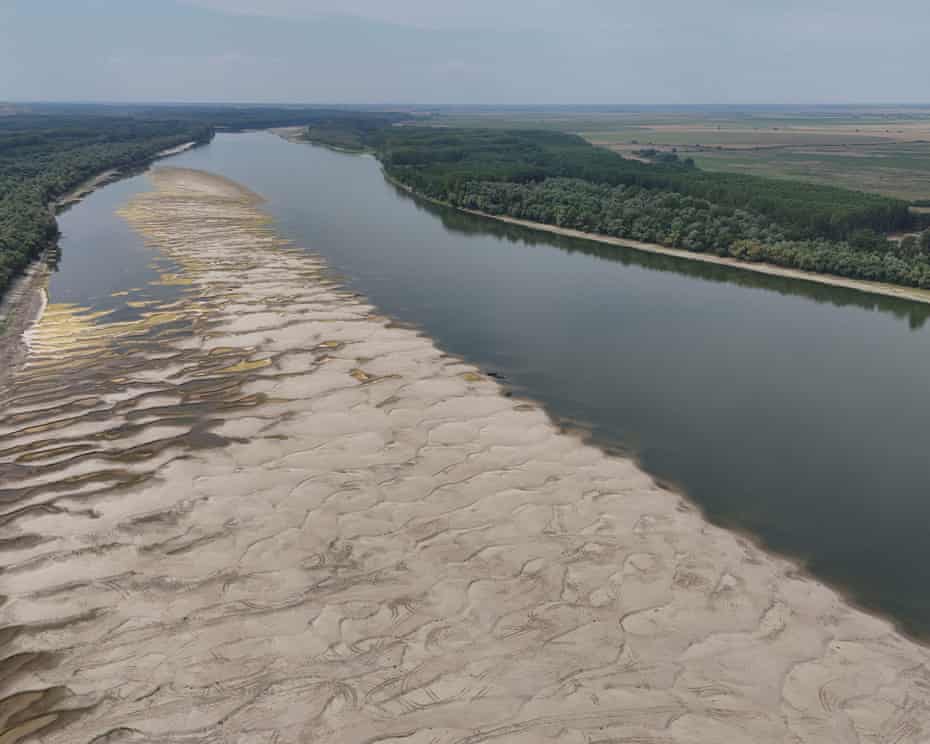
The situation at Cernavoda is part of a wider problem along the Danube, one of Europe’s most important waterways. Low rainfall and persistent heat have reduced water levels along several sections of the river, affecting transport, water availability and energy production. The river’s condition has also raised concerns in neighbouring Hungary, where authorities are preparing measures to maintain sufficient water levels for the continued operation of the country’s only nuclear power plant.
Hungary’s Paks nuclear plant relies on the Danube for cooling water and is facing similar pressure from the river’s unusually low levels. Authorities in Hungary are planning steps this week to raise the level of the river near Paks, as the plant approaches a situation that could force it to reduce or halt operations.
The plant has operated for 44 years and has never before faced a shutdown linked to such conditions, according to the information provided by authorities.The developments in Romania and Hungary demonstrate how extreme weather can affect nuclear power generation even when reactors themselves remain technically sound.
Nuclear plants require reliable access to cooling water, meaning prolonged drought and falling river levels can become an operational constraint. For Romania, the immediate priority is maintaining the stability of the national electricity supply while the Cernavoda reactors remain offline.
The continued decline in the Danube remains a concern, particularly if drought conditions persist and temperatures remain high.The shutdown also comes as European countries face broader challenges from prolonged heat and water shortages. Record temperatures have increased demand for electricity for cooling while simultaneously affecting some forms of power generation that depend on water availability.
At Cernavoda, authorities have emphasised that the controlled shutdown is a safety measure linked to the river’s condition rather than a nuclear safety incident. Both units will remain in a safe shutdown state while conditions are monitored.
The situation will depend largely on whether rainfall returns and the Danube recovers enough to allow the reactors to resume operations. Until then, Romania will rely on other power sources and electricity imports to compensate for the loss of one of its most significant sources of domestic generation, while authorities continue to monitor the impact of the drought on the country’s energy system.