Ghana’s energy sector could face closer fiscal scrutiny in the 2027 Budget as the Africa Centre for Energy Policy (ACEP) and the Natural Resource Governance Institute (NRGI) push for stronger disclosure of power-sector commitments, petroleum revenues and infrastructure spending linked to extractive-sector receipts.
The recommendations place a particular emphasis on preventing new electricity commitments from creating another wave of excess capacity and long-term payment obligations for the state.
At the heart of the concern is Ghana’s generation pipeline.
The two organisations are questioning whether planned and contracted power projects are being matched by credible projections of electricity demand and fuel availability.
Power Commitments Under The Microscope
ACEP and NRGI estimate that a proposed 1,200MW thermal plant, alongside projects including the 900MW AKSA plant, 330MW CENIT project and 350MW AKSA Kumasi plant, could bring about 2,780MW of additional generation capacity into the system.
The issue is not simply whether Ghana needs more electricity.
The more important question is whether the country needs all the contracted capacity, when it will be required and whether sufficient fuel will be available to operate the plants economically.
The organisations are therefore calling for government to publish demand and fuel-supply analysis supporting the generation commitments.
“Government should provide an update on the commitment and clarify the financing mechanism for the plant, and publish a demand and fuel-supply analysis that justifies the total capacity being contracted, to guard against costly excess capacity.”
NRGI and ACEP
That recommendation carries particular weight given Ghana’s experience with power purchase agreements under which the state can incur financial obligations even when contracted electricity is not fully utilised.
For the energy sector, the lesson is fairly straightforward: generation capacity should be treated as a financial commitment as much as an engineering asset.
A plant that strengthens supply when needed can support industrial growth; capacity contracted without corresponding demand can instead become a recurring pressure on the public balance sheet.
Fuel Security Must Match Generation
The organisations’ concern also points to a less visible constraint in Ghana’s power system: fuel availability.
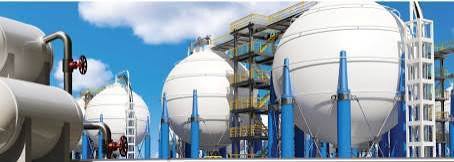
Thermal generation depends heavily on reliable gas and other fuel supplies.
Consequently, adding megawatts without establishing how those plants will be fuelled could leave Ghana with a theoretical increase in generation capacity without a proportional increase in dependable electricity supply.
This makes the proposed analysis of fuel supply particularly important.
Ghana’s gas infrastructure, domestic production, imports and processing capacity all affect the economics of thermal power.
A generation strategy that separates plant construction from fuel planning risks repeating the structural weaknesses that have previously affected Ghana’s electricity market.
The proposed second gas-processing train therefore becomes relevant to the wider budget discussion.
ACEP and NRGI are seeking greater clarity on its financing and feedstock arrangements, underscoring the need to consider electricity generation and gas infrastructure as parts of the same system rather than separate projects.
Petroleum Revenues Face Greater Scrutiny
The organisations are also challenging the treatment of petroleum revenues outside the conventional reporting framework.
They cite US$561.65 million in petroleum revenues reportedly held by JOHL/Explorco and argue that such revenues should be brought within the governance, reporting and accountability requirements of the Petroleum Revenue Management Act.

“Government should reverse this practice and ensure all petroleum revenues are brought within the PRMA’s governance, reporting and accountability framework.”
NRGI and ACEP
For the energy sector, the issue matters because petroleum revenues are ultimately public resources and their treatment affects the fiscal space available for energy infrastructure and other national priorities.
The broader resource-governance debate also extends into mining, particularly as Ghana’s gold revenues become increasingly important to the economy.
But the energy-sector implication is more immediate: stronger controls over resource revenues can help reduce the risk of petroleum receipts being committed to projects without sufficient transparency over their economic returns.
Big Push Spending Needs A Clear Trail
ACEP and NRGI are also calling for more detailed reporting on extractive revenues being channelled into the government’s Big Push infrastructure programme.
The organisations say approximately US$1 billion, equivalent to GH¢11 billion, in mineral and petroleum revenues was spent on the programme in 2025, with another US$708.59 million, or GH¢7.83 billion, reportedly spent during the first half of 2026.
Their proposal for quarterly reporting would require government to identify the resource revenues allocated, projects financed, actual disbursements and value-for-money assessments.
That level of disclosure would be particularly useful for energy infrastructure, where project costs can run into hundreds of millions of dollars and the benefits often depend on long-term utilisation.
The central concern is not whether Ghana should invest resource revenues in infrastructure.
The stronger question is whether those investments are producing assets capable of generating sufficient economic and social returns.
ECG And Recovery Programme Remain Critical
The recommendations also extend to Ghana’s electricity-sector reforms, including the role of private investors in the Electricity Company of Ghana (ECG) and delays associated with the Energy Sector Recovery Programme.
These issues are closely connected to the financial sustainability of the electricity market.
Ghana’s power sector cannot achieve lasting stability through generation investments alone if weaknesses in distribution, revenue collection, sector arrears and utility finances continue to undermine the system.
The Energy Sector Recovery Programme is therefore important because its objective extends beyond adding infrastructure.
The recovery of the sector’s finances determines whether utilities can pay generators, whether generators can meet their obligations and whether government must repeatedly intervene with scarce public funds.
That makes the 2027 Budget an opportunity to assess the energy sector as an interconnected financial system rather than a collection of individual projects.
The Bigger Test Is Fiscal Discipline
The recommendations from ACEP and NRGI ultimately point to a common problem: Ghana’s energy ambitions must be matched by stronger financial planning.
New generation capacity, gas infrastructure and electricity-sector reforms can support economic growth, but poorly sequenced investments can produce the opposite result by increasing public liabilities without delivering equivalent value.
The subtle connection with Ghana’s extractive economy is equally important.
Gold and petroleum revenues can provide funding for infrastructure, but commodity revenues are inherently exposed to market cycles.
Using temporary windfalls to create permanent financial obligations requires particularly careful planning.
For the energy sector, the most useful test of the 2027 Budget will therefore not be the number of new power projects announced.
It will be whether every major generation commitment is supported by credible demand projections, secured fuel supply, transparent financing and a clear assessment of the burden placed on the public balance sheet.
That is where energy policy becomes fiscal policy, and where stronger resource governance can determine whether Ghana’s mineral and petroleum wealth finances productive infrastructure or simply creates another cycle of expensive obligations.
READ ALSO: Ghana Set to Insure Mobile Money Deposits Under New Framework