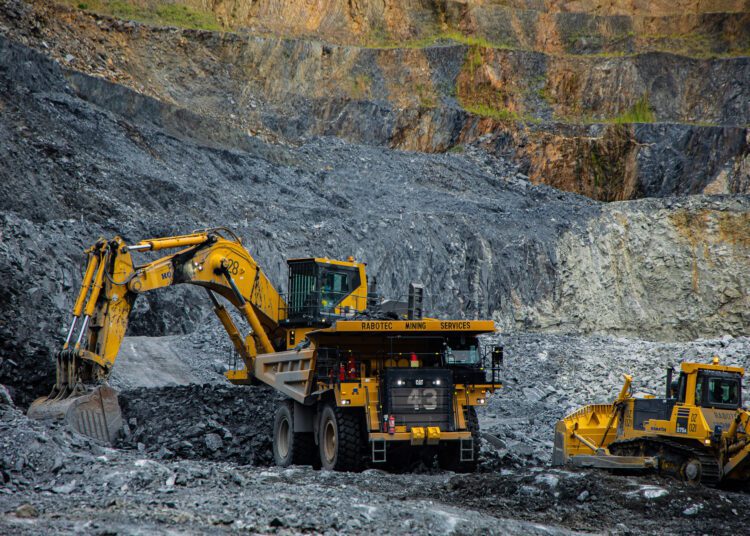
Stakeholders in Ghana’s mining sector have identified inadequate access to finance as the major constraint preventing indigenous mining companies from competing effectively with foreign firms and securing greater ownership of the country’s mineral resources.
Addressing participants during a panel discussion on local content and community participation at the National Mining Dialogue 2026 in Accra, industry leaders noted that while significant strides have been made in local human resource development, acute capital shortages continue to sideline Ghanaian entrepreneurs from taking control of large-scale concessions.
Experts emphasized that the primary gap between indigenous players and international conglomerates lies strictly in capital raising rather than technical expertise. Modern mining requires capital-intensive commitments running into hundreds of millions of dollars to extend mine life and build essential extraction infrastructure.
Because local commercial banks lack the liquidity and balance sheet capitalization required to fund such heavy capital expenditures, indigenous firms are consistently outmatched by foreign multinationals that possess seamless access to international capital markets, leaving local entities unable to acquire or operate tier-one mineral assets.
“I think that the only real advantage that foreign companies have, and to some extent still have, is financial capacity. The problem is not human resource; it is capital and capacity,”
Mr. Bobby Benson, a private legal practitioner
Capital Deficits and Operational Bottlenecks Across Mining Operations
The severe constraint in funding severely impacts everyday mining operations and long-term project viability across the country.
Developing an industrial-grade mine demands substantial front-end investments in deep geological exploration, advanced processing technology, heavy earth-moving equipment, and environmental mitigation systems.
When indigenous companies are restricted by capital deficits, they are often forced to delay crucial expansion projects, compromise on technological efficiency, or settle for sub-scale, short-term extraction methods that yield lower profit margins.
Furthermore, capital limitations weaken the operational resilience of local firms during market downturns. Unlike foreign multinationals that rely on diversified equity financing and global credit lines to absorb fluctuating commodity prices, Ghanaian mining ventures face high interest rates from domestic banks.
Consequently, local operators struggle to maintain cash flow, meet regulatory compliance standards, or invest in required tailings management, effectively hindering their ability to scale up operations or secure high-yielding mining leases.
Community Integration and the Social Licence Framework
Beyond pure balance-sheet constraints, the funding deficit directly affects how mining companies engage host communities and maintain their social licence to operate.
The dialogue, themed “Rethinking the Social Licence to Operate,” highlighted that local content must evolve beyond mere employment quotas to encompass direct equity participation and community decision-making.
Dr. Nana Adarkwa Bediako III, Gyasehene of the Apinto Divisional Council, pointed out that traditional authorities are often excluded from high-level lease negotiations because the financial architecture of mining leases disproportionately favors capital-heavy offshore operators.
When communities and local businesses are unable to financially participate in mine ownership, the host areas fail to secure durable economic returns despite decades of active resource extraction.
Dr. Bediako advocated for a structured, three-way dialogue involving the government, host communities, and mining enterprises to ensure development interventions align with community priorities. Strengthening local ownership, he argued, requires bridging financial gaps so host communities can transition from passive recipients of corporate social responsibility projects to active co-owners of mineral wealth.
Policy Reforms and Strategic Interventions for Local Growth
To correct these structural imbalances, stakeholders are advocating deliberate policy interventions aimed at lowering financial barriers for credible local firms.
Mr. Benson called for collaborative financial mechanisms between the Ghanaian government and domestic financial institutions to facilitate long-term equity and debt financing tailored for the extractive sector.
With global gold prices reaching historic highs, favorable market conditions offer a critical window for local investors to capture market share, provided targeted credit facilities and specialized mineral funds are established.
Securing greater indigenous ownership will require matching Ghana’s robust local content regulatory frameworks with deep financial sector reforms. Stakeholders agreed that enabling Ghanaian entrepreneurs to access competitive long-term capital will retain a significant portion of mineral revenues within the national economy.
By transforming the domestic financing landscape, Ghana can ensure that its vast natural resources build lasting national wealth and foster sustainable industrial growth for future generations.
READ ALSO: Ghana Set to Insure Mobile Money Deposits Under New Framework