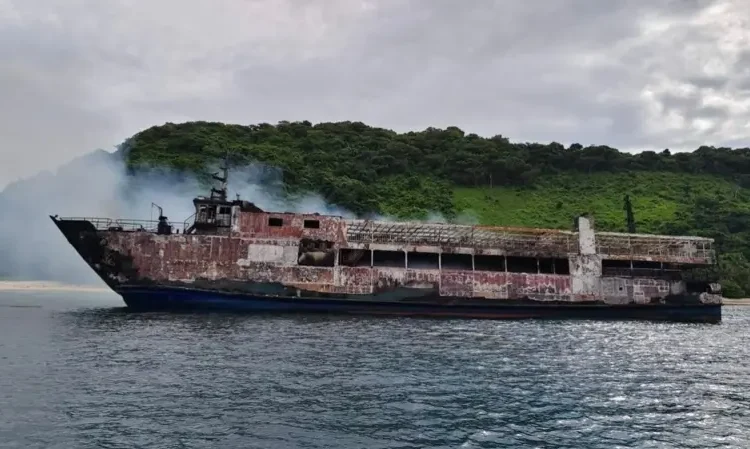
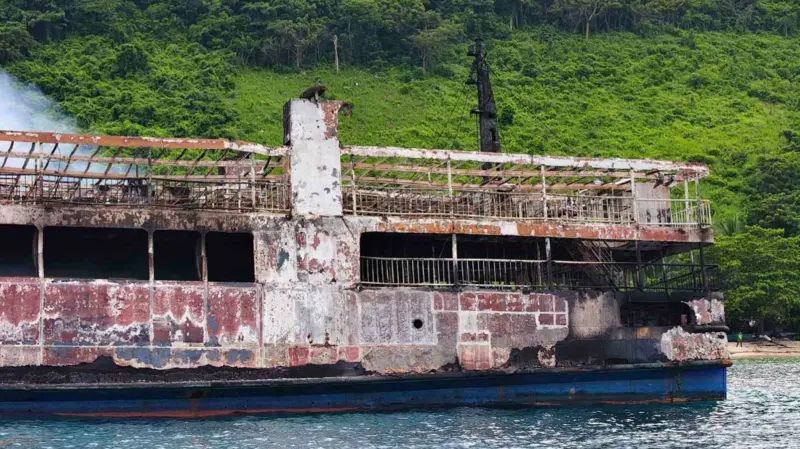
At least five people have died and 86 remain unaccounted for after a fire engulfed a passenger ferry off the coast of the Philippines, triggering a difficult overnight search-and-rescue operation in waters near the popular tourist destination of Coron.
The MV June Aster was carrying 134 passengers and crew when the fire broke out about 1.2 nautical miles, or approximately 2.2 kilometres, from the coast of Marcilla village in Coron. The blaze continued through the night, forcing passengers and crew to flee the vessel as authorities raced to locate those who may have been trapped aboard or swept into the sea.
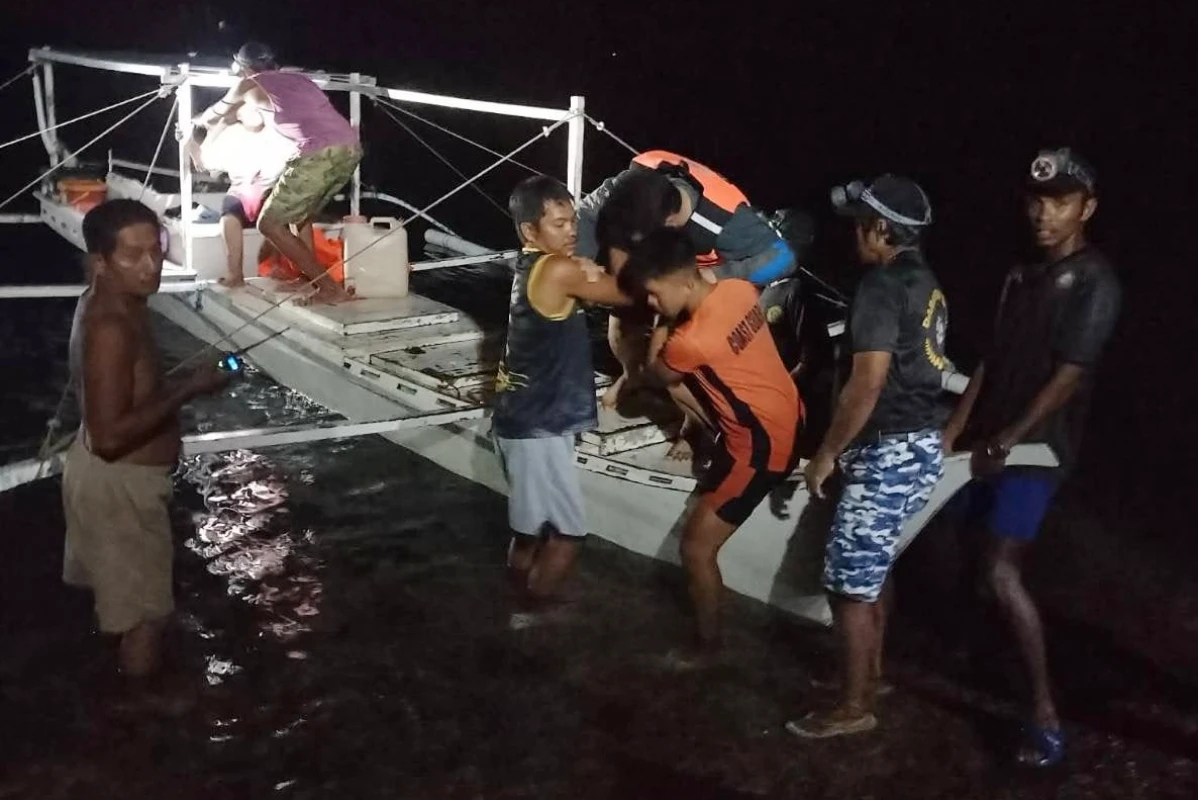
Philippine Coast Guard Captain Noemi Cayabyab said that 43 people had been rescued as rescue teams continued their search for those still missing. The operation, however, has been complicated by strong waves that caused the burning vessel to drift from its original location.
Authorities currently estimate that 86 passengers remain unaccounted for, although officials have warned that the figure could change as the search progresses and passenger numbers are verified. Cayabyab said the coast guard was continuing to coordinate a broad response involving several vessels and personnel. “We are continuing search and rescue operations,” she said.
A coast guard ship and high-speed response boats have been deployed alongside a military vessel and other government boats. Private volunteers and local fishermen have also joined the operation, expanding the search beyond the immediate area where the ferry caught fire.
The coast guard has issued a radio broadcast to nearby vessels, asking ships in the area to watch for survivors who may have entered the water. Authorities have also coordinated with coastal villages in case passengers were able to reach or drift towards shore.
The cause of the fire remains unclear. One survivor reportedly suggested that the blaze may have started in the cargo hold, but authorities have not confirmed the account. The coast guard is working with the shipping company and maritime authorities to establish what caused the fire and determine how the incident unfolded.
Inaccurate Manifests Complicate Philippine Ferry Disasters
As rescuers search for survivors from the MV June Aster, authorities face another challenge that has complicated previous maritime disasters in the Philippines, that is, determining exactly how many people were aboard the vessel.
Officials have cautioned that the number of missing passengers may change as they reconcile the ferry’s manifest with information from survivors, families and other sources. In past disasters, passenger lists have not always provided an accurate picture of the actual number of people on board.
In some cases, individuals listed on a manifest may never have boarded a vessel. More commonly, however, passengers who were actually aboard have not been recorded on the official list. Such discrepancies can make it considerably more difficult for rescue teams to determine how many people are potentially in danger and how many survivors have yet to be located.
A similar problem emerged after the sinking of the MV Trisha Kerstin in January. The vessel, which was carrying more than 370 people, sank in waters off the southern Philippines, killing at least 66 people. Authorities said 372 people were on board, but more than 100 of them were not included on the official manifest.
The issue also arose following the 2023 fire involving the Lady Mary Joy 3 in the southern Philippines. At least 31 people died in that incident, while officials acknowledged that an inaccurate passenger manifest had complicated efforts to determine the true number of people aboard the ferry.
The previous incidents highlight the difficulty authorities can face during emergencies when passenger records do not correspond with the actual number of people travelling. For rescuers, knowing who is missing is critical to directing search efforts, while accurate manifests can help families and authorities establish who was aboard a vessel.
The latest disaster involving the MV June Aster has therefore placed renewed attention on passenger safety and accountability within the country’s extensive ferry network.
Ferries are an essential means of transportation across the Philippines, an archipelago made up of thousands of islands. They connect communities, transport workers and residents, and carry tourists to destinations such as Coron.
However, maritime accidents have remained a recurring concern. Storms and rough seas, poorly maintained vessels, overcrowding and inconsistent enforcement of safety regulations have all contributed to the risks faced by passengers, particularly in remote provinces. For now, the priority remains locating those still unaccounted for.
READ ALSO: UK Imposes Sanctions on Israeli Settlements in Occupied West Bank