The Public Utilities Workers Union (PUWU) is challenging Ghana to take greater ownership of the reforms needed to resolve persistent weaknesses in the energy sector, arguing that external financial institutions should not determine the country’s approach to fixing its power-sector problems.
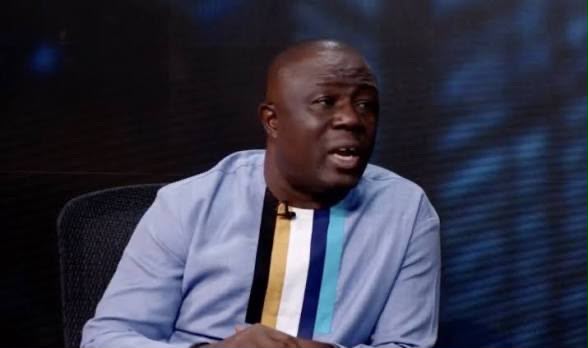
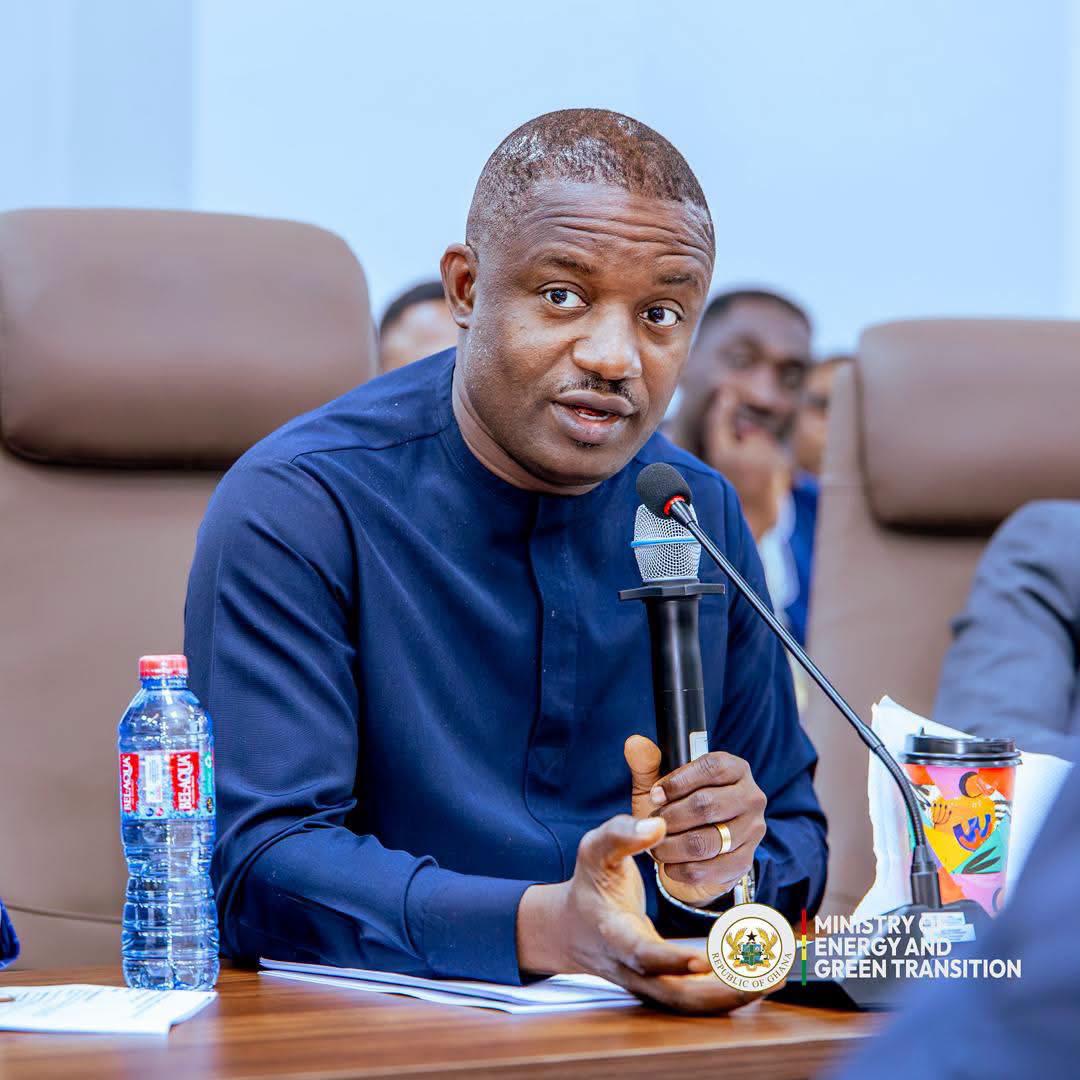
Deputy General Secretary of PUWU, Enoch Paul Hayes, said Ghana possesses sufficient institutional experience and technical capacity to develop solutions to the sector’s financial and operational difficulties, provided policymakers focus on the structural causes of the problem.
His intervention comes as Ghana continues to face significant financing pressures in the electricity sector, with the International Monetary Fund (IMF) estimating a potential financing shortfall of about US$1.1 billion in 2026.
The Fund has associated the gap with high collection and distribution losses and the cost of generation contracts, while also supporting continued electricity tariff adjustments and reforms to distribution.
For Mr Hayes, however, the debate needs to move beyond the question of how much external financing Ghana requires and examine more closely why the power system remains expensive to operate in the first place.
IPP Costs Put Under The Spotlight
A major part of his argument centres on the cost of electricity generated by Independent Power Producers (IPPs), which have become an important component of Ghana’s generation mix.
Mr Hayes questioned why the pricing and contractual arrangements surrounding IPP-generated electricity have not received greater attention in the reform debate.
“For example, the generation: we have IPPs and their pricing. Why is that not a concern?”
Enoch Paul Hayes, Deputy General Secretary, PUWU
The issue is significant because Ghana’s electricity-sector finances are affected at several points along the value chain.
Electricity must first be generated, purchased by utilities, transmitted and distributed before revenue is collected from consumers.
Weaknesses in any part of that chain can create financial pressure elsewhere.
High generation costs therefore cannot be viewed separately from the distribution sector’s collection performance, while distribution losses cannot be addressed without considering the amount utilities are required to pay for power.
This creates a structural question for policymakers: how much of Ghana’s energy-sector financing problem is caused by insufficient revenue, and how much reflects the underlying cost structure of the electricity system?
Mr Hayes believes greater attention should be directed towards that question.
Ghana Should Not Rely Entirely On External Prescriptions
The PUWU executive also pushed back against what he considers excessive reliance on the prescriptions of international financial institutions.
Ghana’s engagement with the IMF and World Bank has become closely intertwined with energy-sector reforms because the financial health of the sector has implications for public debt, government expenditure and broader macroeconomic stability.
The IMF has identified electricity-sector financing pressures as a material fiscal risk, while the World Bank has warned that delays in reforms could undermine Ghana’s progress on debt sustainability and macroeconomic stability.
Mr Hayes does not dismiss the role of international institutions but argues that their recommendations should be assessed against Ghana’s own circumstances and experience.
“We can do something. We don’t always need to rely on the IMF. I want to state it clearly. We have evidence. The IMF is not Father Christmas.”
Enoch Paul Hayes, Deputy General Secretary, PUWU
His position effectively calls for a more locally driven reform process in which Ghana determines which interventions are commercially, technically and socially appropriate rather than simply implementing external recommendations as a package.
That distinction matters particularly in the electricity sector, where reforms can have direct consequences for tariffs, employment, public services and the financial position of state-owned utilities.
African Experiences Raise Questions
Mr Hayes also pointed to developments in other African economies as a reason for Ghana to scrutinise external policy prescriptions rather than accepting them without modification.
He referenced Nigeria and Uganda, arguing that outcomes from reforms undertaken in those countries should form part of Ghana’s assessment of what works and what does not.
“Let’s look at our economy in this part of Africa, especially the energy sector, which they normally want to enter.”
Enoch Paul Hayes
The broader argument is that African energy systems operate within economic, institutional and infrastructure conditions that can differ considerably from those in developed markets.
Policies that improve efficiency in one market may therefore require significant adaptation elsewhere.
For Ghana, this is particularly relevant because the electricity sector carries several overlapping challenges: generation costs, fuel availability, distribution losses, collection efficiency, utility indebtedness, tariffs and the financial obligations created by power-purchase agreements.
A sustainable solution will have to address these issues together rather than treating each one as an isolated problem.
TOR And ECG Offer Evidence Of Local Turnarounds
Mr Hayes cited Ghana’s own experience with state-owned energy institutions as evidence that domestic reform can produce results.
He pointed specifically to the Tema Oil Refinery (TOR), whose recent operational and financial improvements have attracted attention after years of difficulties.
“Just like we stood as Ghanaians and turned around TOR, and we are praising ourselves today for the performance of TOR. We are seeing it today.”
Enoch Paul Hayes, Deputy General Secretary, PUWU
The comparison is significant because TOR’s experience demonstrates the potential value of improving the performance of existing national assets rather than assuming that external ownership or intervention is automatically required.
A similar argument can be made about the Electricity Company of Ghana (ECG), which has recorded improvements in its financial indicators even though substantial challenges remain.
ECG’s 2025 revenue increased to GH¢22.1 billion, while its after-tax loss narrowed from GH¢8.26 billion in 2024 to GH¢2.52 billion.
Those numbers do not mean the utility has become financially sustainable.
But they indicate that changes in revenue mobilisation and operational performance can materially affect its financial position.
Mr Hayes questioned the apparent tension between these improvements and calls for deeper external involvement in ECG.
“The World Bank were the same people who said that currently, the ECG, our revenue is coming up, we are doing well. So what has changed?”
Enoch Paul Hayes, Deputy General Secretary, PUWU
That question goes to the heart of Ghana’s current energy-sector reform debate.
Financial Recovery Is Not The Same As Sustainability
There is an important distinction, however, between improved financial performance and a fully sustainable electricity sector.
ECG’s reduced loss and stronger revenue collection are positive developments, but the utility still operates within a wider system characterised by distribution losses, unpaid or delayed obligations and the cost of purchasing electricity.
Likewise, improvements at TOR do not eliminate the broader financial and technical challenges facing Ghana’s downstream petroleum sector.
The lesson from both institutions is therefore less about declaring victory and more about demonstrating that performance can improve when management, operational discipline and institutional reforms are aligned.
For Ghana’s power sector, that means a homegrown reform strategy would still need to confront difficult issues rather than simply reject external assistance.
The cost of IPP power, the structure of power-purchase agreements, technical and commercial losses, revenue collection, tariff adequacy, fuel costs and utility governance all require measurable interventions.
Labour Wants Its Proposals Considered
Mr Hayes said Organised Labour and the Trades Union Congress (TUC) had already presented government with proposals on how the energy-sector challenges could be addressed.
His concern is that the expertise of workers and local institutions should receive greater consideration in the reform process.
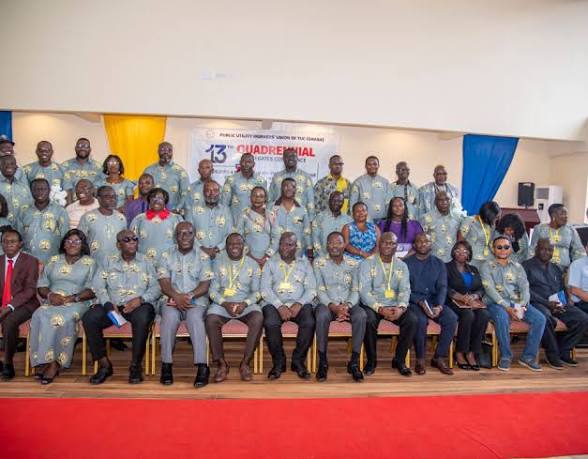
“We as workers of Ghana, well pulled by the leadership of TUC and Organised Labour, have given the president and also the minister some critical and important things we need to do and tackle.”
Enoch Paul Hayes, Deputy General Secretary, PUWU
The intervention adds a labour perspective to an energy debate that is often dominated by government, development partners, private investors and financial institutions.
Yet workers within the utilities possess direct knowledge of operational constraints, network conditions and the practical consequences of policy decisions.
Their involvement could therefore be particularly relevant where reforms affect the day-to-day functioning of generation, transmission and distribution companies.
The Real Question Is What Ghana Pays For Power
PUWU’s position ultimately shifts the debate from who finances Ghana’s energy-sector reforms to what Ghana needs to change to make the sector financially viable in the first place.
External financing can help bridge a funding gap, but it does not by itself resolve expensive generation, inefficient distribution, weak collections or poorly structured contractual obligations.
Similarly, tariff increases can improve utility revenues, but higher tariffs alone cannot create an efficient electricity system if substantial losses remain elsewhere in the value chain.
The challenge is therefore to construct a power market in which the cost of generation, the price paid for electricity, the efficiency of distribution and the revenue collected from consumers are sufficiently aligned.
That is where Mr Hayes’ focus on IPP pricing becomes important.
If Ghana is serious about reducing the sector’s recurring financing requirements, policymakers may have to look more closely at the entire electricity cost stack, from fuel and generation contracts through transmission, distribution and final consumer collection.
PUWU is not arguing that Ghana has no need for international partners. Rather, its intervention is a call for greater domestic ownership of the diagnosis and the solution.
For a sector that has repeatedly required government financial support, that distinction could be crucial.
The long-term objective cannot simply be to find enough money to cover each year’s financing gap. It must be to reduce the structural reasons those gaps emerge in the first place.
In that sense, the union’s challenge presents Ghana’s energy policymakers with a more difficult but more fundamental question: can the country redesign the economics of its electricity sector so that external financing becomes a supplement to reform rather than a substitute for it?
READ ALSO: ICT Powers Ghana’s 6% Second-Quarter Growth