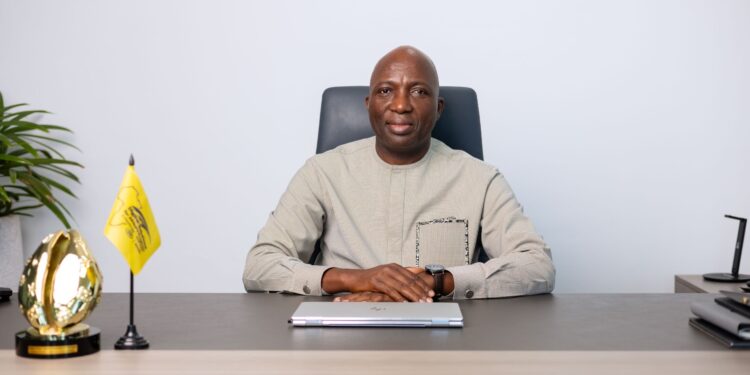
The Chief Executive Officer of Mobile Money Fintech LTD, MMFL, Mr. Shaibu Haruna, has called for Ghana’s digital finance agenda to move beyond basic access to financial services and focus more deliberately on improving customers’ financial health and long-term well-being.
According to him, after more than a decade of expanding mobile money penetration, the next phase of the industry’s growth must deliver practical solutions that help Ghanaians to save securely, access affordable credit, invest and plan for the future.
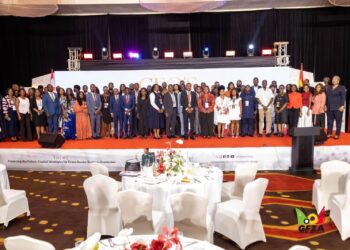
Mr. Haruna made the call during a panel discussion on “Mobile Money, Agency Banking and Digital Payments” at the inaugural Ecobank-Joy Business Financial Dialogue Series held in Accra.
The high level dialogue, held under the theme: Driving Financial Inclusion Through Digital Transformation, brought together regulators, financial institutions, fintech companies and industry leaders to explore how technology can be leveraged to expand access and strengthen economic participation.
Contributing to the discussion, Mr. Haruna said mobile money has already achieved its initial goal of bringing millions of previously unbanked Ghanaians into the formal financial ecosystem.
The challenge now, he said, is to deepen the value and relevance of that inclusion.
“Mobile Money has gone beyond simply bringing people into the financial ecosystem. The focus has shifted from financial inclusion to financial health and financial well-being. We are building solutions that address customers’ real needs’’.
Mr. Harun
He explained that MMFL, a subsidiary of MTN Ghana, is evolving from a payments provider into a holistic financial services platform that responds to the everyday financial challenges of its over 17 million active customers.
MMFL’s Strategic Partnership to Broader Customers Range of Financial Tools
Mr. Haruna pointed to MMFL’s recent strategic partnerships with IC Wealth, Misika, Coronation and Flexi Pension as a reflection of this new direction. Through these collaborations, the company is offering customers access to a broader range of financial tools, including investment products, micro-credit, insurance and pension solutions directly on the mobile money platform.
He said these innovations are designed to help low income earners, small business owners, and young people to build savings culture, access working capital, insure against shocks and prepare for retirement – critical pillars of financial resilience.
“The key lesson is simple: involve the entire ecosystem, engage customers continuously, understand their pain points and build solutions that solve those problems. At the same time, we must continue building trust in digital financial services.’’
Mr. Harun
According to him, trust remains the foundation of digital finance, and the industry must continue to invest in customer education, fraud prevention, data protection and transparent pricing to sustain confidence.
Mr. Haruna noted that while Ghana has made impressive strides in mobile money adoption, usage remains largely transactional, with many customers using the service for transfers and payments rather than savings and wealth creation.
Reversing this trend, he said, requires deliberate product design and continuous engagement. Other panellists at the dialogue reinforced the need for stronger collaboration across Ghana’s digital payments ecosystem to accelerate inclusion.

Interoperability, Key to Ghana’s Digital Finance
Akosua Blay, Chief Business Officer of the Ghana Interbank Payment and Settlement Systems, GhIPSS, said interoperability has been the single most important driver of Ghana’s digital finance success story.
She explained that through shared infrastructure such as Mobile Money Interoperability, MMI, and GhIPSS Instant Pay, GIP, banks, fintechs, payment service providers and mobile money operators are able to connect seamlessly, allowing customers to move money across different networks instantly.
Ms. Blay said further deepening of interoperability, including merchant interoperability and cross-border payments, will be critical to reducing cash dependency and supporting trade under the African Continental Free Trade Area.
Jacqueline Dufie Mpare, Managing Director of Pan African Savings and Loans Ltd, said digital tools are also helping traditional financial institutions to reach more customers and serve them better.
According to her, the use of digital channels and alternative data has enabled lenders to profile customers more accurately, assess risk, and make better lending decisions, particularly for small and medium-sized enterprises that often lack formal collateral.
She noted that agency banking and mobile money partnerships have extended the reach of savings and loans companies to underserved communities, allowing them to mobilise deposits and extend credit at lower cost.
The panellists agreed that while progress has been made, challenges such as digital literacy, network infrastructure, fraud, and regulatory coordination must be addressed through collective action.
MMFL to Launch Fintech Lab for Digital Finance Solutions
The comments by the MMFL CEO come ahead of the launch of MMFL’s Fintech Lab, a new innovation platform designed to bring together fintechs, developers, partners and other ecosystem stakeholders to co-create practical digital finance solutions.
The Fintech Lab, which will be based in Accra, is expected to serve as a hub for experimentation, prototyping and scaling of customer-centric products that respond to Ghanaians’ evolving financial needs and accelerate the country’s digital transformation.
Industry analysts say the shift from access to financial health marks a maturing of Ghana’s mobile money sector, which now accounts for over 70 percent of all digital transactions and has become a critical pillar of the economy.
The inaugural Ecobank-Joy Business Financial Dialogue Series featured discussions on a wide range of topics, including banking, fintech innovation, cybersecurity, artificial intelligence, and the future of digital payments in Ghana.
Organisers say the series is intended to provide a platform for frank dialogue among regulators, operators and consumers to shape policy and drive innovation that leaves no one behind.
Mr. Haruna and MMFL, the message was clear: Ghana’s digital finance story has moved from counting accounts to improving lives, and the industry must now build products that help people not just transact, but thrive.
READ ALSO :No Child Should Be Blamed For Abuse — PTA National Council