
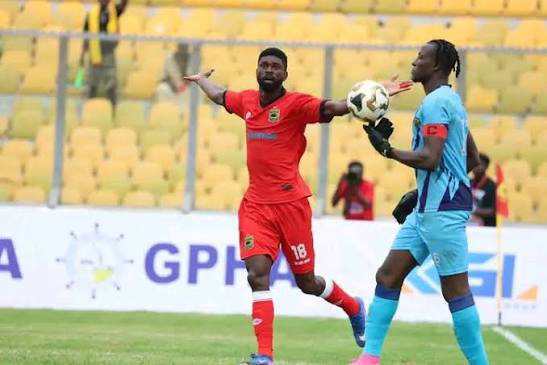
Asante Kotoko have won the 2026 Democracy Cup after defeating arch-rivals Hearts of Oak 4-1 on penalties following a goalless draw at the Baba Yara Sports Stadium in Kumasi on Friday.
Goalkeeper Danlad Ibrahim emerged as the hero for the Porcupine Warriors, producing two crucial saves during the shootout to secure the trophy for his side and complete a memorable return to the club.
After 90 minutes of a tightly contested encounter produced no goals, the match went straight to penalties, where Kotoko proved far more composed from the spot.
Hearts of Oak converted only one of their three penalties, with Mohammed Ali scoring his attempt. Danlad, however, denied Kelvin Osei Asibey and Amankwah Baafi to put Kotoko firmly in control of the shootout.
Kotoko were flawless from 12 yards, converting all four of their attempts as Black Stars goalkeeper Benjamin Asare failed to keep out any of the Porcupine Warriors’ penalties.

The victory sees Kotoko reclaim the Democracy Cup after Hearts of Oak lifted the trophy last year. It is also the second time Kotoko have won the title, having claimed the inaugural edition in 2024 with a 2-1 victory over Hearts of Oak at the Accra Sports Stadium.
Hearts head coach Nebojsa Kapor congratulated Kotoko after the game and displayed sportsmanship in defeat. The Serbian admitted that losing was painful but praised his players for their performance and commitment during the contest.
Kotoko Strengthen Democracy Cup Legacy
The Democracy Cup was instituted by the Parliament of Ghana as an annual football event aimed at celebrating the country’s democratic journey while using the popularity of football to promote national unity, peaceful coexistence and civic engagement.
The competition was first staged in 2024 as part of activities marking 30 years of Ghana’s parliamentary democracy under the Fourth Republic.
Parliament has since sought to establish the match as a regular feature on the national sporting calendar, with the fixture also serving as a platform for strengthening relationships between state institutions and the sporting community.
The 2026 edition commemorated 32 years of parliamentary democracy in Ghana and was sanctioned by the Ghana Football Association. The game was played in Kumasi for the first time, with Baba Yara Sports Stadium selected as the venue for the latest chapter of the country’s biggest club rivalry.
Parliament has also expanded the Democracy Cup concept beyond the flagship Hearts-Kotoko fixture. The initiative now includes programmes designed to deepen civic engagement and promote football development, including the Women Democracy Cup.
The 2026 edition also carried an international dimension. Parliament has been developing a partnership with English Premier League side Sunderland AFC, with discussions aimed at creating opportunities for the winner of the Democracy Cup to play the English club and expanding football development links between Ghana and the United Kingdom.
Kotoko’s triumph therefore gives the Kumasi giants more than bragging rights over their fiercest rivals.
The victory strengthens their historical association with the competition and hands them another opportunity to benefit from Parliament’s broader international football partnership.
For Hearts, the defeat represents a missed chance to retain the trophy and move ahead of Kotoko in the competition’s honours list. The Phobians had entered the contest as defending champions after defeating Accra Great Olympics in the 2025 edition.
Both clubs will now turn their attention to the new Ghana Premier League campaign, which is scheduled to begin next week.
The Democracy Cup provided both sides with another competitive test as they finalise preparations for the demanding season ahead.
For Kotoko, however, the immediate focus will be on celebrating a victory that came through composure, resilience and the heroics of Danlad Ibrahim, whose two penalty saves ultimately decided another chapter in the historic rivalry between Ghana’s two most decorated clubs.
READ ALSO: Attorney-General Inaugurates 11-Member Constitution Review Implementation Committee