The Ghana Export-Import Bank (Ghana Exim Bank) has announced a major shift in its lending strategy, placing high-impact economic projects at the centre of its financing decisions as the country intensifies efforts to drive industrialisation and create jobs under the government’s 24-Hour Economy initiative.
The new approach signals a stronger focus on projects capable of delivering measurable economic value, boosting local production, expanding exports and strengthening Ghanaian businesses to compete in international markets.
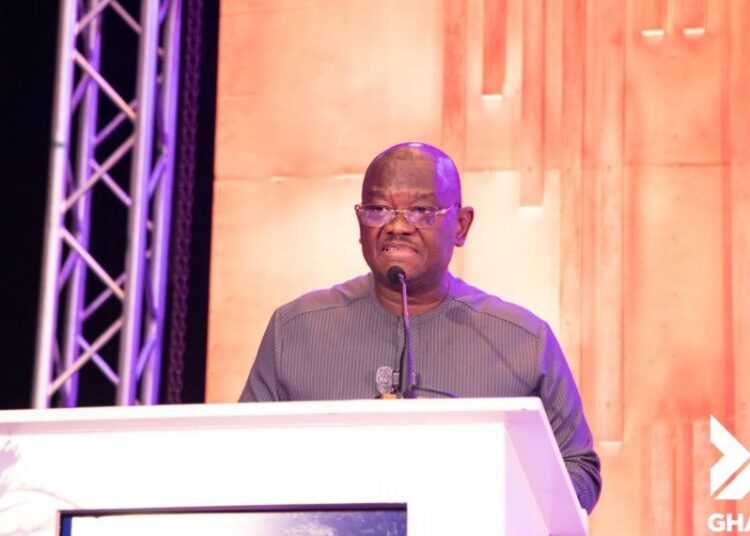
Speaking at the opening of the Northshore Apparel Hub, a facility being developed under the 24-Hour Economy initiative, Chief Executive Officer of Ghana Exim Bank, Sylvester Mensah, said the bank has reset and redefined its lending scope to align with the government’s broader economic transformation agenda.
Exim Bank Changes Its Lending Focus
According to Mr Mensah, Ghana Exim Bank can no longer afford to spread its limited financial resources across projects without carefully assessing their potential contribution to the economy.
He explained that financing decisions would increasingly be guided by the ability of businesses to generate significant economic impact.
“It does not lend based on sentiments. Behind every facility we extend is placing scarce resources where their impact can be significant,” he said.
The statement highlights a deliberate move away from lending based primarily on conventional considerations towards a strategy that places economic impact, productivity and transformation at the heart of funding decisions.
For businesses seeking financing from the bank, the shift could mean greater emphasis on the scale of their operations, job creation potential, export prospects, local value addition and contribution to Ghana’s industrial development.
24-Hour Economy Gets Financial Backing
The change in strategy comes at a time when the government is pushing the 24-Hour Economy as a major initiative to stimulate production, expand employment opportunities and increase the utilisation of industrial capacity.
The programme seeks to encourage businesses to operate for longer hours while creating an environment that supports increased production and investment.
Ghana Exim Bank’s decision to align its lending strategy with this agenda could therefore provide an important financing channel for businesses positioned to take advantage of the initiative.
The bank’s new approach could particularly benefit enterprises operating in manufacturing, agriculture, agro-processing, exports and other sectors where additional capital can translate into higher production and stronger foreign exchange earnings.
Northshore Apparel Hub Emerges as Model Project
Mr Mensah pointed to the Northshore Apparel Hub as an example of the type of enterprise Ghana Exim Bank is prepared to support under its new financing strategy.
He described the project’s case for financing as particularly compelling, highlighting its potential to demonstrate what wholly Ghanaian-owned businesses can achieve through large-scale industrial investments.
The apparel facility represents more than a single business venture. Its development reflects the possibility of creating domestic manufacturing capacity while positioning Ghanaian companies to participate more aggressively in international markets.
The project also aligns with efforts to increase Ghana’s non-traditional exports and reduce excessive dependence on traditional export commodities.
Ghanaian Businesses Target Global Markets
One of the most significant opportunities identified by Mr Mensah is the potential for the Northshore Apparel Hub to expand Ghana’s apparel exports beyond the domestic market.
The facility is positioned to take advantage of opportunities created through the African Growth and Opportunity Act, known as AGOA, as well as other international trade arrangements.
Access to international markets could provide Ghanaian manufacturers with opportunities to increase production, earn foreign exchange and establish stronger global brands.
For the banking sector, projects with such export potential are particularly important because successful exporters can generate foreign currency while creating employment and stimulating demand across local supply chains.
The apparel industry itself has the potential to support a wide range of businesses, including textile suppliers, garment manufacturers, logistics companies, packaging firms and other service providers.
Scarce Funds to Follow Economic Impact
Ghana Exim Bank’s new position also comes against the backdrop of intense competition for financing within Ghana’s business community.
With capital remaining an important constraint for many enterprises, the bank has indicated that it intends to be strategic about where its resources are deployed.
This means projects will need to demonstrate clear economic benefits rather than relying solely on the attractiveness of an investment proposal.
Businesses that can show strong prospects for employment creation, export growth, import substitution, industrial expansion and local value addition could become more attractive under the revised strategy.
The approach could also encourage companies to develop more commercially sustainable projects capable of delivering long-term returns while contributing to national development.
A Potential Boost for Industrialisation
The strategy could mark an important development in Ghana’s efforts to deepen industrialisation.
For years, policymakers have called for increased financing for local businesses, particularly enterprises capable of producing goods that Ghana currently imports or exporting products that can earn foreign exchange.
By directing financing towards high-impact projects, Ghana Exim Bank could play a stronger role in supporting businesses that address these priorities.
The challenge, however, will be ensuring that the new lending approach translates into tangible results for businesses and the wider economy.
If effectively implemented, the strategy could unlock financing for ambitious Ghanaian companies, strengthen domestic production and create new opportunities for export-oriented industries.
Bigger Ambitions for Ghana Exim Bank
The announcement by Sylvester Mensah suggests that Ghana Exim Bank is positioning itself as a more targeted development finance institution, with lending decisions increasingly tied to the country’s economic transformation priorities.
The Northshore Apparel Hub provides an early illustration of that vision, combining local ownership, industrial production and export potential.
As Ghana pushes ahead with the 24-Hour Economy initiative, the availability of strategic financing will remain crucial.
The bank’s renewed lending strategy could therefore become an important component of efforts to turn economic policy ambitions into productive businesses, stronger industries and globally competitive Ghanaian enterprises.
READ ALSO: BoG Bets on Ratings Upgrade as Economy Strengthens