France and Sweden have signed agreements for the delivery of four modern frigates to Sweden, strengthening the Nordic country’s naval capabilities as security concerns continue to grow across Europe and the strategically important Baltic Sea region.
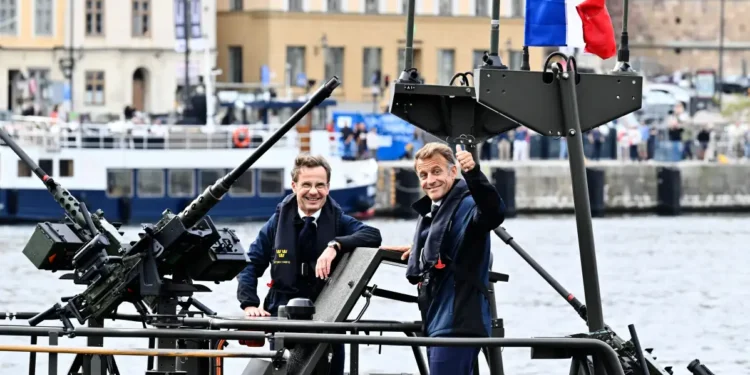
The €4.3 billion ($5 billion) agreement was signed on Monday during French President Emmanuel Macron’s visit to Sweden. The deal includes the warships, weapons and other equipment, as well as training for Swedish personnel.
The frigates will be equipped with advanced air-defence systems capable of intercepting ballistic missiles, along with torpedoes and long-range cruise missiles.
Swedish Prime Minister Ulf Kristersson said the vessels would provide Sweden with greater long-range capabilities and stronger protection against emerging missile threats. “These frigates will serve as platforms that will provide long-range capabilities at sea and protection against ballistic missiles,” Kristersson said. He added that Russia’s war in Ukraine had demonstrated the importance of being able to defend against such weapons.
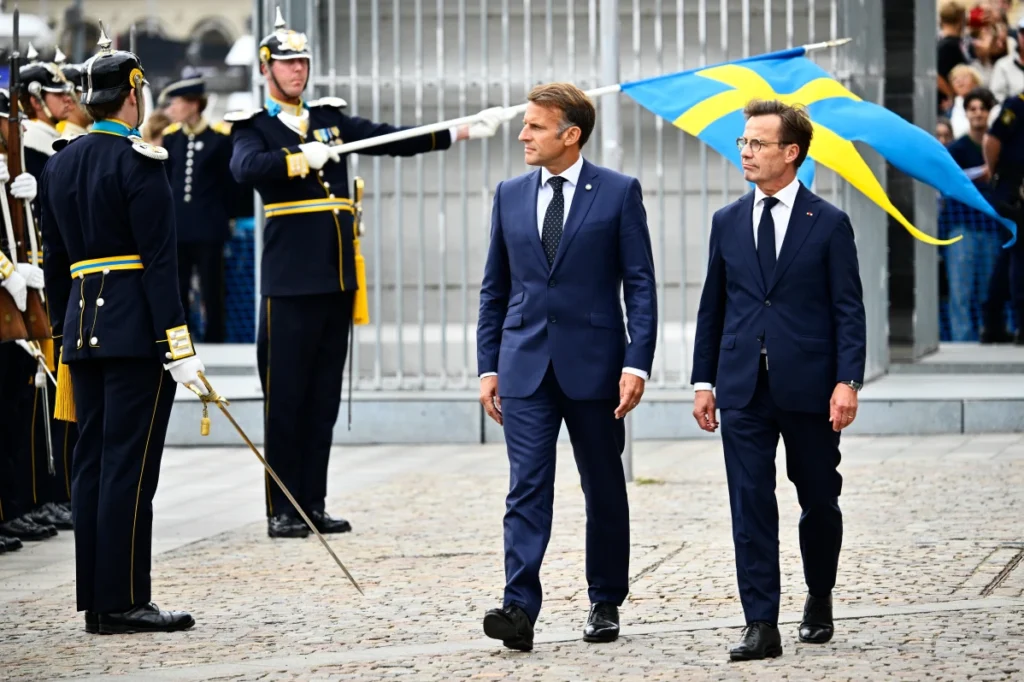
The agreement marks a significant expansion of defence cooperation between France and Sweden at a time when European governments are reassessing their military capabilities and seeking to strengthen the continent’s defence industry. The first frigate is expected to be delivered in 2030, according to French presidential officials.
French shipbuilder Naval Group will build the vessels, which will be based on the same class as France’s new defence and intervention frigates.The agreements were signed aboard the Amiral Ronarc’h, the first vessel in the new French frigate series. The ship was launched in 2022 and delivered to the French Navy in October 2025.
Macron described the agreement as a “major strategic cooperation” between the two countries, saying that it would contribute to strengthening Europe’s defence industrial and technological base. The deal comes as France continues to promote greater European military autonomy and reduce the continent’s reliance on the United States for security.
European allies have faced increasing pressure to expand their defence capabilities as Washington places greater emphasis on threats closer to home and security challenges in the Indo-Pacific. The Baltic Sea has become a particular focus of European security planning since Russia’s full-scale invasion of Ukraine in 2022.
Sweden’s strategic position in the region, combined with its extensive coastline and proximity to other NATO members, has increased the importance of its naval capabilities. Sweden joined NATO in 2024, becoming the alliance’s 32nd member after abandoning decades of military nonalignment following Russia’s invasion of Ukraine.
Its entry strengthened NATO’s position in northern Europe and brought Sweden more closely into the alliance’s collective defence planning.
Macron and Kristersson also held discussions on broader European security issues during the French President’s visit. Among the topics was Sweden’s possible participation in France’s initiative to coordinate its nuclear deterrence efforts with European allies.
Under the French proposal, France could temporarily deploy nuclear-capable aircraft to allied countries and allow partner nations to participate in exercises supporting French nuclear deterrence. Britain, Germany, the Netherlands, Belgium, Greece, Poland, Denmark and Norway have also expressed interest in the initiative.
The discussions reflect growing European efforts to develop additional security arrangements as governments assess the future of transatlantic defence cooperation. Defence ties between France and Sweden are already expanding beyond naval capabilities.
France ordered two GlobalEye surveillance aircraft from Swedish defence manufacturer Saab in December, strengthening cooperation between the two countries’ defence industries.The latest frigate agreement is therefore part of a broader effort to deepen bilateral defence cooperation while increasing European production of advanced military equipment.
For Sweden, the acquisition will provide additional naval capabilities at a time when the country is strengthening its military forces following its entry into NATO. For France, the deal provides an opportunity to expand its defence-industrial partnerships within Europe while supporting its broader push for greater strategic autonomy.
The agreement also highlights the increasingly interconnected nature of European defence planning. As countries seek to respond to a more challenging security environment, governments are investing in naval forces, air defence, surveillance systems and other capabilities while encouraging greater cooperation among European defence industries.
The delivery of the four frigates will take several years, with the first vessel not expected until 2030. However, officials in both countries view the agreement as an important long-term investment in national and European security.
As France and Sweden deepen their defence partnership, the deal signals a broader shift in European security policy: greater military investment, stronger regional cooperation and increased reliance on European defence industries as NATO members adapt to a changing strategic environment.