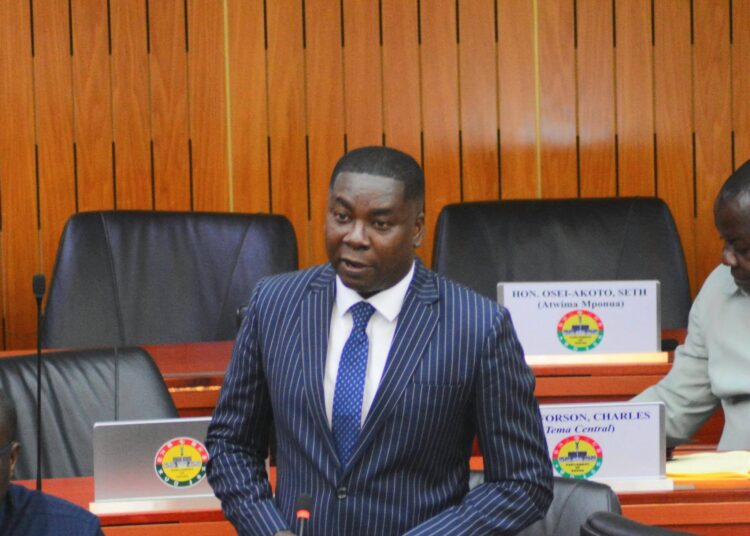
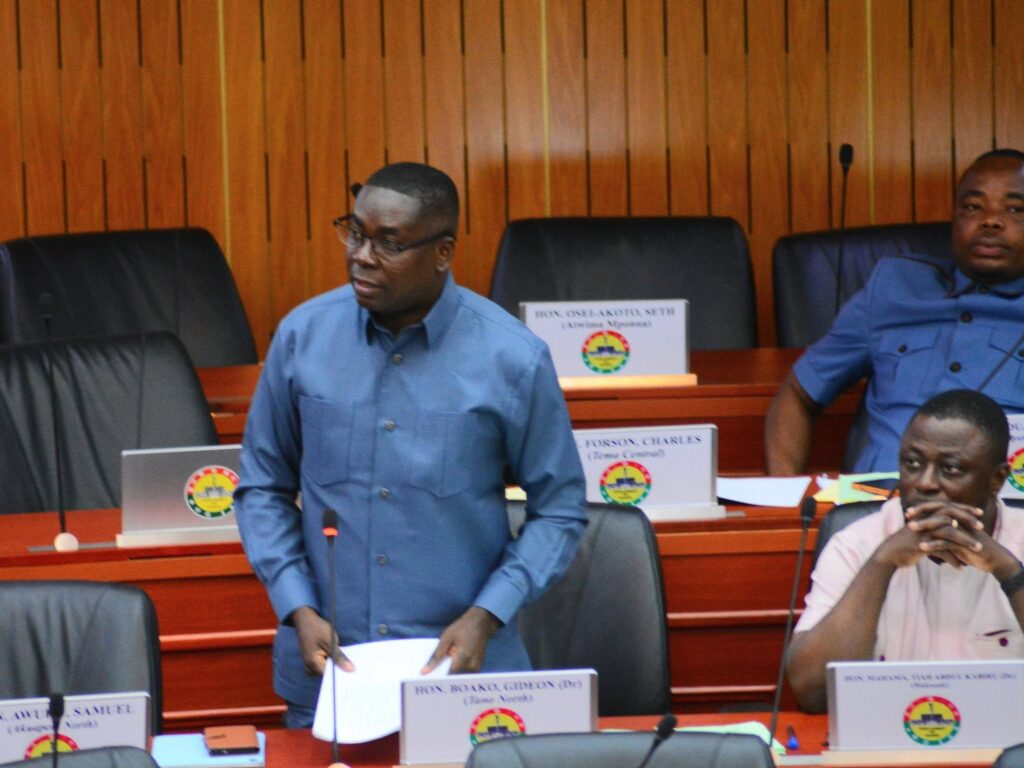
Member of Parliament for Tano North and economist, Hon. Gideon Boako, has asserted that the strategic interventions conceptualized and executed under the former Vice President of Ghana, Dr. Mahamudu Bawumia’s leadership have established an unprecedented sovereign buffer, effectively anchoring national currency stability amidst systemic global financial volatility.
According to the Hon. Gideon Boako, Dr. Mahamudu Bawumia successfully engineered a transformative monetary policy mechanism through gold backing to insulate the Ghanaian cedi against global macroeconomic shocks and structural foreign exchange deficits.
“The Bretton Woods (International Monetary Fund and World Bank Group) order is fraying. Sanctions have weaponized reserves, debt distress has crippled commodity exporters, and persistent inflation has eroded confidence in fiat anchors. From Washington to Nairobi, central bankers are asking the same question: What can credibly back our currencies in a fragmented world?”
Hon. Gideon Boako,

While expanding on the mechanics of this financial framework, Hon. Gideon Boako highlighted how Dr. Bawumia navigated severe macroeconomic constraints including acute dollar shortages and stringent IMF programme caps on direct central bank interventions limited to $80 million by operationalizing the Domestic Gold Purchase Programme alongside the Gold-for-Oil policy.
Rather than succumbing to fiscal paralysis, Ghana systematically transformed its domestic extractive yield into strategic reserves, scaling central bank gold holdings from 8 tons to over 31 tons while propelling Gross International Reserves past the historic $9 billion mark by late 2024, far outperforming IMF projections and securing critical policy flexibility for 2025.
The Fraying Bretton Woods Architecture and National Currency Vulnerability
The global financial system is currently confronting structural friction, as traditional sovereign reserve strategies encounter heightened geopolitical and inflationary risks. Across emerging markets, central banks face an era where conventional fiat reserve holdings are increasingly susceptible to external sanctions, inflationary decay, and abrupt capital outflows.
For commodity-exporting economies across Sub-Saharan Africa, foreign exchange volatility has historically triggered debt distress, imported inflation, and severe currency depreciation.
Under these challenging conditions, reliance on conventional multilateral stabilization frameworks often leaves developing nations exposed to liquidity bottlenecks.
When external shocks restrict access to international capital markets, developing economies encounter systemic foreign exchange deficits that undermine domestic price stability.
Ghana’s strategic shift reflects a proactive recognition that relying solely on external fiat allocations is insufficient during periods of systemic global fragmentation, necessitating localized, resource-backed economic anchors.
Gold as Strategic Infrastructure and Domestic Economic Anchors
Dr. Mahamudu Bawumia’s policy shift reframes gold from a passive bullion asset into active, operational economic infrastructure.
By designing mechanisms that systematically channel locally extracted gold into the Bank of Ghana’s balance sheet and leveraging bullion directly for vital energy imports, the strategy directly addressed the root driver of cedi depreciation: the perpetual demand for foreign currency to fund import bills.
This structural realignment generated immediate relief across the domestic foreign exchange market. By directly satisfying bulk oil distributors’ import demands through gold settlements, the economy bypassed market dollar competition, arresting speculative runs on the cedi.
The resulting reserve build-up not only reinforced external liquidity metrics but also fundamentally altered the sovereign balance sheet, earning recognition from international financial institutions regarding the tangible impact of these non-traditional monetary tools.
Reimagining Extractive Governance for Long-Term Sovereign Resilience
The successful deployment of gold-backed policy instruments provides a sustainable blueprint for resource-rich developing nations seeking macroeconomic sovereignty.
Hon. Gideon Boako emphasized that turning raw extractive wealth into central bank reserves establishes a resilient shield against global shocks, demonstrating that economic stability can be built through innovative resource management.

By bridging domestic natural resource extraction with sovereign central bank balance sheets, Ghana has established a pioneering precedent within the extractive and monetary landscape.
As global monetary paradigms continue to shift, the institutionalization of gold as monetary infrastructure ensures that Ghana retains structural stability, safeguarding the cedi while offering a transformative model for emerging market resilience across the global South.
READ ALSO: “Error in Judgment” Admitted in Haaland’s Goal in Manchester Derby