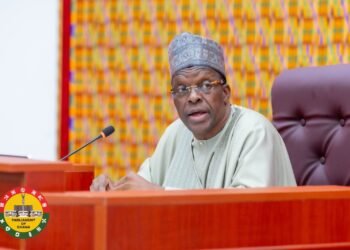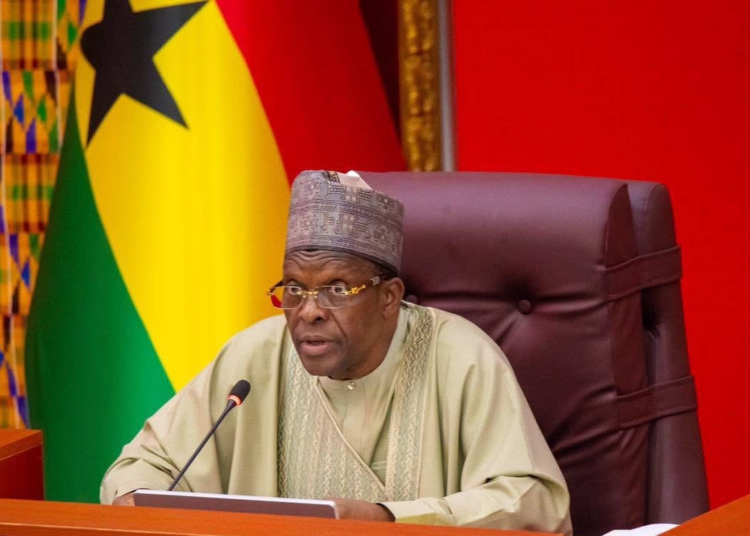
The Speaker of Parliament, Rt. Honourable Alban Kingsford Sumana Bagbin, has dismissed a Minority motion seeking an ad hoc parliamentary inquiry into major narcotics seizures linked to Ghana. Delivering his ruling at Parliament’s emergency sitting on Tuesday, September 29, 2026, Rt. Honourable Bagbin held that the proposed investigation substantially overlaps with ongoing criminal investigations and judicial proceedings.
The motion, filed by First Deputy Minority Whip and Member of Parliament for Tolon, Habib Iddrisu, sought the establishment of an ad hoc committee to examine how major narcotics consignments were processed, inspected, cleared and exported from Ghana. The proposed inquiry followed the seizure of nearly 3.9 tonnes of cocaine by French Customs at Dunkirk on September 10, alongside other drug interceptions linked to Ghana.

Explaining the basis of his decision, the Speaker noted that the proposed committee could be required to examine evidence, witnesses, conduct and questions of responsibility that are already relevant to matters before the courts. He therefore determined that allowing the inquiry to proceed in its present form could interfere with the judicial process.
“The proposed parliamentary enquiry will traverse factual matters directly connected with matters presently engaging the criminal justice process.”
Rt. Honourable Alban Kingsford Sumana Bagbin,
Directing attention to the proposed committee’s terms of reference, the Speaker explained that its work would require Parliament to assess how the transactions occurred and determine why certain actions or inactions took place at ports of entry. He noted that such an exercise could ultimately lead the House into determining questions reserved for a court of competent jurisdiction.
The Speaker subsequently invoked Standing Orders 5, 6 and 103, Sub-rule F, in declaring the Private Member’s Motion inadmissible. His ruling brought the Minority’s immediate attempt to establish a dedicated committee on the narcotics seizures to an end.

Rt. Honourable Bagbin also clarified that his decision is based on the form and timing of the motion rather than the substance of the allegations surrounding the seizures. He explained that the ruling did not mean Parliament is permanently barred from examining issues connected to narcotics trafficking.
Speaker Bagbin Keeps Parliamentary Oversight Open After Narcotics Ruling
The Speaker of Parliament, Rt. Honourable Alban Kingsford Sumana Bagbin, has clarified that his rejection of the Minority’s narcotics motion does not prevent Parliament from scrutinising Ghana’s drug control systems.
He explained that lawmakers could still examine the performance of public institutions and assess the adequacy of the country’s legal and regulatory framework.
Rt. Honourable Bagbin stressed that the ruling is procedural and did not amount to a determination of the allegations surrounding the narcotics consignments. He explained that Parliament retains its constitutional oversight responsibilities provided that any further action complies with the Constitution and the Standing Orders.
The Speaker outlined several areas that lawmakers could pursue without conducting a parallel fact-finding process on matters currently before the courts. These include seeking information from Ministers, scrutinising the performance of relevant state institutions and examining whether existing narcotics control legislation and regulations are adequate.
Furthermore, Rt. Honourable Bagbin also pointed to port security, border security and national narcotics policy as areas that Parliament could consider independently. He emphasised that such scrutiny must remain within the limits required to protect ongoing judicial proceedings.
“What Parliament must avoid is conducting a parallel fact-finding exercise which may prejudice the interest of parties whose cases are presently before the courts.”
Rt. Honourable Alban Kingsford Sumana Bagbin,
Referencing the procedural basis of his ruling, the Speaker further reminded MPs that Private Members’ Motions have a specific meaning under Parliament’s Standing Orders. He explained that such motions allow individual members, acting outside their capacity as members of leadership or committees, to request parliamentary action or express an opinion on a matter of public interest.

The clarification is significant because the Minority’s motion was framed as a request for a dedicated investigation into the processing and movement of narcotics consignments. The Speaker indicated that the issue could still receive parliamentary attention through other mechanisms that do not duplicate the work of the courts.
Additionally, Rt. Honourable Bagbin linked the matter to Parliament’s wider constitutional responsibility to balance oversight with respect for judicial proceedings. He urged lawmakers to defend the right of the Minority to scrutinise government while also protecting the integrity of institutions and the rights of persons involved in pending cases.
The Speaker also connected the narcotics debate to the constitutional process that brought Parliament back from recess. He explained that members who secured the required support were entitled to request the meeting, while the Speaker had a corresponding constitutional duty to summon the House.
Nonetheless, he noted that every motion placed before Parliament remains subject to the Standing Orders governing admissibility. The emergency sitting therefore enabled the House to consider the proposed inquiry, but the procedural requirements ultimately prevented the motion from proceeding in its current form.
READ ALSO: Speaker Bagbin Urges MPs To Uphold Civility In Political Debate