Ukraine is facing a $27 billion funding gap as the total cost of its war with Russia is projected to reach $155 billion this year, raising concerns about the government’s ability to sustain combat operations into 2027.
Prime Minister Sergii Koretskyi disclosed that the government was exploring spending cuts, budget reallocations and additional financial support from international partners to bridge the shortfall and ensure that military operations could continue at the beginning of next year.
According to Koretskyi, the government plans to cover $7 billion of the deficit by postponing some expenditure, redirecting funds from other areas of the national budget and reducing certain costs. Discussions are also underway with international partners to secure the remaining $20 billion.
The funding challenge comes as Ukraine continues to face mounting military expenditure amid Russia’s sustained attacks on its territory, particularly its energy infrastructure. The growing use of missiles and drones has also increased the financial demands of the conflict, according to Ukrainian officials.
The $155 billion projection represents the first time Kyiv has publicly disclosed an estimate of its annual war costs. Consequently, there is no directly comparable figure for 2025, making it difficult to measure the precise year-on-year increase in expenditure.
However, Ukrainian officials have indicated that the financial burden of the conflict has continued to grow as military operations become increasingly dependent on expensive missile and drone technology.
Koretskyi’s remarks come amid renewed Russian attacks on Ukraine’s energy infrastructure, with overnight strikes targeting facilities in Kyiv and several other regions, causing damage to civilian infrastructure and disrupting essential services.
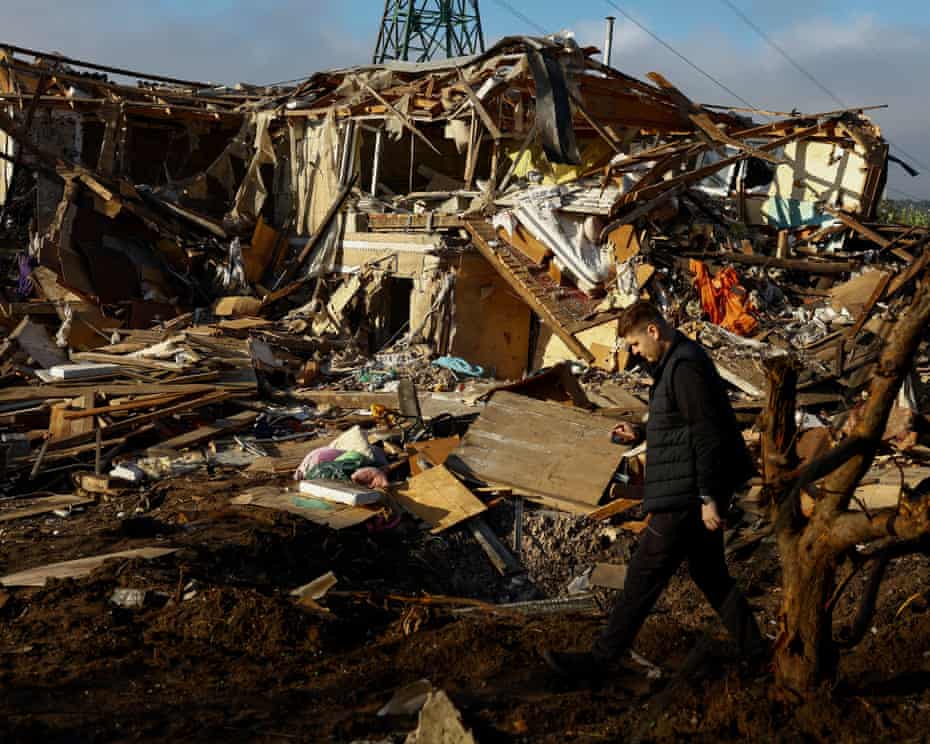
The Prime Minister described the latest bombardment as an escalation in the scale of Russia’s attacks on the country’s energy network. “This was the first time such a massive and combined attack had taken place since the end of the last heating season,” Koretskyi said.
President Volodymyr Zelenskyy also described the overnight bombardment as a difficult attack, reporting that Russia had launched nearly 190 attack drones alongside ballistic missiles.
“The main target was energy infrastructure in the capital and the Kyiv region. Residential buildings were also damaged. Work is ongoing to restore electricity and water supplies everywhere they are currently unavailable.”
Volodymyr Zelenskyy
The Ukrainian President reported that the strikes had affected several regions, with emergency responders working to contain fires, assess damage and restore essential services.

According to Zelenskyy, a drone struck a grocery supermarket in Ivankovychi, where first responders were working to extinguish a fire. Kyiv also came under drone attack, with a warehouse building hit and one person killed.
He further reported strikes on critical infrastructure in the Zhytomyr, Mykolaiv, Kirovohrad and Rivne regions, while damage was also recorded in Odesa, Sumy, Kharkiv, Kherson and Cherkasy. As of his statement, 14 people had been injured across the country, while five had been killed, including a child.
The attacks have added to the pressure on Ukraine’s already strained infrastructure, with the disruption of electricity and water supplies posing further challenges as the country approaches the colder months.
Russian Strikes Heighten Security Concerns As Poland Scrambles Jets
The latest Russian bombardment has also heightened security concerns in Kyiv and neighbouring Poland, following reports of damage to civilian facilities and debris found near a foreign diplomatic mission in the Ukrainian capital.
Kyiv Mayor Vitali Klitschko said that debris had been discovered on the premises of an embassy belonging to one of Ukraine’s Western partners in central Kyiv. Citing preliminary information, he said that emergency services were heading to the location but did not identify the diplomatic mission.
The discovery came amid another night of Russian drone and missile attacks targeting energy facilities and other infrastructure across Ukraine.
Russia said that its forces had targeted a communications centre and energy facilities in Kyiv, as well as port infrastructure in Izmail, among other locations.
The attacks also prompted neighbouring Poland to raise its military readiness. Authorities issued a high-readiness emergency alert to residents in the country’s south-eastern regions as the military scrambled aircraft to monitor the situation and respond to potential threats.
The latest developments underscore the wider security implications of Russia’s continued attacks on Ukraine, particularly for neighbouring countries monitoring the conflict and its potential spillover effects.
Meanwhile, the damage to Ukraine’s energy infrastructure and the rising cost of military operations have added to the financial challenges facing Kyiv. With the government seeking to bridge its $27 billion funding gap, the ability to sustain military operations while financing essential public services remains a central concern as Ukraine prepares for 2027.
READ ALSO: Plane Makes Emergency Landing In Saudi Arabia After Pilot Brawl