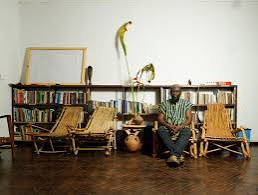
Ghanaian artist, poet and educator kąrî’kạchä seid’ou has been named the sole recipient of the 2026 Prince Claus Impact Award. The announcement recognises more than two decades of work that has reshaped art education and contemporary artistic practice in Ghana and across West Africa.
The Prince Claus Fund selected seid’ou as its 2026 Impact Awardee while marking its 30th anniversary and the centenary of the birth of Prince Claus. Unlike previous editions that recognised multiple practitioners, this year’s Impact Award is being conferred on a single recipient.
The formal presentation will take place at the Royal Palace in Amsterdam on November 26, 2026, during the Fund’s 30th Anniversary Awards Week, scheduled from November 23 to 28.
seid’ou, born in 1968 in Accra, serves as Dean of the Faculty of Art at the Kwame Nkrumah University of Science and Technology (KNUST) in Kumasi. He is the Faculty of Art’s longest-serving dean in the new millennium. His entire education, training and professional practice have taken place in Ghana, and he has never travelled outside Africa.
In 2003, following his appointment as a lecturer, seid’ou conceived and implemented the Emancipatory Art Teaching Project. The initiative fundamentally transformed the fine art curriculum in the Department of Painting and Sculpture at KNUST across its Bachelor of Fine Arts, Master of Fine Arts and doctoral programmes.
The project challenged inherited colonial models of art education and introduced approaches that prioritised critical engagement, collective practice and non-proprietary forms of artistic production.
He is widely regarded as Ghana’s leading figure in non-proprietary art. Since the early 1990s, he has advanced the concept of “art without default,” promoting practices in which knowledge and creative output are shared rather than owned.
As co-founder of blaxTARLINES, an open-source, artist-run community based in Kumasi, he helped establish a platform where artists, curators and cultural practitioners collaborate outside conventional market and institutional structures.
The Prince Claus Fund described seid’ou as a practitioner who has transformed not only what art can be, but also how it can be taught, shared and imagined. His influence is reflected in the generations of artists, curators and scholars who emerged from the programmes he helped reshape.
Many of his former students and mentees now form a significant part of Ghana’s contemporary and post-contemporary art scene and have gained international visibility.

An independent jury comprising Ibrahim Mahama, Daniela Ortiz and Fatima Bintou Rassoul Sy selected the 2026 recipient. The jury reviewed extensive research, shortlisted four finalists and reached a unanimous decision. Ibrahim Mahama, a jury member and himself a former Prince Claus Awardee, noted that seid’ou’s approach has profoundly changed how art is perceived and practised.
seid’ou’s scholarly work includes an archival reconstruction of Ghana’s art education history that earned the Silver Award, the highest honour given by the Ghana Academy of Arts and Sciences for a doctoral thesis. His research interests span modern and contemporary African art, non-proprietary art practice, curating, cultural heritage and emancipatory pedagogy.
About the Impact Award
The Impact Award is presented biannually by the Prince Claus Fund to artists whose work has made a widely positive contribution to their societies. Recipients receive a grant and formal recognition at a ceremony in Amsterdam. The Fund emphasises practices that engage with urgent social issues and demonstrate sustained impact within local communities.
For the Ghanaian art community, the recognition highlights a pedagogical and artistic movement developed primarily in Kumasi that has influenced discourse far beyond Ghana’s borders. seid’ou’s preference for working quietly and remaining based in Africa has not limited the reach of his ideas. His methods have contributed to broader conversations about decolonial approaches to art education and the redistribution of cultural authority.
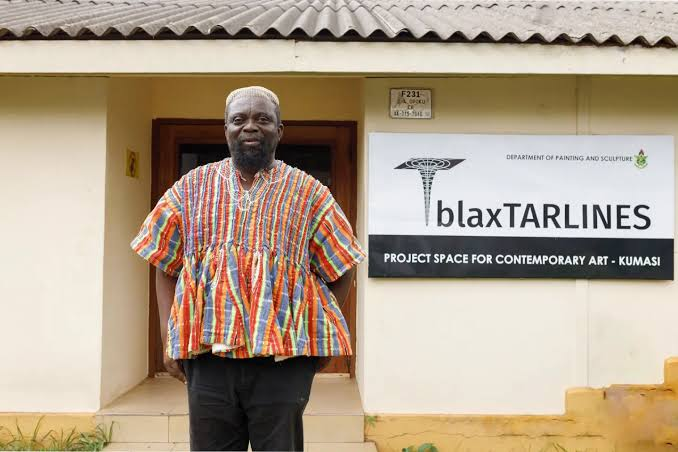
As preparations continue for the November ceremony, attention remains on the communities and practitioners shaped by seid’ou’s long-term commitment. The award places international focus on an educational experiment that began at KNUST and continues to generate new forms of artistic collaboration and critical practice across the region.
READ ALSO:Eduwatch Calls For Urgent Resolution To Teachers’ Strike