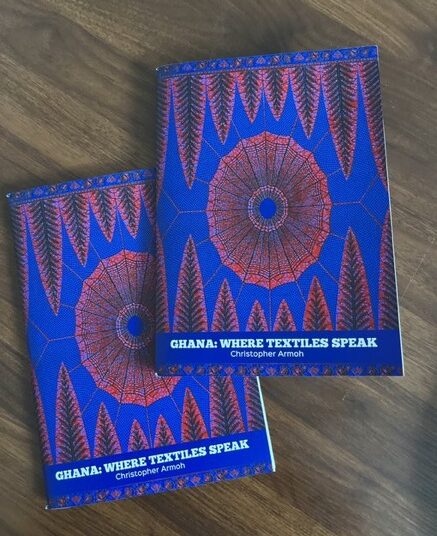
Ghanaian poet, cultural researcher, and archivist Christopher Armoh has released a new community-based book that captures the names, symbolism and living cultural knowledge of Ghanaian wax-print textiles.
Titled Ghana: Where Textiles Speak, the work was publicly shared on social media on 2 October 2026 and is available free under a Creative Commons Attribution-NonCommercial-NoDerivatives 4.0 International license.
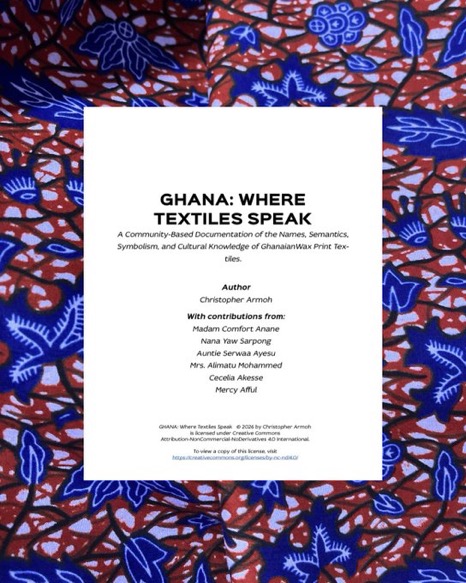
The project is described as a documentation effort rooted in conversations with knowledge holders rather than academic theory alone. The book carries contributions from Madam Comfort Anane, Nana Yaw Sarpong, Auntie Serwaa Ayesu, Mrs. Alimatu Mohammed, Cecelia Akesse and Mercy Afful.
These collaborators supplied the oral histories, proverbs and market-derived names that give the brightly patterned cloths their deeper meanings.
Wax prints, also called African prints or Ankara, occupy a central place in Ghanaian dress culture. Although the industrial technique originated with European adaptations of Indonesian batik in the nineteenth century, West African communities rapidly claimed the fabrics as their own.
Designs acquired local names that encode proverbs, social commentary, marital advice, economic wisdom, and historical memory. A pattern of birds in flight may warn that “money has wings.” Circles resembling ripples in a well can remind wearers that every action creates consequences.
Other motifs speak of forgiveness, household responsibility or the quiet strength of a mother who knows what her children need. Elders and market women have long treated these textiles as a non-verbal language capable of communicating moods, status, and intentions without a single spoken word.
That language is under quiet threat. Younger generations often select fabrics for colour and beauty alone, unaware of the messages the patterns once carried. Rapid urbanisation, the dominance of cheap Chinese imports and the flood of second-hand clothing into markets such as Accra’s Kantamanto have further loosened the everyday transmission of this knowledge.
Ghana’s Textile Manufacturing Sector
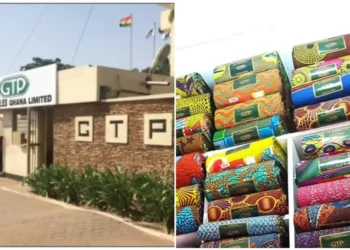
Ghana’s own textile manufacturing sector, once a pillar of post-independence industrial ambition, has contracted sharply over decades. Production that once measured in the tens of millions of yards has fallen dramatically, leaving cultural meaning increasingly dependent on oral tradition rather than living industrial practice.
Armoh’s book arrives as part of a broader wave of cultural recovery work. The poet, who holds a bachelor’s degree in English from Kwame Nkrumah University of Science and Technology and is a 2025 Adinkra Prize winner, has built a public practice that moves fluidly between poetry, storytelling, fashion, and archival research. He founded Grio Commons, a platform that explores Ghanaian creative heritage, and hosts the Take Um So podcast.
In 2026 he was named a LOATAD Black Atlantic resident. His earlier writing has appeared in journals and anthologies that examine identity, memory, and social consciousness. Ghana: Where Textiles Speak extends that commitment into material culture, treating the cloth itself as a primary text.
The volume does not claim encyclopaedic completeness. Instead, it models a method: sit with the people who still know the names, record the stories attached to specific designs, and place those stories in the public domain so they cannot disappear.
By releasing the work under a non-commercial Creative Commons license, Armoh ensures that schools, community groups, designers, and researchers can access and share the material without financial barriers, provided they credit the source and do not alter the content for profit.
The timing is significant. Across Ghana and the wider West African region, conversations about cultural ownership, sustainable local production and the politics of dress have intensified. Recent policy discussions have focused on revitalising cotton cultivation and textile manufacturing.
Fashion fairs and heritage initiatives increasingly emphasise materials and makers rather than finished garments alone. In that climate, a freely available record of the symbolic vocabulary of wax prints supplies both practical reference material and a reminder that textiles remain one of the most democratic forms of cultural expression.
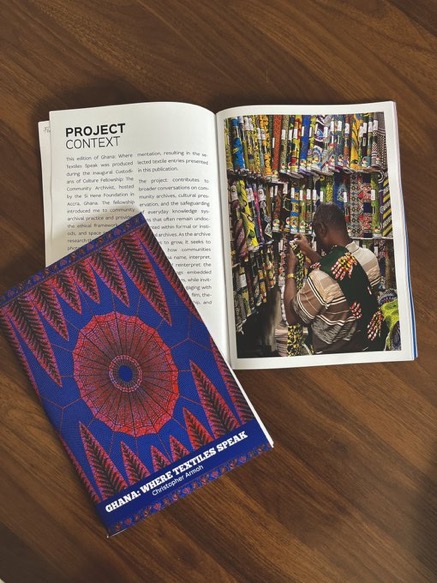
Readers who download the book will encounter more than a catalogue of patterns. They will find a collective act of memory: elders insisting that the cloth still speaks, and a younger cultural worker determined to write down what the cloth has always said.
In a country where fabric has long doubled as both clothing and communication, Armoh’s project affirms that the conversation is far from over.
READ ALSO:AfDB Rating Initiative Puts Ghana’s Borrowing Costs in Focus