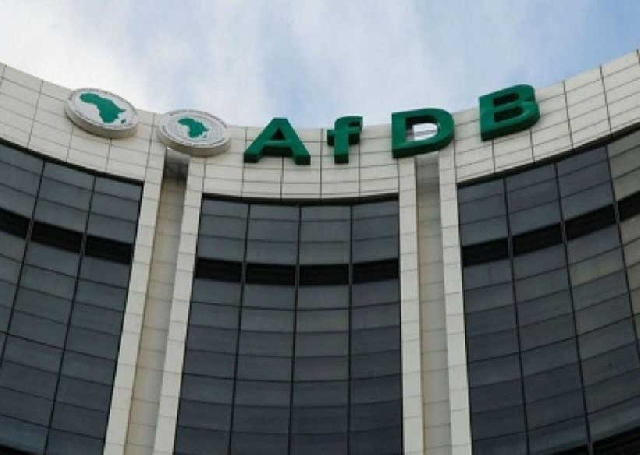
African Development Bank’s plan to help African governments prepare more effectively for sovereign credit ratings has put the cost of sovereign borrowing back into focus for Ghana, just as the country rebuilds its credit standing after restructuring and looks toward an eventual return to international capital markets.
AfDB President Sidi Ould Tah said at an S&P emerging-markets conference in London on Thursday that the initiative would operate through the African Legal Support Facility and concentrate on better data, transparency and preparation for ratings.
He argued that gaps in data and market infrastructure can reinforce perceptions of high risk and raise African borrowing costs. Tah said only three of Africa’s 54 countries are currently investment grade.
For Ghana, the issue is immediate. The latest S&P assessment kept the sovereign at B-/B with a stable outlook, while the IMF’s latest debt sustainability analysis classifies Ghana at moderate risk of debt distress and assumes a first new Eurobond issuance in 2028.
Those gains improve Ghana’s country-specific risk profile, but they do not insulate the government from a global bond market where benchmark yields are rising sharply.

Ratings Shape Costs
Sovereign ratings affect investor mandates, risk limits, and the price at which governments can issue debt. Better data and more transparent fiscal and debt reporting can reduce uncertainty around a sovereign, but they cannot substitute for economic fundamentals.
Ratings still reflect debt-service capacity, fiscal balances, growth, reserves, institutions and exposure to external shocks. The African Legal Support Facility notes that stronger sovereign ratings can facilitate access to international capital markets and influence financing terms.
The AfDB plan is therefore better understood as an attempt to improve the quality of sovereign information and engagement with rating agencies, rather than a mechanism that automatically produces upgrades. For Ghana, credible numbers on public debt, contingent liabilities, state-owned enterprises, reserves, revenue and debt service remain central.
Ghana Rebuilds Credit
Ghana has moved away from default-era ratings after domestic and external debt restructuring, stronger fiscal outcomes and improved external buffers. The latest S&P assessment nevertheless kept a stable outlook while highlighting continuing fiscal and external risks.
At the same time, the government’s fiscal buffers show that large restructured domestic bond maturities in 2027 and 2028 remain an important test of the recovery. The IMF’s debt analysis says Ghana’s market-financing risks are moderate, but gross financing needs are projected to peak at 16.3 percent of GDP in 2028. Its baseline assumes Ghana’s first post-restructuring Eurobond issuance in that year.
The Fund also expects domestic debt-service pressure to surge in 2027 and 2028 as DDEP bonds mature. A return to external markets would therefore need to complement, rather than replace, disciplined domestic debt management.

A better sovereign rating can narrow Ghana’s country spread, reducing the premium investors demand above safer global benchmarks. Yet timing matters. Entering international markets when global yields are elevated can still lock government into expensive coupons even if Ghana’s own risk premium has improved.
Global Yields Tighten
That is the key new complication. Reuters reported on Thursday that the US 10-year Treasury yield reached 5.34 percent, its highest since 2002, as a global bond sell-off pushed government borrowing costs higher.
The US Treasury yield is a major benchmark for dollar sovereign borrowing, meaning future Ghanaian Eurobond pricing would reflect both the global base rate and Ghana’s country-specific spread.
Economically, this creates a two-part challenge. Domestic reforms and better ratings preparation can reduce Ghana’s risk premium, but policymakers cannot control the global risk-free rate.
A large decline in Ghana’s spread can therefore be partly or fully offset by a rise in benchmark yields. The relevant test is not only the rating letter itself, but the total financing cost, maturity and refinancing risk attached to any new borrowing.
Market Return Needs Discipline
The AfDB initiative arrives as African governments seek deeper local capital markets and less dependence on costly external borrowing. For Ghana, that fits the current shift toward longer-dated domestic issuance and pre-funding future debt service rather than relying immediately on Eurobonds.

Better ratings preparation can strengthen investor communication ahead of eventual re-entry, but sequencing remains critical. Ghana’s strongest case to rating agencies and investors will come from demonstrable fiscal discipline, credible debt data, durable reserves, sustained growth and tighter management of contingent liabilities.
If those fundamentals improve while global yields normalise, international market access could become less costly. If domestic fundamentals weaken or benchmark yields remain high, better presentation alone will not remove financing pressure.
The AfDB plan is therefore relevant to Ghana not because it guarantees a ratings upgrade, but because sovereign information quality has become part of financing strategy. After restructuring restored breathing space, the next phase is proving that improved creditworthiness can translate into durable capital-market access without rebuilding the debt vulnerabilities that closed Ghana out of international markets in the first place.
READ ALSO: BoG Governor Signals Sharp Drop in Ghana’s Borrowing Costs