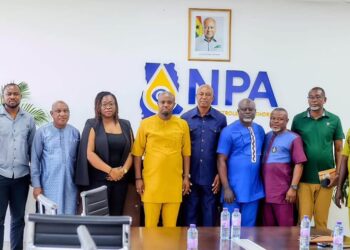
Dr. Kenneth Bansah, a prominent extractive sector scholar and professional engineer, has cautioned against the total offshore shipment of Ghana’s artisanal and small-scale mining (ASM) gold output, arguing that the practice risks exhausting a non-renewable national asset for short-term economic relief.
The mining engineer stressed that while gold trading is rapidly becoming a cornerstone of Ghana’s national development framework through central institutions, exporting virtually all domestically sourced bullion deprives the state of long-term economic security.
“There is value in keeping a substantial quantity of the gold we produce domestically instead of shipping almost everything offshore. Beginning September 1, 2026, GoldBod required ASM gold covered by its export arrangements to be refined locally before export. These are good initiatives, but refining the gold locally is different from retaining it locally.”
Dr. Kenneth Bansah
Dr. Bansah expanded on his position by highlighting the underlying risks of the current central trading setup managed by GoldBod, which was established in 2025 to streamline purchases from the small-scale sector.

Although the institution has registered massive success by capturing hundreds of tonnes of small-scale gold and generating staggering foreign exchange returns to anchor the cedi, Dr. Bansah maintained that using rapid mineral extraction solely for short-term currency stabilization is inherently flawed.
Because gold reserves naturally deplete over time while holding increasing historical value, the current strategy of exporting almost every ounce retrieved leaves the state vulnerable once domestic deposits are spent.
Rethinking Resource Retention and National Reserves
Dr. Bansah noted that while government interventions mandating local refining before offshore dispatch represent a step forward, they fail to address the core problem of mineral retention.
Under the current regulatory directives implemented in late 2026, all ASM gold routed through official channels must undergo local refining, with a overarching policy objective to refine all gold produced across Ghana domestically by 2030.

However, the policy continues to treat local value addition merely as a pitstop before liquidation.
The scholar questioned whether state authorities have formulated an explicit roadmap to retain a significant portion of this refined gold within the Central Bank’s strategic vault assets.
By failing to convert physical gold into sovereign strategic reserves, the nation risks selling off its wealth today while leaving future generations with depleted mines and no tangible safety net.
The Imperative for Sustainable Extraction Frameworks
The fundamental driver behind Dr. Bansah’s campaign is the inherent contradiction between rapid resource extraction and the principles of sustainable economic development.
Mineral resources are finite, and once extracted and sold, their generational wealth transfer vanishes unless converted into long-term strategic assets.
Across global resource-rich economies, national resilience is built not merely by balancing trade deficits through immediate sales, but by accumulating physical bullion reserves that act as a hedge against global economic shocks, currency devaluation, and inflation.
If Ghana continues to prioritize short-term foreign exchange inflows over long-term reserve building, the country risks liquidating its natural capital without securing intergenerational equity.
Building Intergenerational Wealth Through Strategic Buffers
To ensure that the artisanal and small-scale mining sector contributes meaningfully to long-term national growth, policy frameworks must shift from aggressive export optimization to structural reserve building.
Dr. Bansah insists that state planners must define a clear percentage of all refined ASM gold that must be retained permanently within national sovereign reserves.
Combining mandatory domestic refining with an aggressive domestic retention quota allows Ghana to retain real wealth within its borders, securing a stable macroeconomic environment for generations to come.
READ ALSO: BoG Warns Rapid Credit Growth Could Trigger Bank Losses