Ghana’s proposed 1,450-megawatt (MW) state-owned thermal power plant could face a significant fuel-supply challenge if the Government does not secure additional natural gas beyond the volume already identified for the project.
The concern centres on the Government’s plan to fuel the larger facility with approximately 150 million standard cubic feet of gas per day, the same volume that the 2026 Budget had identified as sufficient to support a 1,200MW power plant.
The Africa Centre for Energy Policy (ACEP), in its analysis of the 2027 Budget, has questioned the technical assumptions underpinning the expansion, arguing that the additional generating capacity has not been matched by a corresponding increase in the stated gas requirement.
The Government intends to begin construction of the 1,450MW facility at Kafodzidzi-Abrobeano in the Central Region in December 2026. The first 600MW is expected to be completed by December 2028, with the remaining 850MW scheduled for December 2030.
The project is expected to be fully funded and owned by the state, forming a major part of the Government’s strategy to strengthen domestic electricity generation and phase out emergency power plants by 2030.
However, ACEP argues that the fuel requirement deserves closer scrutiny before the project moves further into implementation.
In its report, the centre states:
“Yet the same 150 MMscf of gas per day is expected to fuel the larger plant, despite the 2026 Budget stating that this volume was sufficient for up to 1,200 MW.”
The discrepancy raises questions about whether Ghana’s gas infrastructure and upstream production plans can support the proposed generation capacity without creating additional fuel costs or reliability risks.
More Generating Capacity Requires More Fuel
The relationship between a thermal plant’s generating capacity and its fuel requirement is central to determining whether the facility can operate reliably.
A power plant may be completed on schedule, but without sufficient gas supply it may be unable to operate at its intended capacity.
This could force the operator to reduce generation or rely on alternative fuels, potentially increasing electricity production costs.
ACEP estimates that, using the same gas-to-generation ratio applied in the 2026 Budget, the proposed 1,450MW plant would require approximately 181 million standard cubic feet of gas per day rather than 150 million.
That estimate represents a material difference in the fuel volume that must be secured.
The issue is particularly important because Ghana’s electricity system already relies heavily on thermal generation, with natural gas playing a major role in supplying power to households, businesses and industry.
The Government’s plan to add more thermal capacity is intended to improve energy security and provide dependable electricity for industrial expansion. But the additional capacity will only strengthen security if the fuel supply is equally dependable.
The risk is that Ghana could invest heavily in a new generation facility without adequately resolving the upstream and midstream requirements necessary to operate it.
The Missing Processing Infrastructure Question
ACEP also draws attention to the omission of the proposed second gas processing plant from the 2027 Budget’s description of the thermal project.
The 2026 Budget had linked the additional 150 million standard cubic feet of gas per day from the Sankofa and Jubilee fields to the second Ghana Gas processing plant, which was expected to handle additional volumes from Jubilee.
However, ACEP says the 2027 Budget does not mention the facility, despite a Government Technical Implementation Committee having worked on the project under a proposed public-private partnership arrangement.
The omission creates uncertainty about how additional Jubilee gas will be processed and delivered to the new power plant.
Gas production alone does not guarantee that the fuel will be available for electricity generation.
The gas must be processed to the required specifications and transported through the necessary infrastructure before it can be used by thermal facilities.
If processing capacity is delayed, the power plant could face difficulties securing the volumes required for commercial operations.
ACEP warns in its analysis:
“It also risks leaving the new plant idle or reliant on costly liquid fuels if the processing plant lags behind the December 2028 power deadline.”
This is a particularly important concern given the financial pressures already facing Ghana’s energy sector.
The 2027 Budget reports an annual energy-sector shortfall of approximately US$1.4 billion in 2025, while arrears to Independent Power Producers and fuel suppliers stood at about US$1.7 billion.
A new thermal plant that cannot secure affordable gas could add to the financial burden rather than help reduce it.
Gas Planning Must Match Generation Expansion
The Government’s wider energy infrastructure programme includes the proposed 600MW state-owned solar plant supported by 2,000 megawatt-hours of battery storage, alongside the 1,450MW thermal facility.
The two projects are expected to support electricity supply for households and industries, including energy-intensive activities such as bauxite and manganese processing.
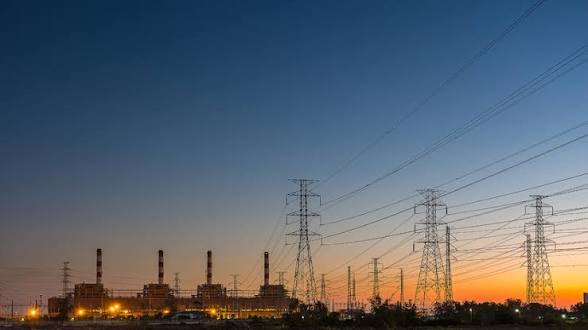
However, the proposed thermal plant introduces a long-term fuel commitment that must be assessed alongside the country’s upstream production outlook, gas-processing capacity and competing domestic demand.
Ghana’s mature oil and gas fields are also facing production challenges, making it important to distinguish between gas volumes identified in project announcements and volumes that can be delivered consistently over the life of a power plant.
The Government must therefore clarify whether the 150 million standard cubic feet per day is a firm supply commitment, how the additional volumes will be sourced and whether the second gas processing plant remains part of the delivery strategy.
It should also disclose the expected gas price, transportation arrangements and contingency plans if domestic supply falls short.
These details are necessary to assess the plant’s eventual cost of generation and whether it can contribute to the Government’s ambition of reducing generation costs.
The Risk Of Building Capacity Before Securing Fuel
Ghana’s energy planning must avoid treating generation capacity as an end in itself.
The value of a power plant lies in its ability to generate electricity reliably and at a competitive cost. If fuel supply is uncertain, the country risks committing public funds to infrastructure that may not deliver the expected benefits.
The proposed 1,450MW facility could strengthen electricity supply, support industrial development and reduce reliance on emergency power arrangements.
But those outcomes depend on the alignment of construction schedules with gas production, processing and transportation infrastructure.
ACEP’s analysis highlights a gap that should be addressed before the project advances too far: the Government needs to demonstrate that the fuel assumptions supporting the larger plant are technically and commercially credible.
For Ghana, the challenge is no longer simply adding more megawatts to the national grid. It is ensuring that every new generating asset has a dependable fuel source and a cost structure that the electricity sector can sustain.
Without that alignment, the country could end up with more installed capacity but not necessarily more reliable or affordable electricity.
READ ALSO: Mahama Signals Overseas Jobs for National Apprenticeship Programme Graduates