
The Africa Centre for Energy Policy (ACEP) has welcomed the overarching policy direction of 2027 Budget Statement, noting that its proposed interventions in natural resource governance, public investment management, and energy transition signal a deliberate push toward structural reform.
By prioritizing domestic mineral value addition, distributed solar deployment, and the consolidation of state investment vehicles, the fiscal blueprint seeks to break Ghana’s long-standing dependence on raw commodity exports and fragmented public capital.
Beyond signaling strategic intent, the 2027 fiscal policy framework outlines concrete shifts designed to overhaul how extractive revenues are captured and deployed across the economy.
Among the flagship proposals are plans to merge the Minerals Income Investment Fund (MIIF) and the Ghana Infrastructure Investment Fund (GIIF) into a unified sovereign investment vehicle, alongside aggressive timelines to refine small-scale gold, bauxite, and manganese locally.
These measures aim to channel finite resource rents into productive national infrastructure while insulating the economy from volatile global commodity cycles.
“Directing extractive revenues toward strategic infrastructure, consolidating state investment vehicles, promoting distributed solar adoption, and pursuing domestic mineral processing all signal clear reform intent.”
ACEP
Dismantling the Raw Export Trap and Fiscal Leakages
Ghana’s extractive sector stands at a critical inflection point that demands urgent structural recalibration rather than incremental policy adjustments.
Despite recording 88 tonnes of small-scale gold exports valued at US$12 billion, the 2027 Budget reports virtually zero direct royalty or tax receipts from that sub-sector, highlighting severe revenue mobilization gaps.
Simultaneously, petroleum receipts are projected to decline by 35 per cent between 2027 and 2030 as mature offshore fields experience natural depletion, narrowing the fiscal headroom available to fund national development.
Continuing to export unprocessed ores forfeits substantial industrial linkages, employment generation, and foreign exchange retention.
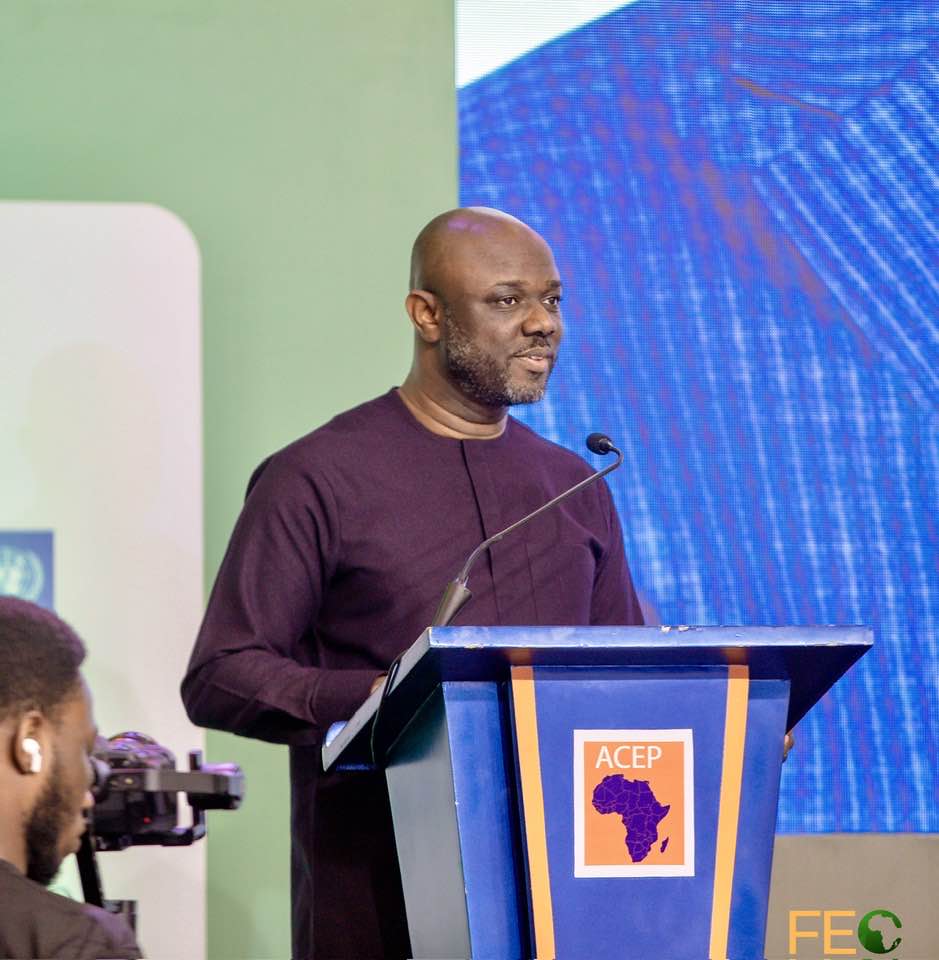
In its policy brief examining the fiscal statement, ACEP stressed that moving away from raw exports is an economic imperative, though the think tank cautioned that “the success of these ambitions will depend on the quality of their institutional design, the discipline with which public resources are deployed, and the ability of government to resolve underlying economic and technical constraints”.
Without closing fiscal leakages and capturing value along the domestic supply chain, Ghana risks depleting its finite mineral endowments without securing commensurate generational wealth.
Bridging Infrastructure Deficits and Industrial Power Bottlenecks
Translating domestic refining targets into operational realities requires confronting steep technical and infrastructural hurdles that have stalled past industrialization drives.
While the government’s goal of refining 70 per cent of small-scale gold locally by December 2027 and 100 per cent by 2028 is commercially attainable, processing bulk minerals presents a far more complex equation.
Refining all of Ghana’s manganese output, for instance, would demand roughly one gigawatt of continuous, competitively priced baseload power, while the country still lacks a single operating alumina refinery to support its bauxite processing targets.
Furthermore, environmental remediation remains acutely underfunded, with current budgetary allocations covering only 15 to 38 per cent of the actual cost required to reclaim degraded mining lands.
Addressing these deficits justifies the budget’s push toward distributed solar adoption, grid modernization, and targeted capital allocation.
Yet ACEP warned that capital commitments must be anchored in rigorous bankability rather than political expediency, noting that oil revenues are once again being earmarked for railway projects whose feasibility studies remain incomplete.
Institutional Discipline as the Bedrock of Sovereign Wealth Consolidation
Consolidating state investment vehicles offers a promising pathway to eliminate overlapping mandates, reduce administrative overheads, and build scale for strategic co-investments.
To safeguard the consolidated vehicle from political interference and non-performing assets, institutional reform must precede capital deployment.
ACEP emphasized the need for “independent and technically competent investment decisions insulated from political interference,” backed by transparent risk frameworks, periodic portfolio evaluations, and strict parliamentary oversight over major withdrawals and contingent liabilities.
Ultimately, the 2027 Budget provides a coherent roadmap for transforming Ghana’s extractive and energy landscape, but its legacy will be determined by disciplined execution rather than the ambition of its policy pronouncements.
READ ALSO: Sagnarigu MP: 2027 Budget Builds on Stability to Expand Jobs