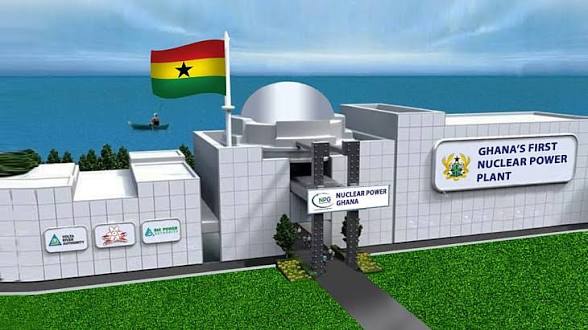
Ghana’s proposed nuclear power programme is entering a critical phase, but the Government’s allocation of US$200 million for nuclear readiness activities raises a larger question about how the country intends to finance a plant that could cost between US$15 billion and US$30 billion.
The 2027 Budget commits US$200 million to a 24-month nuclear readiness programme running from January 2027 to December 2028.
The programme is expected to conclude with an engineering, procurement, construction and financing agreement for a nuclear facility intended to be fully owned by the state.
However, the Africa Centre for Energy Policy (ACEP) has warned that the readiness allocation is only a small part of the financial commitment required to deliver the proposed 2,000-megawatt nuclear plant.
In its analysis of the 2027 Budget, ACEP estimates that the project could cost between US$15 billion and US$30 billion, based on the cost of comparable nuclear developments in other countries.
The estimate highlights the scale of the financing challenge facing Ghana as it seeks to introduce nuclear power into its electricity mix while managing existing energy-sector debts and infrastructure requirements.
ACEP states in its report:
“Without a credible financing plan, spending US$200 million on readiness risks committing public funds to a timeline that cannot be sustained at financial close.”
The warning does not question the potential role of nuclear power in Ghana’s long-term energy mix. Rather, it draws attention to the need to establish how the country will finance the construction, manage the resulting liabilities and protect public finances before committing to a major project.
Readiness Funding Is Not Construction Financing
The Government’s US$200 million allocation is intended to support activities required to prepare Ghana for nuclear power development.
These activities include the institutional, legal, technical and regulatory work necessary to progress towards a construction agreement.
However, readiness funding should not be confused with the financing required to build and commission a nuclear plant.
ACEP points to international projects to demonstrate the scale of the capital involved. It cites a 462MW small modular reactor project in the United States whose estimated cost increased from US$5.3 billion to US$9.3 billion in 2023.
It also references Egypt’s El Dabaa nuclear project, where individual units of approximately 1,100MW to 1,200MW have been estimated at around US$7.5 billion each, and the Vogtle project in the United States, where units of similar capacity cost approximately US$15 billion each.
Based on these comparisons, ACEP estimates that Ghana’s proposed 2,000MW facility could require between US$15 billion and US$30 billion.
Such a commitment would have implications beyond the initial construction budget. Nuclear projects require long development periods, extensive safety and regulatory oversight, specialised technical capacity, waste-management arrangements and long-term maintenance planning.
The financing structure could also expose the state to substantial debt obligations, particularly if the project relies on sovereign guarantees or loans from the technology provider.
Vendor Financing Could Create Long-Term Liabilities
One of ACEP’s key concerns is the potential financial exposure associated with vendor-backed financing.
The centre uses Egypt’s El Dabaa project as an example, noting that a Russian state loan covers 85% of the project’s cost and is repayable over 22 years at an interest rate of 3%.
Such arrangements can make major infrastructure projects possible where domestic financing is limited.
However, they can also create long-term obligations for governments, especially where project revenues are insufficient to meet repayment commitments.
For Ghana, this raises questions about the terms under which international partners would finance a nuclear plant that the Government intends to own fully.
The 2027 Budget indicates that international partners will provide financing but does not disclose the proposed terms, annual disbursement schedule or the extent of potential sovereign liabilities.
These details matter because the country is already managing substantial financial obligations within the electricity sector.
The Budget reports an annual energy-sector shortfall of about US$1.4 billion in 2025, alongside approximately US$1.7 billion in arrears to Independent Power Producers and fuel suppliers.
Although nuclear power could provide long-term baseload electricity, the Government must demonstrate that the financing model will not create additional fiscal pressures that undermine other energy investments.
Competitive Procurement And Legal Readiness Matter
ACEP also raises questions about the competitiveness of the process for selecting a nuclear technology provider.
Ghana has engaged with different international vendors over the years, including American, Chinese and Russian partners. The centre argues that the latest agreement with Russia should not prevent the Government from maintaining a transparent and competitive procurement process.
The choice of technology provider has consequences extending beyond the initial construction price.
It can influence fuel supply arrangements, maintenance costs, technical support, training, financing terms and the country’s long-term dependence on a particular vendor.
A competitive process would allow Ghana to compare the full costs and risks of different proposals rather than focus narrowly on the availability of financing or the headline price of construction.
There are also legal and site-related milestones that must be completed before the programme can progress.
ACEP notes that meeting the December 2028 target depends on Parliament passing the Nuclear Power Corporation Bill, as well as completing site acquisition and characterisation.
The sequencing of these requirements is important. A construction and financing agreement cannot be treated as a substitute for the legal and regulatory foundations needed to operate a nuclear power programme safely.
Ghana Must Protect The Economics Of Its Nuclear Decision
Nuclear energy could provide Ghana with a source of dependable low-carbon electricity and help diversify a generation mix that remains heavily dependent on thermal power and hydropower.
It could also support long-term industrialisation if the country develops the technical institutions, skilled workforce and regulatory capacity required to manage the technology.
However, the scale of the investment means that the decision must be evaluated against alternative sources of electricity, including renewables, storage, gas-fired generation and investments in transmission and distribution.
The question is not simply whether Ghana needs additional generating capacity. It is whether a nuclear project of the proposed scale offers sufficient long-term value to justify the financial commitments and risks.
The Government should therefore publish a credible financing roadmap showing the expected capital cost, funding sources, repayment arrangements, risk-sharing structure and potential impact on public debt.
It should also clarify how the US$200 million readiness allocation will be disbursed and what measurable milestones must be achieved before further public funds are committed.
The nuclear programme should be assessed not by the speed with which Ghana signs an agreement, but by whether the country can afford to build, operate and maintain the facility without undermining electricity affordability or fiscal stability.
Ghana’s nuclear ambition may represent a major step in its energy development. But the difference between a successful programme and an expensive unfinished commitment will depend on the quality of its financing, procurement and institutional preparation.
READ ALSO: Stakeholders Launch Skills Initiative to Improve Road Construction