Stakeholders in Ghana’s road construction sector are rolling out the Future Ready Skills for Road Construction initiative to strengthen the technical capacity of contractors, engineers, equipment operators and other personnel responsible for delivering road infrastructure projects.
Supported by the German development agency GIZ and its partners, the programme will be spearheaded by the Koforidua Training Centre (KTC), which will oversee curriculum development, capacity building and the licensing of trainees.
The initiative seeks to address persistent skills shortages within the construction industry, particularly concerns raised by contractors working on the government’s flagship Big Push project. The shortage of qualified personnel has, in some instances, affected the quality of road construction, prompting calls for a more structured approach to technical training and professional development.
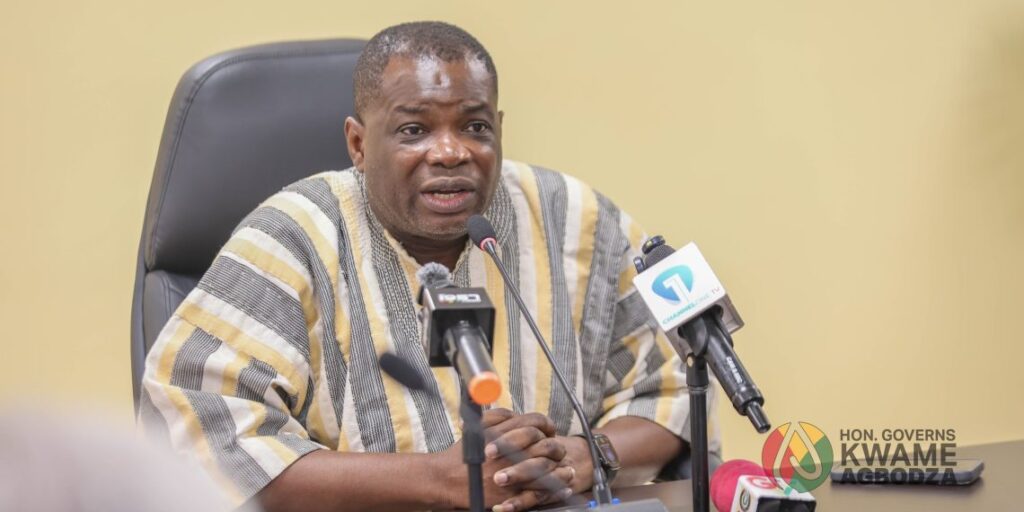
The Minister for Roads and Highways And Member of Parliament for Adaklu Constituency, Honourable Kwame Governs Agbodza has characterised the programme as a significant intervention in addressing deficiencies within the country’s road construction sector. He emphasised that its purpose extends beyond training excavator operators, encompassing construction technology, technical competence and the broader capabilities required to deliver durable infrastructure.
“It is not merely the training of an excavator operator, but it is an attempt to address the issues of skills, as well as the issues of construction technology and everything involved.”
Honourable Kwame Governs Agbodza
Honourable Agbodza identified the quality of roads delivered with public funds as a matter requiring urgent attention, questioning why substantial government expenditure does not always translate into infrastructure that meets public expectations. He emphasised that the ministry must take responsibility for strengthening the entire construction value chain, including the people who build roads and those expected to maintain them.
The Training To Highlight Working Conditions
Under the proposed arrangement, KTC will develop training curricula and modernise its facilities and instructional capacity to improve the preparation of participants. The programme will also seek to enhance trainees’ working conditions before introducing a licensing framework for individuals who successfully complete the training.
The licensing component is particularly significant because contractors often prefer recruiting workers who already possess the necessary qualifications and practical competence. This limits opportunities for inexperienced individuals to learn directly on construction sites, making structured training essential to producing personnel who can meet industry requirements.

Several partners are expected to contribute specialised expertise and resources to the initiative. GBM Plant and Constructions Limited, MC-Bauchemie and GIZ will provide different forms of support, with KTC serving as the principal training institution responsible for coordinating the programme’s educational and technical components.
The Team Lead for GIZ Ghana, John Duti, described the initiative as “an important undertaking” noting that it emerged from “a series of nine projects developed through German-Ghanaian business engagements.” He explained that the road construction skills programme was the first of those projects selected for implementation, placing considerable attention on its performance.
Minister Urges Contractors to Fund Road Skills Training
Beyond the introduction of specialised training for road construction personnel, the Minister for Roads and Highways, Honourable Kwame Governs Agbodza called on contractors to contribute towards the Future Ready Skills for Road Construction initiative. He believes that companies which benefit directly from the skilled workforce produced through the programme should help fund its implementation instead of leaving the responsibility entirely to government and development partners.
“We should be able to fund this sustainably. I wouldn’t threaten anybody, including contractors, but I think I’ll be very happy with all those contractors who would contribute generously toward the implementation of this project at KTC.”
Honourable Kwame Governs Agbodza
Honourable Agbodza explained that the initial support from GIZ should serve as a foundation for a financing arrangement capable of sustaining the programme over time. He indicated that stakeholders would examine the programme outline and its projected costs to establish the resources required for its operation.

The Minister also called for greater visibility and accountability among companies executing publicly funded road projects. The Minister expressed the expectation that the individuals and companies benefiting from government payments should be “identifiable” emphasising that the public deserves clarity about who receives the money allocated to infrastructure contracts.
Subsequently, he called on the Koforidua Training Centre and all participating organisations to honour their agreements and uphold the standards required to make the project successful. “We can only scale up if we do better,” he remarked, highlighting the importance of establishing credible indicators through which the programme’s impact could be assessed.
READ ALSO: NAIMOS Plans Specialised System to Expose Impersonators