

The Africa Centre for Energy Policy (ACEP) has called on the government to conduct independent audits of the Minerals Income Investment Fund (MIIF) and the Ghana Infrastructure Investment Fund (GIIF) before consolidating them into a proposed Ghana Sovereign Wealth Fund.
Issued in response to structural fiscal proposals outlined in the 2027 Budget Statement, the energy and extractives think tank warned that merging the two state investment vehicles without rigorous institutional scrutiny risks transferring legacy balance-sheet vulnerabilities into a larger national fund.
“The proposed Sovereign Wealth Fund must be preceded by independent audits and insulated from political capture, natural resource revenue consolidation must be anchored in binding statutory safeguards, solar tax relief must translate into lower retail prices, and distribution reforms must proceed without further delay to relieve the fiscal burden on the state.”
Africa Centre for Energy Policy (ACEP)
In its latest policy brief evaluating Ghana’s fiscal and extractive governance roadmap, ACEP emphasized that while consolidating mineral and petroleum revenues to finance long-term national development represents a bold policy shift, institutional design will determine whether the initiative succeeds.
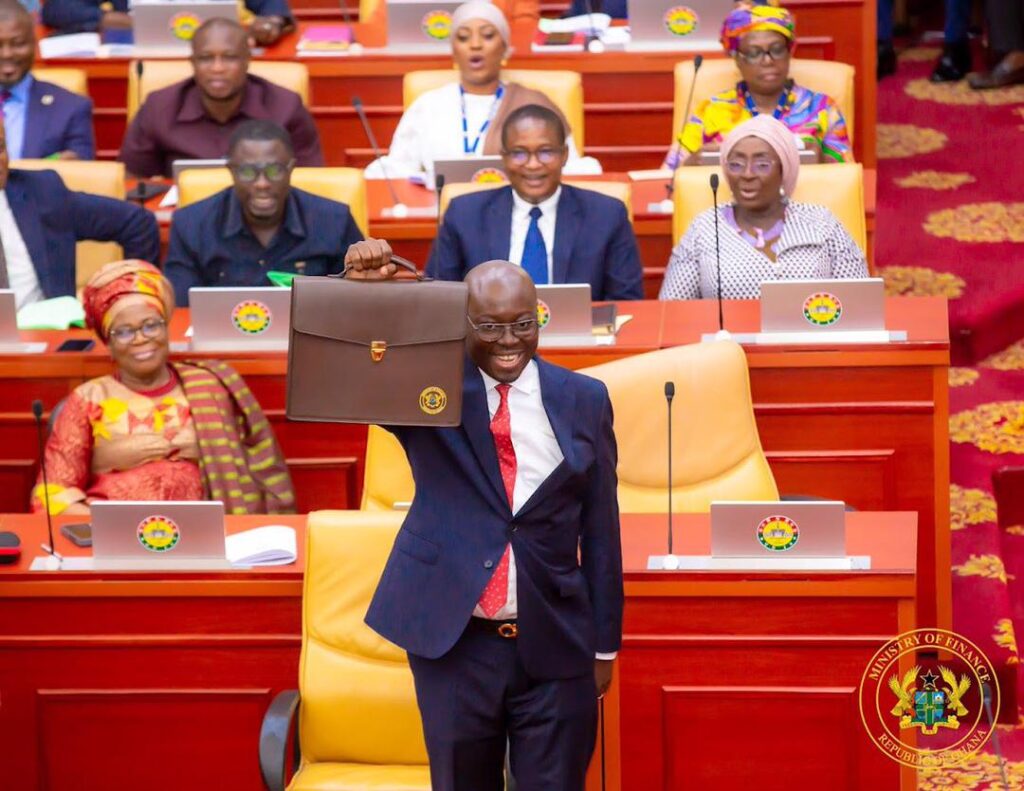
Presented to Parliament on November 12, 2026, by Finance Minister Dr. Cassiel Ato Forson, the 2027 Budget proposes unifying MIIF’s mineral royalty operations and GIIF’s infrastructure financing mandate to support Ghana’s 24-hour economy agenda.
However, policy analysts maintain that ambitious revenue pooling must be anchored in strict legal safeguards, independent portfolio appraisals, and insulation from political interference.
Safeguarding Sovereign Wealth Through Binding Statutory Controls
Establishing a credible Sovereign Wealth Fund requires resolving longstanding governance weaknesses across Ghana’s natural resource management architecture before new capital is pooled.
According to ACEP’s analysis, MIIF and GIIF have historically operated under distinct mandates with varying levels of portfolio transparency, making an independent valuation of existing assets, liabilities, and contingent commitments essential prior to consolidation.
Without establishing a clean financial baseline, the merged entity could inherit underperforming investments that undermine its creditworthiness and capacity to attract private co-investment.

Beyond pre-merger audits, the think tank stressed that consolidating extractive proceeds under the proposed Natural Resource Revenue Management Act must incorporate enforceable legal guardrails.
Petroleum receipts are projected to decline by roughly 35 percent from US$1.13 billion in 2027 to US$736 million by 2030 as mature offshore fields experience natural depletion.
Against shrinking oil inflows, ACEP noted that natural resource revenue consolidation must be governed by “independent and technically competent investment decisions insulated from political interference,” alongside mandatory parliamentary oversight for major withdrawals and transparent risk frameworks.
Feasibility Tests for Domestic Mineral Value Addition
A central pillar of the 2027 Budget is accelerating domestic mineral processing to transition Ghana away from raw commodity exports toward local value retention.
Government timelines target refining 70 percent of artisanal and small-scale mining (ASM) gold locally by December 2027 and 100 percent by December 2028, alongside processing 50 percent of bauxite domestically by late 2028 and 100 percent by 2030.
While ACEP acknowledged that domestic gold refining is relatively attainable given existing refinery capacity, it cautioned that the bauxite and manganese benchmarks face severe structural hurdles.

Research highlighted in the brief reveals that Ghana currently lacks an operating alumina refinery, meaning the 2028 bauxite processing target begins from zero installed capacity.
Furthermore, processing all of Ghana’s manganese output would require approximately one gigawatt of continuous, reliable electricity a significant strain on the national grid.
ACEP also flagged fiscal leakage in the artisanal gold subsector, noting that despite recording 88 tonnes of small-scale gold exports valued at US$12 billion, the budget captured virtually no direct royalty or tax receipts from that output.
Aligning Energy Sector Reforms with Fiscal Discipline
Fiscal sustainability across Ghana’s extractives and infrastructure sectors remains closely tied to resolving persistent inefficiencies in the power value chain.
While the 2027 Budget introduces tax incentives for solar equipment and outlines a state-owned 600-megawatt solar facility paired with battery storage, ACEP observed that tax exemptions alone will not ease energy costs unless accompanied by market competitiveness and structural utility reforms.

Electricity consumers currently absorb utility distribution losses both through end-user tariffs and the Energy Sector Levy, whose collections are projected to rise by 51 percent by 2030 without clear earmarking once legacy debts are cleared.
In the transport and petroleum infrastructure space, ACEP also questioned the recurring practice of ring-fencing Annual Budget Funding Amount (ABFA) petroleum revenues into escrow accounts for major railway projects whose engineering and commercial feasibility studies remain incomplete.
By prioritizing private-sector co-investment over direct state execution and enforcing strict commercial appraisals, policymakers can ensure Ghana’s resource revenues build resilient infrastructure rather than recurring fiscal liabilities.