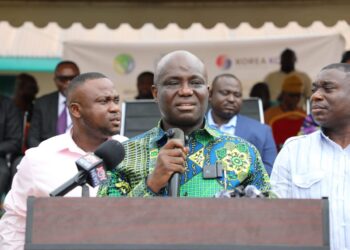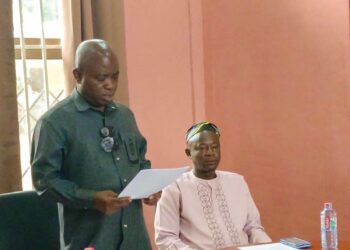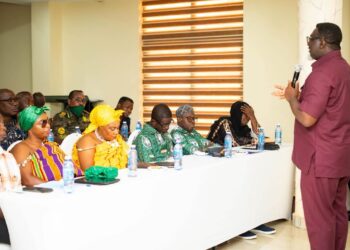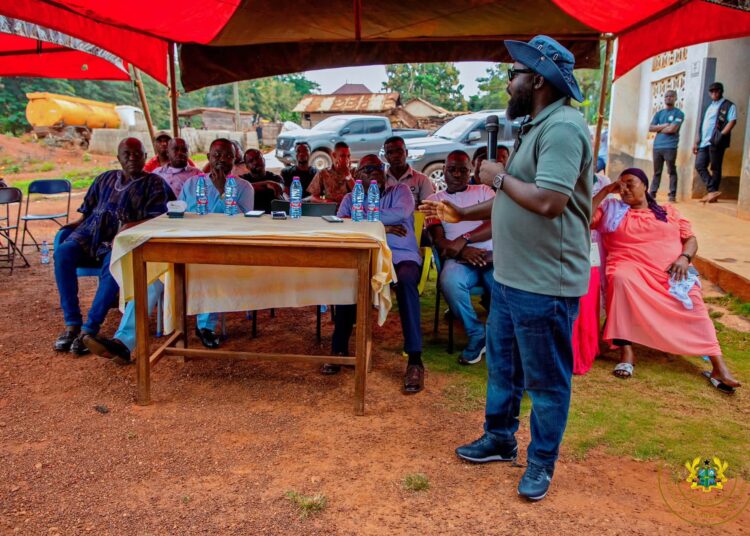
The Director of the Presidential Initiatives in Agriculture and Agribusiness (PIAA), Dr. Peter Boamah Otokunor, has engaged farmers in the Dormaa West District of the Bono Region as part of efforts to strengthen smallholder agriculture and improve productivity under the government’s DOBIDI Initiative.
Dr. Otokunor undertook the working visit following an invitation from the Member of Parliament for the area, Hon. Vincent Oppong Asamoah, to interact with farmers, understand their production challenges and discuss opportunities available under the initiative.
The engagement forms part of the government’s broader efforts to provide practical support to smallholder farmers through access to agricultural inputs, technical assistance and other services needed to increase production.
The DOBIDI Initiative is an integrated outgrower scheme designed to support smallholder farmers through coordinated input supply, extension and technical services, market linkages and post-harvest management.
According to PIAA, the programme targets more than 30,000 smallholder farmers and seeks to support the cultivation of 50,000 acres of maize, 10,000 acres of rice and 5,000 acres of soybean.
In Dormaa West, the intervention has particular relevance to rice farmers, who have faced challenges relating to access to farm inputs, machinery and finance. Recent reports indicate that inadequate local paddy production has contributed to the idling of a rice processing facility at Nkrankwanta, creating concerns about the availability of raw materials for processing.
Dr. Otokunor has indicated that the extension of the DOBIDI Initiative to farmers in the area will support farmer groups with improved seeds, machinery and other agricultural inputs to increase paddy production and strengthen the supply of raw materials to the processing facility.
A Focus on Smallholder Farmers
He explained that the programme is particularly relevant to smallholder farmers who often encounter difficulties accessing conventional agricultural credit because they lack the collateral required by financial institutions.
The initiative is therefore structured to provide support at different stages of agricultural production, with the objective of helping farmers increase their output and improve the economic returns from farming.
Speaking during an earlier DOBIDI community engagement, Dr. Otokunor said the programme was designed to address some of the longstanding barriers confronting smallholder farmers.“The Goal of the DOBIDI Initiative is Simple: Give Farmers what they Need to Farm,” he said.
He added that the government was seeking to ensure that agricultural inputs reached farmers at the appropriate time to improve yields, strengthen food security and support job creation.
“We are making sure that inputs reach the right hands at the right time to improve yields, ensure food security, and create jobs.”
PIAA- Dr. Peter Boamah Otokunor
A Call for Support and Expansion
The Dormaa West engagement also comes at a time when farmers in the district are calling for increased support to expand production. Farmers have identified limited access to improved seeds, machinery, chemicals and affordable financing among the challenges affecting their ability to increase the scale of their operations.
Hon. Vincent Oppong Asamoah has also called for greater investment in local rice production, particularly to ensure that rice processing facilities have adequate supplies of locally produced paddy.
Reports indicate that the Nkrankwanta facility has the capacity to process between 1.5 and 2.8 tonnes of rice per hour, but has been affected by inadequate supplies of locally produced paddy.
The situation highlights the importance of stronger linkages between farmers, processors, input suppliers, financial institutions and markets.
Increasing farm level production alone may not be sufficient unless farmers have access to reliable markets and processing facilities that can absorb their output.
The PIAA has stated that DOBIDI goes beyond the provision of farm inputs. The initiative also incorporates technical services, market linkages and post-harvest support as part of a broader effort to make smallholder farming more productive and commercially sustainable.
The initiative also includes the Dobidi Agro-Input Credit and Farmer Financing Platform (DACFIP), a digital system intended to help bridge financing gaps in the agricultural value chain and improve farmers’ access to affordable finance.
For farmers in Dormaa West, the engagement provides an opportunity to connect local production challenges with national agricultural support programmes. Improved access to inputs and technical assistance could enable farmer groups to expand cultivation, increase yields and contribute more consistently to the supply of raw materials for local agro-processing.
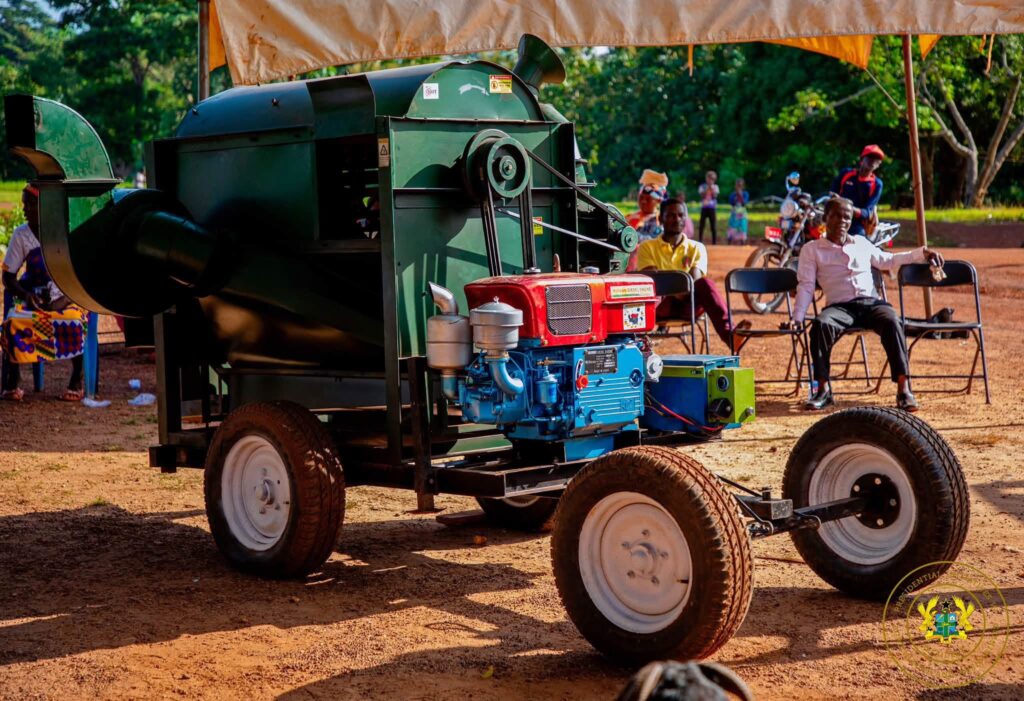
Government to Support Framers Beyond Inputs
Dr. Otokunor has previously stressed that government support to farmers would extend beyond input distribution to include market access, extension services and longer-term policy support.
The Dormaa West engagement therefore forms part of ongoing field-level efforts by PIAA to connect national agricultural initiatives with farmers and agribusinesses at the local level.
Under the government’s Agriculture for Economic Transformation Agenda, PIAA’s framework places emphasis on food security, agro-industrial development, agricultural infrastructure, investment and stronger value-chain linkages.
The continued implementation of DOBIDI in farming communities such as Dormaa West is expected to strengthen smallholder production while linking farmers to the wider agricultural value chain.
For the district, increased rice production could also support the revival and sustained operation of local processing capacity, create market opportunities for farmers and contribute to efforts to increase domestic food production and reduce dependence on imported agricultural commodities.
READ ALSO: Tullow Arbitration Offers Ghana Lessons Beyond The Award