The Ghana Cocoa Board (COCOBOD) is strengthening its partnership with Stanbic Bank Ghana to mobilise financing for key activities across the cocoa value chain, including farm rehabilitation, plantation development, cocoa processing and domestic purchases.
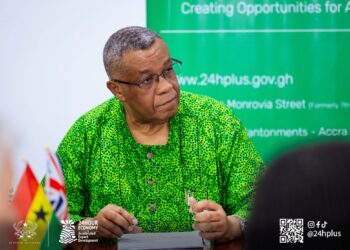
Chief Executive of COCOBOD, Dr. Ransford Anertey Abbey, together with Management, received a delegation from Stanbic Bank Ghana at Cocoa House in Accra, where both institutions discussed opportunities to deepen their long-standing relationship and support the sustainable development of Ghana’s cocoa industry.
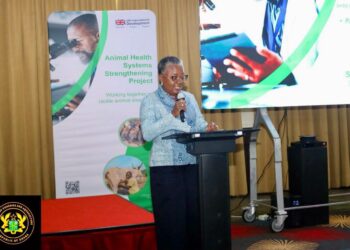
The engagement also provided an opportunity for the formal introduction of Ms. Anne Aliker, Executive Head of Corporate and Investment Banking for Africa Regions at Standard Bank Group, to the Management of COCOBOD.
Ms. Aliker oversees specialised sector teams across Standard Bank’s African markets, with expertise spanning investment banking strategy, capital markets, project and leveraged finance and mergers and acquisitions.
The discussions come at a significant period for Ghana’s cocoa industry as the country implements reforms aimed at strengthening the financial sustainability of the sector while increasing domestic participation and value addition.
A major area of interest between COCOBOD and Stanbic Bank is the development of financing solutions that can support cocoa rehabilitation and plantation programmes. Financing for rehabilitation is particularly important as the industry seeks to improve productivity, replace unproductive farms and strengthen the resilience of cocoa production.
The institutions also explore financing opportunities for cocoa processing and purchasing, with emphasis on domestic financing instruments that can mobilise capital within Ghana for activities traditionally dependent on external sources of funding.
Mobilising Domestic Sector
The discussions align with COCOBOD’s broader shift towards a new financing framework for the cocoa sector. The Board has indicated that the new model is intended to mobilise domestic liquidity through instruments such as commercial paper and commercial notes, while creating greater opportunities for local investors and businesses to participate in cocoa financing.

The new approach is also expected to strengthen domestic value addition by creating a financing environment that enables local processors and indigenous companies to secure cocoa beans and invest further along the value chain.
‘’COCOBOD is currently undergoing a financing reforms include the Domestic Cocoa Notes Programme, under which Cocoa Capital PLC is raising up to GH¢16.3 billion.’’
CEO of COCOBOD, Dr. Ransford Abbey
According to COCOBOD, GH¢14 billion of the programme is targeted at short-term liquidity requirements for cocoa purchases during the 2026/27 crop season, while GH¢2.3 billion is earmarked for restructuring existing legacy debt. Stanbic Bank Ghana is among the book runners for the programme.
The participation of Stanbic Bank in the financing framework underscores the importance of commercial banks in providing liquidity and developing financial instruments that respond to the needs of Ghana’s agricultural sector.
For agribusinesses, access to appropriate and affordable financing remains critical because cocoa production requires substantial investment at different stages, from planting and rehabilitation to harvesting, aggregation, processing, transportation and marketing.
A stronger financing relationship between COCOBOD and financial institutions can therefore support the flow of capital across the value chain and create opportunities for businesses operating in farming, input supply, logistics, processing and related services.
The engagement also reflects the growing importance of domestic value addition in Ghana’s cocoa strategy. COCOBOD has repeatedly identified local processing as an important component of reforms aimed at retaining more economic value from cocoa within the country.
Abbey indicated that the new cocoa sector reforms were anchored on three major areas: a new funding model, a new pricing mechanism and greater promotion of local value addition.
‘’The shift from the traditional syndicated financing model is intended to improve efficiency and create greater opportunities for domestic participation in cocoa financing.’’
CEO of COCOBOD, Dr. Ransford Abbey
Stanbic Bank, an Avenue Financial Support
The latest engagement with Stanbic Bank therefore provides an avenue for the financial sector to contribute to the implementation of these reforms by developing financing structures suited to the long-term needs of the cocoa industry.
The discussions further touch on the shared interest of both institutions in promoting sustainable cocoa production. This includes supporting investments that can improve farm productivity, strengthen the resilience of cocoa-growing communities and contribute to the long-term viability of the industry.
The focus on sustainability is particularly relevant as Ghana’s cocoa sector faces production and financial pressures, making investment in productive farms and efficient value-chain infrastructure increasingly important.
The partnership also comes as Ghana begins the 2026/27 cocoa season under a revised financing and pricing framework. COCOBOD has announced a producer price of GH¢42,400 per tonne, equivalent to GH¢2,650 per 64-kilogramme bag, effective September 25, 2026.
The Board says the new framework guarantees farmers at least 70 percent of realised Gross Free-on-Board value while supporting measures to improve productivity and protect cocoa farms.
For the banking sector, such developments create opportunities to design financial products that respond to the needs of farmers, Licensed Buying Companies, processors and other actors within the cocoa economy.
The meeting between COCOBOD and Stanbic Bank consequently highlights the role of strategic financial partnerships in supporting Ghana’s agricultural transformation agenda.
Both institutions reaffirm their commitment to deepening their collaboration and supporting initiatives that promote sustainable cocoa production, increase domestic value addition and contribute to the long-term development of Ghana’s cocoa industry.
The engagement demonstrates that beyond the financing of cocoa purchases, stronger collaboration between the agricultural and financial sectors can help mobilise investment for production, rehabilitation, processing and other activities that add value to Ghana’s most important tree crop.
READ ALSO:Ethiopia, Eritrea Cut Diplomatic Ties Amid Escalating Northern Conflict