The Ministry of Local Government, Chieftaincy and Religious Affairs has directed Metropolitan, Municipal and District Chief Executives to organise biannual accountability engagements with residents in areas where President John Dramani Mahama has already undertaken the Presidential Accountability Series.
The directive seeks to extend the national accountability process to the local level through structured townhall meetings led by MMDCEs.
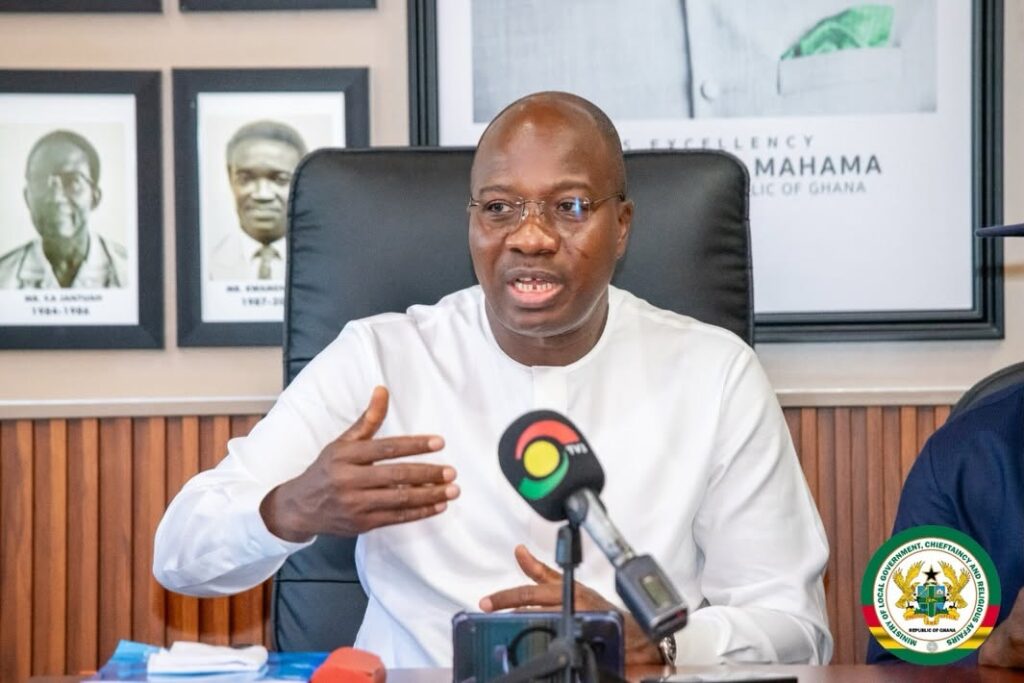
The directive, dated October 2, 2026 and signed by the Minister, Honourable Mahama Ayariga, requires affected assemblies to begin preparations immediately. Regional Coordinating Councils are also expected to coordinate the exercise and ensure that eligible Metropolitan, Municipal and District Assemblies comply with the programme.
The Ministry indicated that the engagements must provide citizens with an opportunity to assess how local authorities are implementing approved development plans and government interventions. MMDCEs are expected to account for areas including infrastructure delivery, sanitation, education, healthcare, social protection, local economic development and youth programmes.
Financial management will also form part of the accountability exercise, with assemblies required to address the utilisation of the District Assemblies Common Fund, Internally Generated Funds and other public resources. Revenue mobilisation, expenditure management, outstanding commitments and projects are also to be presented for public scrutiny.
The directive further requires MMDCEs to account for security and disaster management within their jurisdictions. Disability interventions, support for vulnerable groups and challenges requiring assistance from regional or national authorities will equally feature in the engagements.
A key component of the exercise is the requirement for assemblies to outline their priorities for the next implementation period. The Ministry expects this to give residents a clearer basis for monitoring commitments made by their local authorities after each townhall engagement.
The Ministry stated that the exercise should not be restricted to assembly officials and invited stakeholders. Traditional authorities, Members of Parliament, Assembly Members, religious leaders, organised labour, civil society organisations, youth and women’s groups, persons with disabilities, market associations, professional bodies and the media are among those expected to participate.
“The MMDA Accountability Series is intended to provide a structured platform for MMDCEs to account to citizens for the implementation of Government policies and programmes at the local level bi-annually through townhall meetings.”
Honourable Mahama Ayariga

Meanwhile, the Regional Coordinating Councils have been assigned responsibility for monitoring the quality and inclusiveness of the engagements. They are also expected to consolidate issues that require regional or national intervention and submit regional accountability reports to the Ministry.
The Ministry will conduct monitoring visits and participate in selected engagements as part of its oversight role. Assemblies have consequently been directed to make appropriate budgetary arrangements within approved allocations and applicable financial management procedures to facilitate the exercise.
Local Assemblies Required to Give Citizens Direct Accountability Platform
Metropolitan, Municipal and District Assemblies are to provide residents with a direct platform to question their local authorities under a new accountability framework issued by the Ministry of Local Government, Chieftaincy and Religious Affairs. The initiative requires each affected assembly to create sufficient space for citizens to seek explanations on projects, public spending and commitments made by their local authorities.
The directive places public participation at the centre of the accountability engagements by requiring MMDCEs to include a wide range of community stakeholders. Traditional leaders, religious bodies, civil society organisations, youth and women’s groups, business associations, persons with disabilities and members of the general public are among those expected to participate.
Citizens are also expected to have adequate opportunity to raise questions and seek clarification on the performance and activities of their respective assemblies. The Ministry has consequently attached a media-access requirement to the exercise to extend participation beyond those who attend the physical meetings.
Each MMDA is required to broadcast its entire Accountability Series live on a local FM station with effective coverage within its jurisdiction. Where more than one significant local station operates in an area, assemblies are encouraged to use multiple stations to expand access to the proceedings.
The broadcast is expected to facilitate live interaction with residents where technically possible and should be conducted in a language accessible to the majority of people within the jurisdiction. Assemblies must also record and preserve the broadcasts for official reference and reporting.
This requirement builds on Honourable Mahama Ayariga’s broader push for greater public access to local government proceedings, including plans announced earlier for assembly meetings to be broadcast through local radio.
“The live broadcast is expected to cover the entire Accountability Series, provide for live interaction with members of the public where technically feasible, conducted in a language accessible to the majority of residents and recorded and preserved by the MMDA for official reference and reporting purposes.”
Honourable Mahama Ayariga
Beyond broadcasting, the directive establishes a formal documentation process for every engagement. Each assembly must prepare a report containing the date and venue, participating station or stations, estimated audience, issues raised by citizens, responses provided and commitments made by the MMDCE.
The report must also identify unresolved matters requiring regional or national intervention and include an action matrix showing the institutions or individuals responsible for addressing outstanding issues. The Ministry requires the report and evidence of the live broadcast to be submitted to the Regional Coordinating Council and the Ministry within seven working days.
Furthermore, the RCCs have been tasked with ensuring that the engagements are inclusive and properly implemented across eligible assemblies. They are expected to consolidate recurring concerns from the local level and identify issues requiring intervention beyond the capacity of individual MMDAs.
The Ministry has directed affected assemblies to organise their sessions within a period to be communicated by the relevant RCC. Scheduling is expected to prevent clashes between neighbouring assemblies and allow sufficient media coverage.
READ ALSO: 600 Arrested As High School Protests In France Escalate