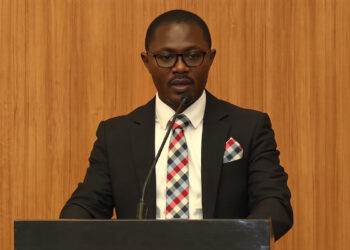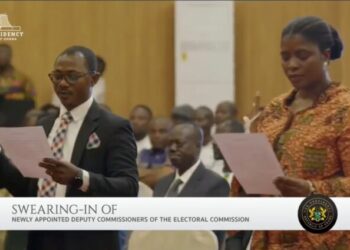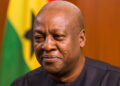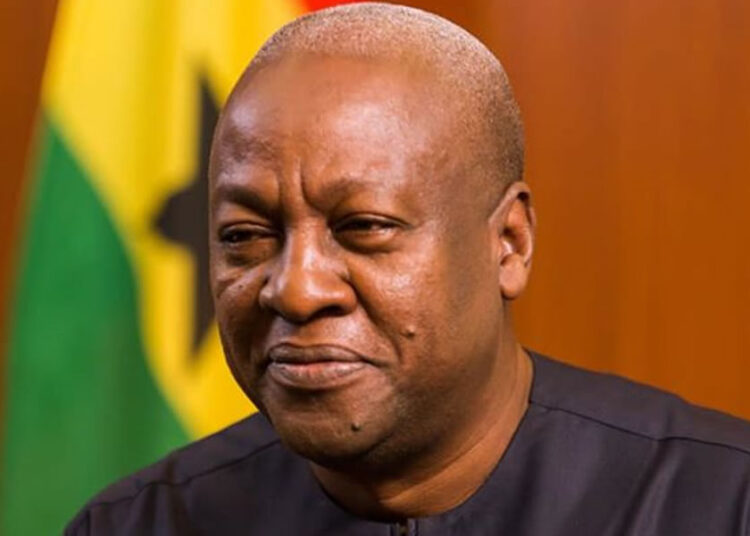
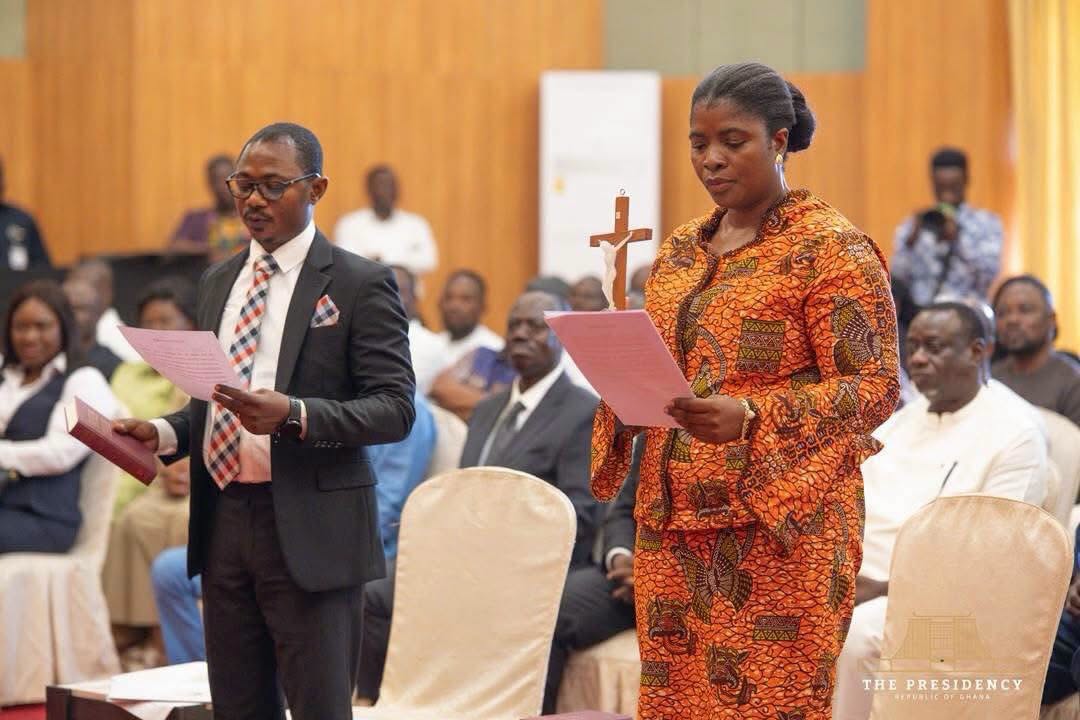
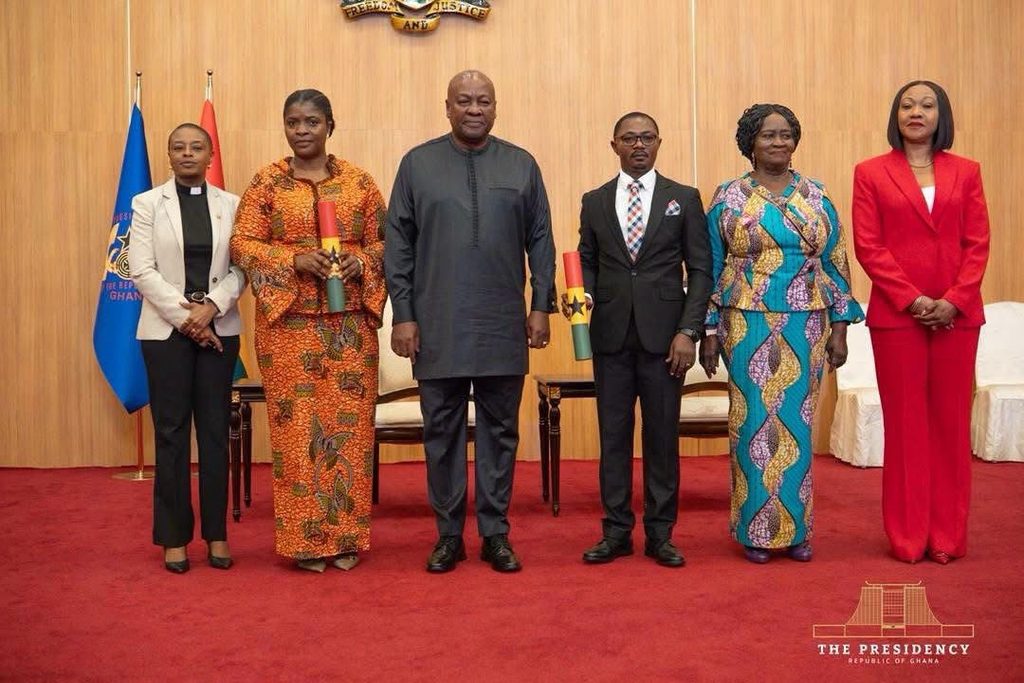
President John Dramani Mahama has charged newly sworn-in Electoral Commission (EC) Deputy Chairpersons Dr Joseph Kwaku Asamoah and Emelia Afi Agbenyo to uphold impartiality, transparency and fairness in the discharge of their duties, warning against preferential treatment for any political party, candidate or government.
Speaking at their swearing-in ceremony at the Jubilee House on Monday, October 12, 2026, Mahama stressed that the credibility of Ghana’s elections depends on an independent Electoral Commission that applies the law consistently, protects citizens’ voting rights and earns public confidence through accountable decision-making.
“So let me state clearly, your duty is to the Republic of Ghana and its people. You must discharge your responsibilities without favour towards any political party, any candidate, or government.”
President John Dramani Mahama
The President’s charge places institutional independence and public trust at the centre of the new deputy chairpersons’ responsibilities as they assume office following recent changes in the Commission’s senior leadership.
Mahama Rejects Political Favouritism at Electoral Commission
President Mahama emphasised that the authority accompanying the deputy chairpersons’ offices must be exercised with fairness, restraint and fidelity to the law. He maintained that the Commission’s responsibility to Ghana transcends partisan interests and requires its officials to protect the right of citizens to choose their leaders freely.
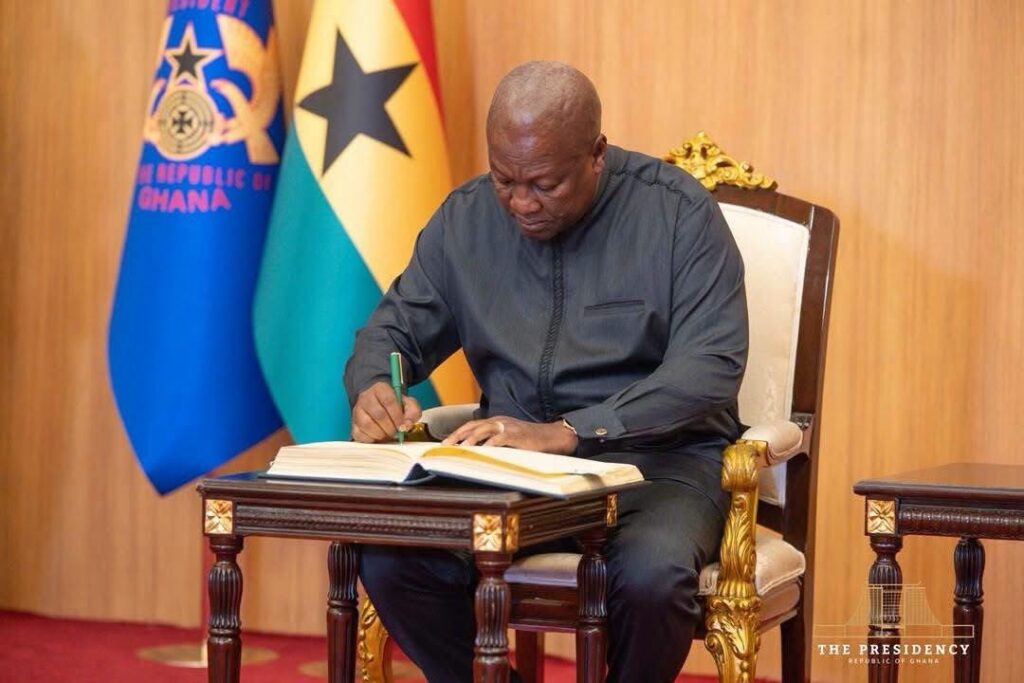
The President also made his expectations of the institution explicit, declaring that he did not expect preferential treatment for himself, his political party or his government. “As President, I expect no preferential treatment from the Electoral Commission for myself, my party, or my government,” he stated.
He added that the country needed an institution capable of applying the same standards to everyone, regardless of political position or influence. President Mahama urged Asamoah and Agbenyo to demonstrate the courage to uphold what is right, even when their decisions inconvenience those in power.
He argued that public trust develops through consistent conduct, particularly when electoral procedures remain clear, decisions receive adequate explanations, concerns attract timely attention and institutional commitments are honoured.
Transparency and Engagement Key to Building Public Trust
The President called on the new deputy chairpersons to make transparency and constructive engagement central to their work. He urged them to listen carefully to political parties, civil society organisations, the media and ordinary citizens, particularly when they raise concerns about electoral procedures and the Commission’s decisions.
President Mahama stressed that the institution must distinguish between legitimate concerns and inaccurate information, responding appropriately to both.
“Listen carefully to political parties, civil society, the media, and citizens. And where their concerns are well-founded, address them. Where their information is inaccurate, provide clear facts. And where mistakes occur, acknowledge those mistakes and correct them promptly”.
President John Dramani Mahama
He further maintained that citizens who seek clarification about electoral processes deserve respectful answers. According to the President, such engagement can strengthen the Electoral Commission and reinforce confidence in Ghana’s democratic institutions.
His remarks placed particular emphasis on the relationship between institutional accountability and public confidence, indicating that the Commission’s credibility depends not only on electoral outcomes but also on how it communicates, explains and addresses concerns throughout the electoral process.
Mahama Calls for Stronger Electoral Preparation and Professionalism
President Mahama reminded the new deputy chairpersons that credible elections require sustained preparation long before polling day. He identified accurate record-keeping, well-trained electoral officials, reliable logistics, secure systems and careful resource management as essential components of effective election administration.
The President encouraged Asamoah and Agbenyo to work closely with their fellow commissioners and the Commission’s staff to strengthen these operational foundations.
He also urged them to promote professionalism at every level of the institution, insist on consistent standards and establish a working culture in which problems are identified early and resolved promptly.
President Mahama’s emphasis on preparation highlights the importance of institutional readiness in delivering credible elections. Effective administration requires coordination across departments, reliable procedures and adequate attention to operational challenges before they affect voting.
He encouraged the new appointees to use their respective professional experiences to strengthen the Commission’s systems and improve the preparation of electoral personnel.
Technology and Inclusion Must Improve Electoral Access
The President also called for responsible use of technology to improve the reliability and accessibility of Ghana’s electoral processes. He stressed that technological applications must be supported by proper testing, appropriate safeguards and clear communication with the public.
The emphasis on safeguards reflects the need to ensure that technological improvements strengthen confidence in electoral administration rather than introduce uncertainty about the integrity or accessibility of the process.
President Mahama further urged the Commission to make inclusion a practical feature of its operations, ensuring that persons with disabilities, older citizens, women, young people and eligible voters in remote communities can participate with dignity and confidence.
He argued that the quality of an electoral system must partly be measured by its ability to serve citizens who might otherwise be excluded. The President’s position places accessibility alongside security, efficiency and impartiality as important considerations in the management of elections.
President Calls for Shared Responsibility in Protecting Elections
President Mahama stressed that safeguarding electoral integrity requires cooperation among political parties, citizens, the media and security agencies, rather than depending exclusively on the Electoral Commission.
He urged political parties to act responsibly and called on citizens to reject intimidation and electoral violence. The President also reminded the media of its responsibility to verify information before publication, while insisting that security services must perform their duties professionally and impartially.
These responsibilities, he indicated, are essential to maintaining an electoral environment in which citizens can exercise their rights freely and without intimidation. President Mahama assured the Commission that his government would support it in carrying out its mandate while respecting its independence.
The assurance reinforces his call for impartiality by distinguishing government support for the institution from political interference in its work.
New Deputies Urged to Put National Interest First
The President concluded by reminding Asamoah and Agbenyo that the oaths they had taken must guide their decisions throughout their tenure. He urged them to allow competence to distinguish their work, fairness to shape their judgement and the national interest to remain their constant guide.
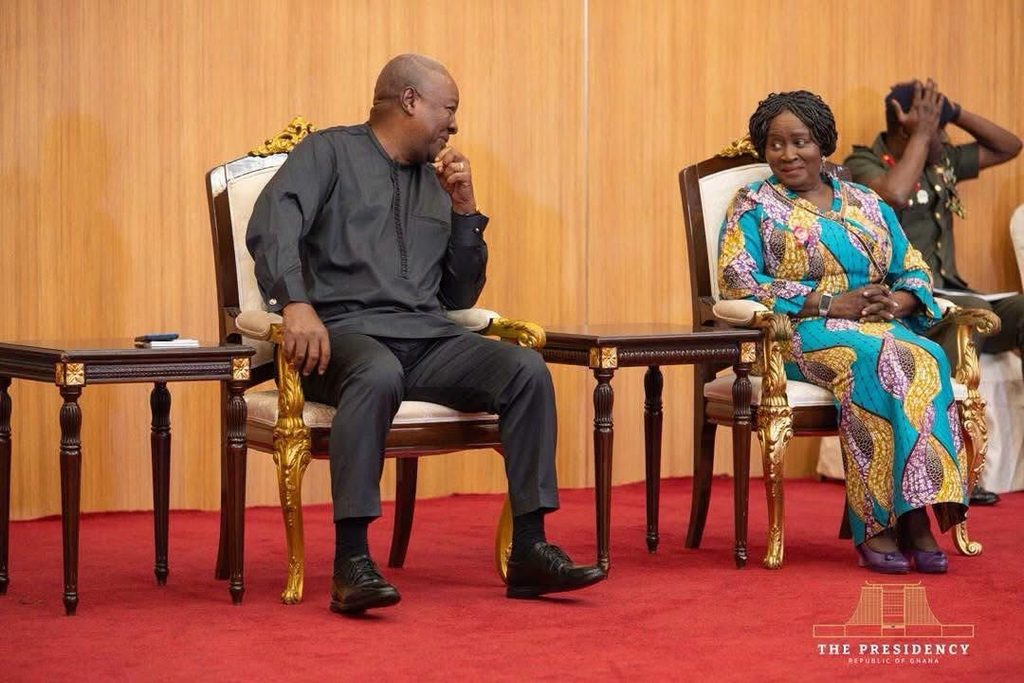
“Let competence distinguish your work. Let fairness shape your judgement. And let the national interest remain your constant compass,” President Mahama declared.
The two appointments follow the departure of former Deputy Chairperson responsible for Corporate Affairs Dr Bossman Asare, who resigned effective July 31, 2026, to return to academia at the University of Ghana, and former Operations Deputy Chairperson Samuel Tettey, who reached the mandatory retirement age.
With the new deputy chairpersons assuming office, President Mahama’s expectations place a clear responsibility on the Commission’s leadership to strengthen institutional effectiveness, protect electoral rights and maintain public confidence through impartial administration.
The President’s central message was that the credibility of Ghana’s electoral system depends on officials who uphold the law consistently, engage citizens transparently and place the interests of the Republic above partisan considerations.
READ ALSO: APPO Sets 2050 Target for African Energy Sovereignty