Breast cancer remains the most diagnosed cancer among Ghanaian women, with more than 5,000 cases recorded every year and roughly half of patients losing their lives to the disease.
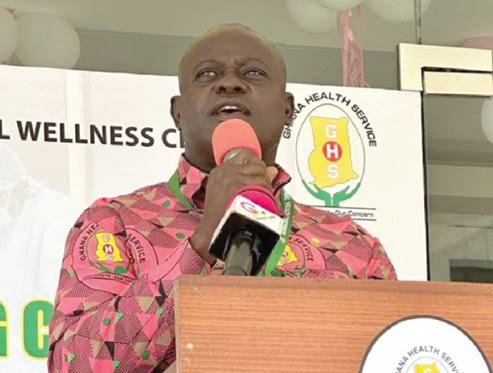
The Greater Accra Regional Director of Health Service, Dr. Robert Amesiya, disclosed this at the launch of the Greater Accra Regional Health Directorate’s (GARHD) 2026 Breast Cancer Awareness Month at the Ga West Municipal Hospital.
The Directorate has set a target of 8,000 screenings across the region this month and is counting on patient navigators and consistent follow-through on referrals to close the gap between detection and treatment.
The launch was held under the theme “Early Action, Better Outcomes.” It brought together health officials, development partners, advocacy groups and breast cancer survivors.
“Breast cancer is treatable. It is not a death sentence.”
Dr. Robert Amesiya
Delays in diagnosis
Dr. Amesiya said one of the biggest obstacles to survival is delay. Symptomatic patients typically take about eight months to reach a pathological diagnosis, a period in which a treatable condition can progress into a far more dangerous one.
He identified several causes: fear of a positive result, persistent myths about the disease, the cost of care, and patients who are lost to follow-up between screening and treatment.
According to him, many women who detect a lump or notice other changes in their breasts hold back from seeking care, while others who are screened never complete the journey to treatment.
To tackle the problem, Dr. Amesiya pointed to the government’s Free Primary Health Care rollout, which includes breast examination. He said removing the cost barrier at the primary level should encourage more women to come forward early.
The Directorate is also expanding the use of breast cancer navigators, health workers who guide patients from screening through diagnosis and treatment. The aim is to ensure that women with abnormal findings are not left to find their own way through the health system.
Screening target, Partners join the campaign
The region has set an ambitious goal of 8,000 screenings this month, of which 2,000 are expected to be conducted in the Ga West Municipality. Dr. Amesiya said the municipality’s count was already nearing 1,000 as of October 13, a sign that the campaign had gained early traction.

He also appealed to men to play a more active role in the fight against the disease, urging them to accompany their partners to screening appointments. Their support, he said, can ease fear and encourage women to complete the process.
“Symptomatic patients typically take about eight months to reach a pathological diagnosis.”
Dr. Robert Amesiya
Speaking at the event, a partner organisation outlined its work under the BEAT Breast Cancer Programme, which spans 240 health facilities across the Greater Accra, Ashanti and Northern regions. The programme targets more than 80,000 women. So far, it has reached 1,900 women with diagnostic services and linked 75 of them to treatment.
The Breast Society of Ghana also addressed the gathering, calling for greater public awareness, improved access to imaging services, and equitable access to treatment for patients across the country.
Advocates have long argued that gaps in diagnostic equipment and the uneven spread of specialist care leave many women, especially those outside major urban centres, at a disadvantage.
A survivor’s message
A breast cancer survivor also shared her treatment journey, which began in 2022, with the gathering. She encouraged women to check their breasts regularly and to seek medical attention at the first sign of any change, stressing that early detection made her recovery possible.
Her testimony gave a human face to the statistics presented earlier in the programme and reinforced the central message of the campaign: that timely action saves lives.
With screening targets set and navigators being deployed, attention now turns to how many of the women screened this month will be successfully linked to treatment where needed.
The Directorate says it is counting on early screening and consistent follow-through on referrals to narrow the gap between detection and care.
Health authorities have encouraged women across Greater Accra to take advantage of free screening opportunities available at health facilities throughout the month.
READ MORE: NARM-GH Calls on Government to Establish Separate Salary Structure for Midwives