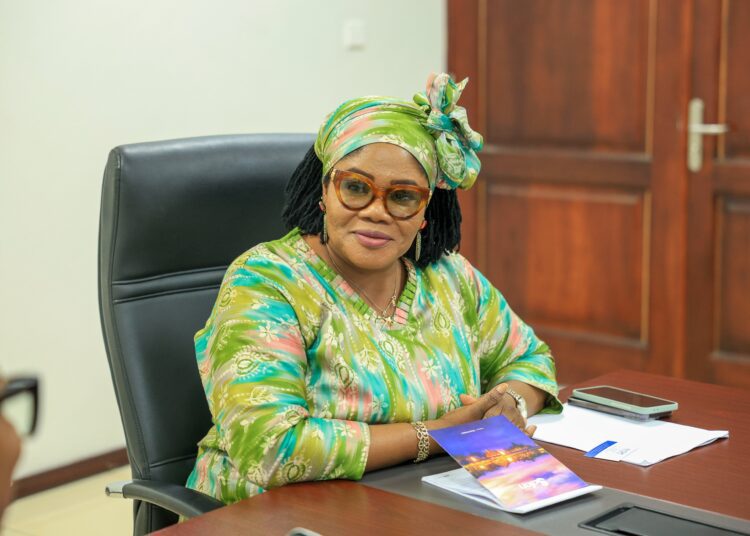
Institutional coordination and delays in pursuing abuse allegations have come under scrutiny as the Minister of Gender, Children and Social Protection, Dr Agnes Naa Momo Lartey has called for more responsive systems to protect students and other vulnerable groups.
She identified “bureaucratic bottlenecks and weak cooperation” among public institutions as obstacles that can impede timely intervention and access to justice.
Honourable Lartey explained that the ministry was already engaging the Ministry of the Interior before the Obuasi Senior High Technical School case attracted national attention, following reports of incidents at various campuses. She also disclosed that a technical committee has been brought together to examine some of the issues, demonstrating that inter-agency engagement is already underway.

The Gender Minister added that the effectiveness of child protection depends on institutions understanding their respective mandates and establishing mechanisms to share information and coordinate responses.
“It is not enough for us simply to show up; we must also speed up the processes. If we leave things to the usual arrangements and past practices, most people will despair because of the numerous processes, bureaucracies, and bottlenecks.”
Dr Agnes Naa Momo Lartey
Dr Lartey postulated that policy-level intervention sometimes becomes necessary when established procedures move too slowly to meet public expectations for justice. She explained that senior officials may step into cases to accelerate action, while acknowledging that systemic inefficiencies require sustained attention beyond individual interventions.
Furthermore, the Minister pointed to the Social Protection Act as a framework supporting coordination across sectors, arguing that the ministry’s cross-cutting responsibilities require active collaboration with institutions responsible for education, security and child welfare. She urged public agencies to strengthen communication so that cases are handled comprehensively and protective measures reach those who need them.
Addressing the implementation of institutional safeguards, Honourable Lartey noted that the ministry is providing technical support to organisations reviewing their codes of conduct and related policies. She explained that some institutions have approached the ministry for assistance, while investigations into earlier cases are also being pursued within the relevant national legal frameworks.
Dr Lartey further indicated that the Director-General of the Ghana Education Service provided information on cases under investigation dating back to 2021, including matters that predated his tenure. She expressed readiness to continue supporting the Service in improving its procedures and handling the Obuasi case.
Gender Minister Condemns Attempts To Minimise Sexual Misconduct
The Minister of Gender, Children and Social Protection, Dr Agnes Naa Momo Lartey pushed back against attempts to trivialise alleged sexual misconduct involving students at Obuasi Senior High Technical School, insisting that inappropriate conduct towards children must be treated with the seriousness it deserves.
The Gender Minister underscored the need to protect students from exploitation by individuals entrusted with their care, particularly within educational settings.
Honourable Lartey cautioned against interpretations that excuse inappropriate physical contact as harmless, explaining that sexual harassment can occur without penetration when actions or advances carry a suggestive or sexual character.

She referenced the report by the Ghana Education Service (GES), which reportedly captured the headmaster’s account that “he hugged some female students” noting that such conduct must be assessed within the applicable safeguarding and legal framework.
“When we begin to make excuses and explain these abuses away, then we are normalizing these abuses and violations of the rights of the children.”
Dr Agnes Naa Momo Lartey
The Minister further elucidated the psychological dynamics that can make children vulnerable to people in positions of authority, particularly when inappropriate conduct is disguised as affection or care. She observed that a child’s apparent compliance may emerge from emotional pressure and cultivated trust, making it essential to examine the circumstances surrounding alleged misconduct instead of dismissing it as inconsequential.
In addition, Dr Lartey emphasised that a child’s willingness to engage in an interaction does not provide an adult with justification to exploit them, especially where the individual is below 18. She emphasised the necessity of safeguarding responsibilities with adults who supervise and protect children, including teachers and other school authorities.
Turning to the support available to the students involved in the Obuasi case, the Gender Minister explained that her ministry contacted the families to reassure them that the matter would be investigated and that the affected girls would receive assistance. The planned support includes psychological care and medical attention to help establish their wellbeing.
Honourable Lartey also expressed appreciation for the co-operation of the GES and the Criminal Investigations Department, while affirming that the ministry would continue working to protect children in schools, churches and communities. She pledged that the case would receive attention and that the ministry is committed to safeguarding children wherever they are placed in the care of others.
READ ALSO: Performance Determines Who Plays for Madrid — Mourinho