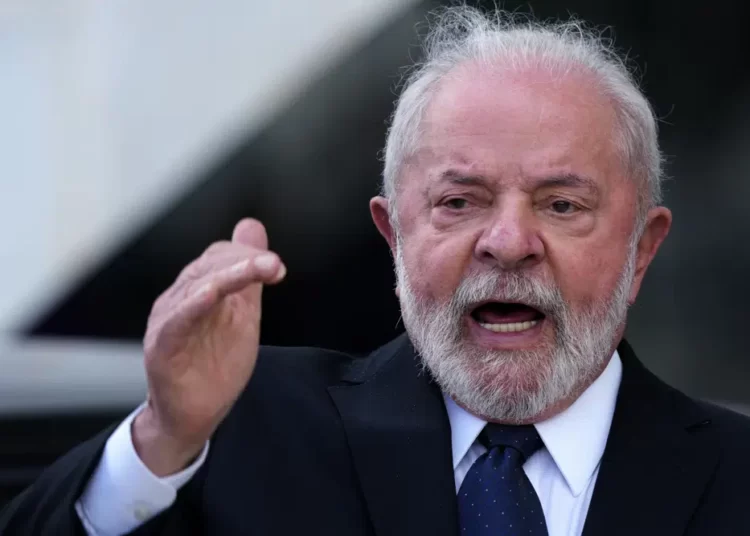
Brazilian President, Luiz Inácio Lula da Silva has vowed to defend democracy after securing a historic fourth, non-consecutive term by defeating far-right rival Flávio Bolsonaro in Sunday’s presidential runoff.
Lula staged a remarkable political comeback, overturning his first-round defeat earlier in October to win by more than four million votes. His victory marks the first time since Brazil’s return to democracy that a candidate who lost the first round has gone on to win the presidential election in the second.
According to the results provided, Lula secured 64.2 million votes, representing 51.79 per cent of the total, against Bolsonaro’s 59.8 million votes, or 48.21 per cent. Lula attracted approximately 10 million additional votes compared with the first round, helping him overcome the initial setback.
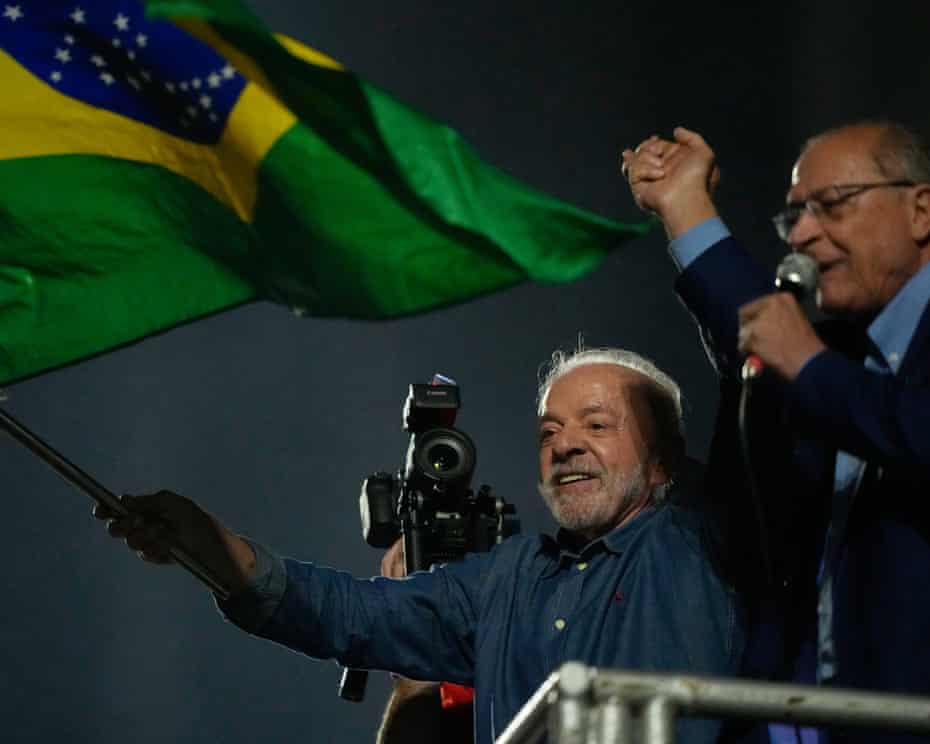
The result triggered celebrations in São Paulo and other Brazilian cities, as supporters gathered to mark the incumbent president’s dramatic return to power. “This is God’s work – and it’s thanks to all of you,” Lula told tens of thousands of supporters who assembled in central São Paulo in the early hours of Monday.
Declaring the occasion a historic moment, he reiterated his commitment to democratic governance, telling the crowd, “Democracy always, dictatorship never again. Democracy always, fascism never again.”
Lula’s victory represents a significant reversal in Brazil’s presidential race, where his initial first-round defeat had placed his campaign in a difficult position.
His ability to secure millions of additional votes in the runoff enabled him to defeat Bolsonaro and extend his political leadership. The result also makes him an important political counterweight in a region where several leaders are moving towards the right and strengthening ties with US President Donald Trump.
Lula is expected to take office on January 5, 2027, for his fourth non-consecutive term.
His victory comes amid broader political divisions across South America, where differences over governance, democratic institutions and international partnerships have shaped political debates.
Bolsonaro, the son of former Brazilian President Jair Bolsonaro, had campaigned on closer relations with the Trump administration. His defeat means that Lula will continue to lead Brazil at a time when political alignments across the region are shifting.
Lula’s remarks following the election placed democracy at the centre of his victory speech, with his rejection of dictatorship and fascism reflecting the significance of Brazil’s experience under military rule between 1964 and 1985.
Flávio Bolsonaro Rejects Election Outcome
Despite the result, Flávio Bolsonaro has rejected the outcome and indicated that he intends to seek its annulment.
At a press conference on Sunday, Bolsonaro said that he planned to challenge the election following a chaotic extension of voting requested by both candidates. However, the precise legal grounds on which he intends to pursue the challenge remain unclear.
His response follows the example of his father, Jair Bolsonaro, who refused to concede defeat after losing the 2022 election to Lula. The former President was subsequently convicted of plotting a coup and is serving a 27-year prison sentence for his role in the coup attempt.
The younger Bolsonaro’s rejection of the result raises questions about the next steps following the closely contested election. However, no further details were provided about the legal process he intends to pursue or the likelihood of his request succeeding.
World Leaders Congratulate Lula On Victory
Despite the challenge, political leaders and governments from across the political spectrum moved quickly to recognise Lula’s victory, with several international figures framing the result as a win for democratic governance.
International reactions to Lula’s election victory came from leaders across Latin America, Europe and Asia, reflecting the result’s significance beyond Brazil.
Mexico’s left-wing President, Claudia Sheinbaum, celebrated the outcome in a post on social media. “Long live democracy, the people of Brazil won,” she wrote.
Spanish Prime Minister, Pedro Sánchez also welcomed the result, describing it as part of a wider political trend among progressive movements. “The global progressive resurgence has just begun,” Sánchez wrote.
Right-wing leaders in South America also acknowledged Lula’s victory. Chilean President José Antonio Kast called Lula to offer his congratulations, while Peruvian President Keiko Fujimori praised the Brazilian people for their participation in the election. “The Brazilian people for this democratic day,” Fujimori said.
European Commission President Ursula von der Leyen also welcomed the outcome, stating that “Democracy and multilateralism have won in Brazil.”
China, meanwhile, said it respected the result and the decision of Brazilian voters.
The international responses show the broad recognition of Lula’s victory, even as his opponent disputes the result.
For Lula, the election marks a historic political comeback and a renewed opportunity to lead Brazil. His promise that dictatorship and fascism will never return now sets a clear tone for his incoming administration, while the challenge from Bolsonaro leaves questions about the political tensions that may follow the closely fought contest.
READ ALSO: