The Minority in Parliament has accused the Mahama-led government of repackaging its 24-Hour Economy programme under the newly introduced New Economy agenda, demanding accountability for previous commitments before additional public resources are channelled into the initiative.
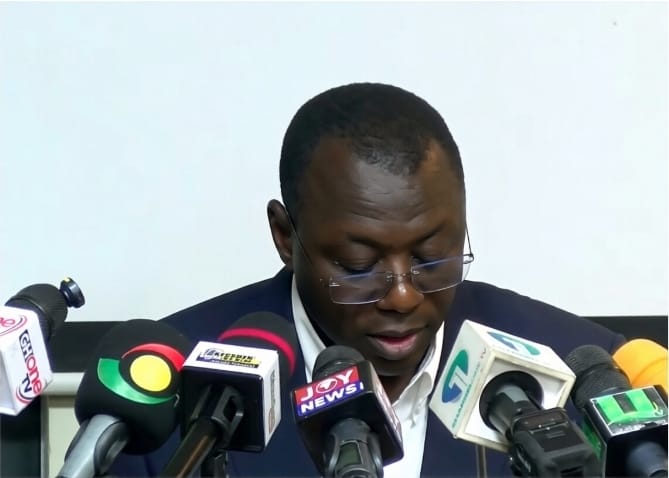
Addressing a post-budget press conference following the presentation of the 2027 Budget on November 12, former Finance Minister and Ranking Member on Parliament’s Finance Committee, Dr Mohammed Amin Adam, argued that the government’s new economic blueprint substantially reproduces programmes previously outlined under the 24-Hour Economy initiative.
He maintained that several pillars, agricultural interventions and industrial projects featured in the New Economy programme had already appeared in the 24-Hour Economy policy document published in July 2025.
Describing the development as a repackaging exercise, Dr Amin Adam declared: “The New Economy is a rebranding of the failed 24-hour economy. This is copy and paste.” His criticism raises questions about the continuity of the government’s flagship economic policies, the utilisation of previous programme commitments and the financing arrangements supporting its latest economic transformation agenda.
Minority Identifies Overlapping Programmes Under Both Agendas
Dr Amin Adam argued that six of the eight pillars under the New Economy closely correspond
with programmes previously outlined under the 24-Hour Economy framework.The government’s 2027 economic agenda is anchored on eight pillars: macroeconomic stability and affordable finance, commercial agriculture, energy infrastructure, critical minerals value addition, tourism, culture and creative arts, textiles and garments, pharmaceuticals and biomanufacturing, and the technology economy.
However, the Minority maintains that several of these areas mirror the earlier programme’s Grow 24, Make 24, Show 24, Fund 24 and Aspire 24 initiatives. The 24-Hour Economy and Accelerated Export Development Programme, officially launched by President John Dramani Mahama on July 2, 2025, was organised around eight thematic areas, including agricultural transformation, manufacturing, infrastructure, tourism, financing and digital development.

According to Dr Amin Adam, the similarities extend beyond broad policy objectives to specific agricultural value chains and industrial projects. He cited rice, sugar, poultry, maize, soybean, fisheries, oil palm and vegetable production as agricultural priorities appearing in both programmes, with cocoa processing identified as an additional component in the New Economy framework.
He further referenced projects previously associated with the Volta Economic Corridor and greenhouse vegetable production, arguing that their reappearance under new descriptions raises questions about whether the government is introducing fresh interventions or simply renaming existing commitments.
GH¢30 Billion Allocation Raises Questions About Programme Financing
The Minority’s criticism also centres on the government’s ability to finance its new economic ambitions. Under the 2027 Budget, government has committed to investing US$10 billion in the New Economy programme between 2027 and 2030, with GH¢30 billion earmarked for implementation in 2027.
Dr Amin Adam questioned the credibility of the financing arrangements, particularly following what he described as inadequate funding and implementation of the earlier 24-Hour Economy programme. He also highlighted differences between the funding projections contained in the government’s earlier fiscal strategy and the figures presented in the 2027 Budget.

According to him, the projected allocation for 2028 had declined from GH¢53 billion in the fiscal strategy document to approximately GH¢30.9 billion in the latest budget, raising concerns about the programme’s long-term financial sustainability. The former Finance Minister further questioned how the agricultural and tourism components would be implemented, considering the allocations to their respective ministries.
He contrasted the proposed US$3 billion investment in commercial agriculture with the GH¢2.9 billion allocated to the Ministry of Food and Agriculture and GH¢188 million to the Ministry of Trade, Agribusiness and Industry. He similarly questioned the proposed US$1 billion tourism investment against the GH¢186 million allocated to the Ministry of Tourism, Culture and Creative Arts.
Government Defends New Economy as Separate Economic Programme
Despite the Minority’s allegations, Finance Minister Dr Cassiel Ato Forson has maintained that the New Economy and the 24-Hour Economy have different implementation and financing structures. In a post-budget interview on November 13, he explained that the New Economy would be government-led, with public resources directed towards strategic infrastructure and productive investments.
The 24-Hour Economy, on the other hand, would operate through private-sector investment supported by government incentives and an enabling business environment.
“The New Economy is a government-sector-led initiative, whereas the 24-Hour Economy is a private-sector-led, incentive-based initiative.”
Hon. Cassiel Ato Forson, Finance Minister.
The distinction suggests that although the two programmes share certain economic priorities, government intends to pursue them through different investment models. The 2027 Budget also maintains a separate GH¢165 million allocation to the 24-Hour Economy Secretariat, indicating that the programme has not been formally discontinued.
Minority Demands Accountability Over Previous Commitments
Beyond the similarities between the two programmes, Dr Amin Adam questioned the government’s implementation timelines, arguing that several projects expected to generate employment would not deliver their anticipated benefits immediately.
He cited the Pwalugu Multipurpose Dam, whose first phase is scheduled for early 2029, and the proposed garment factories expected to create 27,000 jobs, which he indicated remained at the feasibility stage.
He also questioned the continued allocation of public funds to the 24-Hour Economy Secretariat despite what he considers the transfer of several earlier interventions into the New Economy framework. The Minority’s central demand is for government to provide verifiable information on projects delivered, investments mobilised and employment generated under the original programme.
As the US$10 billion New Economy programme begins its implementation phase in 2027, the controversy places renewed attention on policy continuity, public spending and the government’s ability to translate ambitious economic promises into measurable results.
READ ALSO: Minority: 2027 Growth Target Offers No Hope for Jobless Youth