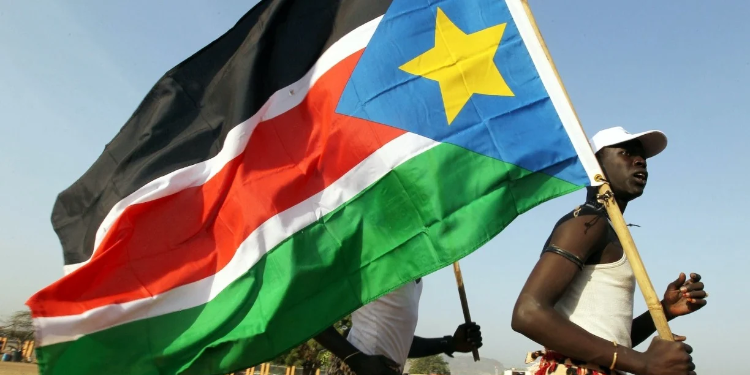
South Sudan’s National Elections Commission (NEC) has postponed the country’s long-awaited general elections from December 22, 2026, to February 11, 2027, extending the electoral timeline by 51 days, according to a revised calendar issued by the Commission.
The new date shifts the presidential and legislative elections into February, following mounting concerns about the country’s preparedness to conduct peaceful, inclusive and credible polls.
The revised timetable also adjusts the deadlines for voter registration, candidate nominations, election campaigns, results processing and the resolution of electoral disputes.
According to Josephine Achiro Fortelo, a Commissioner of the National Elections Commission, “this is the timeline we have come up with after a thorough consultation with the stakeholders.”
Voter Registration Begins Nationwide
Under the revised electoral calendar, voter registration is scheduled to run from November 14 to November 28, 2026, across South Sudan’s 10 states and three administrative areas. The provisional voter register is expected to be published on November 29.
NEC Chairperson Gabriel Bol Deng announced the registration schedule during a media briefing confirming that the exercise would take place at 3,161 designated registration centres nationwide.
Bol Deng explained that the announcement followed several months of consultations and coordination with relevant electoral institutions, in accordance with the Commission’s mandate under the Transitional Constitution of the Republic of South Sudan, 2011, as amended.
He urged eligible South Sudanese citizens to register within the designated period, describing the exercise as a fundamental step towards exercising their democratic right to vote.
Prospective voters have been encouraged to visit their nearest registration centres with the required identification documents or other acceptable proof of identity and age.
The Commission has also urged applicants to provide accurate personal information, verify their details before completing registration and avoid registering more than once.
Bol Deng further called on High Elections Committees across the states and administrative areas, security agencies, political parties, civil society organisations, community leaders and media institutions to support public awareness campaigns and encourage participation.
He emphasised that cooperation among electoral stakeholders would be essential to ensuring an inclusive, transparent and accessible registration exercise, particularly in reaching eligible voters across the country.
International Partners Question Electoral Readiness
The revised election date follows growing international concern over South Sudan’s readiness to meet the political, financial and institutional requirements for credible elections.
United Nations Commission on Human Rights in South Sudan raised concerns that the country lacked the necessary safeguards and conditions for peaceful and credible polls.
During a United Nations Security Council Meeting, South Africa’s Ambassador, Mxolisi Sizo Nkosi, cautioned that preparations for the South Sudan elections remained inadequate, citing an African Union assessment that identified shortages in resources and technical expertise.
He highlighted worsening humanitarian conditions, restricted access for aid organisations and increasing pressure from refugees fleeing neighbouring Sudan.
While recognising South Sudan’s sovereign right to determine its electoral process, the South Africa’s Ambassador stressed the importance of meeting legal, financial and operational requirements and ensuring the participation of political parties, women and young people.
Moreover, Denmark’s Ambassador, Christina Markus Lassen, similarly warned that holding elections without political consensus, adequate preparations and meaningful participation could heighten divisions and trigger renewed violence.
South Sudan’s Government Defends Elections Amid Political Divisions
Despite the concerns, South Sudan’s government has maintained that the country cannot remain indefinitely under transitional arrangements, defending elections as necessary for consolidating peace and establishing an elected government.
Speaking on behalf of the country at the United Nations, Deputy Permanent Representative Sabino Edward Nyawella Amaikwey stated that elections should be viewed as part of the peace process rather than an impediment to it.
Amaikwey also criticised the disproportionate attention to political actors obstructing implementation of the 2018 Peace Agreement, cautioning against further delays to the electoral process.
He rejected unverified allegations and politically charged reporting, while urging United Nations Mission in South Sudan (UNMISS) and human rights mechanisms to strengthen consultations with national authorities.
Meanwhile, South Sudan has formally been at peace since the 2018 agreement ended a five-year conflict that claimed hundreds of thousands of lives. However, violence between rival communities continues to flare, raising further concerns about the security environment ahead of the elections.
The new February 2027 polling date therefore provides additional time for electoral preparations.
READ ALSO: GSE Sheds 36 Points as Market Losses Deepen