United Nations Children’s Fund (UNICEF) has warned that escalating drone attacks and worsening drought are compounding the humanitarian crisis in Sudan, exposing millions of children to growing threats from violence, hunger, disease and the collapse of essential services.
Addressing a press briefing at the Palais des Nations in Geneva, UNICEF Spokesperson James Elder described the situation as an unprecedented assault on children.
“In the last week of October, not a single day passed without an armed drone striking a power station in Sudan. Up to 15 were hit in the month. At the same time, amid all the global warnings about El Niño, in Sudan the damage has already begun.”
James Elder
He explained that even the arrival of delayed rainfall would not reverse the agricultural losses already recorded, as the planting window for the 2026–27 cereal harvest has largely closed.
Attacks Disrupt Water, Electricity and Food Supplies
Also, James Elder indicated that the growing consequences of repeated drone strikes on Sudan’s power are spreading geographically and occurring in quick succession, representing a serious escalation against civilian infrastructure.
He explained that electricity disruptions have far-reaching consequences for communities because power stations sustain water pumping, treatment facilities, healthcare services and agricultural irrigation systems.
“In Sudan, power is water. When a power station is struck, water pumps stop and water treatment stops. Families are forced onto expensive and unsafe alternatives. Disease spreads.”
James Elder
The UNICEF Spokesperson disclosed that communities in some of the hardest-to-reach areas, including internally displaced persons’ settlements, are experiencing renewed pockets of cholera as access to safe water deteriorates.
The disruption also threatens cold storage facilities required to preserve vaccines and medicines, while farmers face declining irrigation capacity because water pumps depend on electricity amid severe fuel shortages.
According to James Elder, these interconnected disruptions are worsening agricultural production, driving food prices higher and making essential supplies increasingly inaccessible to vulnerable households.
Children Bear the Human Cost of Sudan’s Conflict
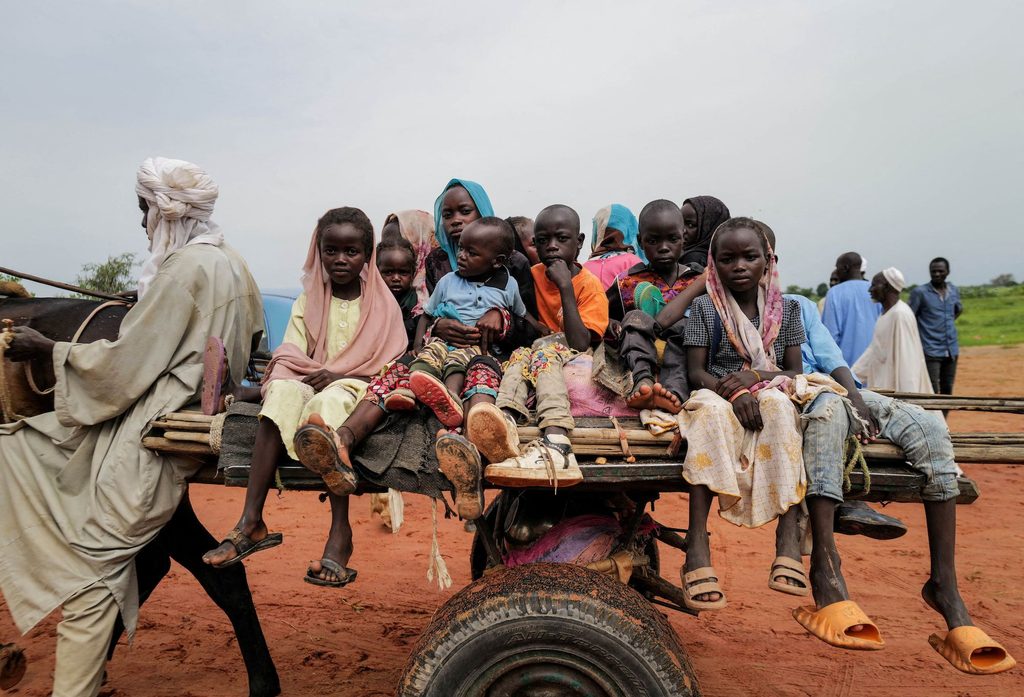
The deteriorating conditions are particularly concerning given the scale of child malnutrition in the country, with an estimated 825,000 children under five expected to suffer from severe acute malnutrition in 2026.
“This year in Sudan, two in three child casualties were caused by drones. They are bringing the war to places that were once safe.”
James Elder
He added that access to safety, education and water, three essential needs frequently raised by communities, is increasingly being undermined by the attacks.
Moreover, the destruction of civilian infrastructure is accompanied by devastating consequences for children’s physical and mental well-being, Elder noted, recalling a teenage boy who lost both hands in an explosive attack.
The teenager, identified as Burie, lives in a tent and continues to navigate daily life despite his injuries, relying on assistance from friends.
James Elder recounted that Burie told him, “I must accept this as it is.”
Despite losing both hands, the teenager spends his mornings attending online lessons and his afternoons collecting grass for animals, demonstrating the determination of children attempting to maintain some normality amid the conflict.
Reflecting on the encounter, Elder described the situation facing Sudanese children as relentless and devastating, adding, “and still Sudanese people hold each other up.”
UNICEF Calls for Urgent Funding and Protection of Civilians
Despite the deteriorating humanitarian situation, UNICEF and its partners continue to provide critical assistance to vulnerable communities across Sudan through healthcare, nutrition, education, water and child protection interventions.
“We have helped provide healthcare to more than 2.5 million people and vaccinated millions of children against deadly diseases. We have repaired and solarised water systems, helping to keep safe water flowing for close to 8 million. We have helped get millions of children back to learning.”
James Elder
Additionally, UNICEF has reached 1.5 million children and families with protection services, mental health assistance and psychosocial support.
However, UNICEF’s Spokesperson warned that the organisation’s humanitarian response is facing significant financial constraints, with its operations in Sudan only one-third funded despite mounting needs.
“People here are showing remarkable strength, but resilience cannot run on goodwill alone,” he stressed.
Against this backdrop, UNICEF has called for an immediate end to violence against children and attacks on power stations, water systems and other civilian infrastructure essential to their survival.
The organisation is also demanding safe humanitarian access across conflict lines, stronger protection for children and civilians, and action by influential parties to halt the flow of weapons contributing to the killing and injury of children.
Additionally, UNICEF has urged international partners and donors to provide urgent, sustained and flexible funding to maintain essential services, including safe water, treatment for malnourished children, healthcare, education and child protection.
READ ALSO: BoG Receives Application for Ghana’s Women Proposed Women’s Development Bank