Government has earmarked approximately GH¢25.37 billion for pension payments, gratuities, social security contributions and the clearance of outstanding obligations in the 2027 Budget, as it seeks to meet its financial commitments to retired public servants, serving employees and creditors awaiting payment.
The allocations, outlined by Finance Minister Dr Cassiel Ato Forson during the presentation of the 2027 Budget Statement and Economic Policy to Parliament on November 12, 2026, form part of the government’s expenditure commitments under the section titled ‘Retirement Benefits and Past Obligations’.
The provisions include GH¢4.15 billion for pensions, GH¢1.3 billion for gratuities, GH¢6.02 billion for social security and GH¢13.9 billion to clear accumulated arrears. Together, the allocations highlight the financial obligations government must meet while pursuing its broader economic transformation agenda.
Presenting the figures, Dr Forson emphasised the government’s responsibility towards those awaiting payment, indicating that the funding was intended to honour existing commitments.
GH¢4.15 Billion Allocated to Retired Public Servants
Pension payments account for GH¢4.15 billion of the allocation, reflecting government’s obligation to provide retirement benefits to former public sector employees who have completed their years of service.
The provision is particularly significant for retired workers who depend on regular pension payments to meet their living expenses and maintain financial security after leaving active employment.
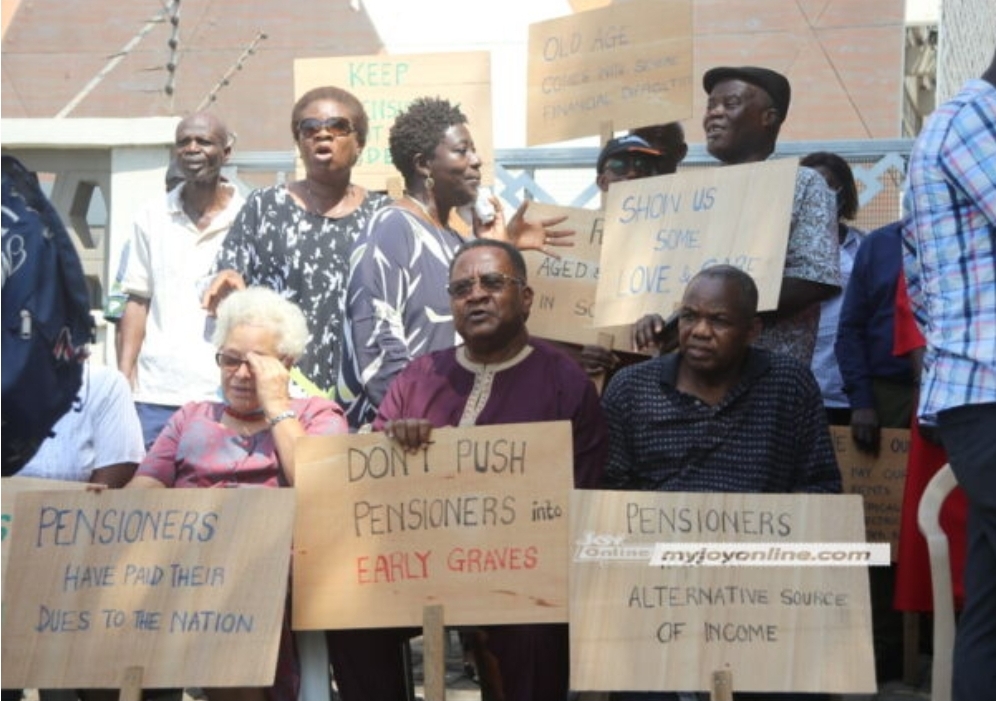
Ghana operates a three-tier pension system established under the National Pensions Act, 2008 (Act 766), as amended by Act 883. The framework comprises a mandatory basic national social security scheme, a mandatory occupational pension scheme and a voluntary provident fund and personal pension scheme.
The Social Security and National Insurance Trust (SSNIT) administers the first tier, while private pension trustees and fund managers oversee the second and third tiers under regulatory supervision. The GH¢4.15 billion allocation is intended to meet government’s pension obligations to retired public servants, reinforcing the importance of maintaining consistent funding for retirement benefits.
GH¢1.3 Billion for Gratuities and GH¢6.02 Billion for Social Security
Beyond regular pension payments, government has earmarked GH¢1.3 billion for gratuities, which are lump-sum benefits payable to eligible public servants upon retirement or separation from service, subject to applicable employment arrangements.
The provision complements the pension allocation by addressing other retirement-related financial commitments owed to workers.Another GH¢6.02 billion has been allocated for social security to meet government’s obligations to its employees.
These contributions form part of the broader social protection framework supporting workers and their dependants, including retirement and other statutory benefits.
According to the 2027 Budget’s expenditure classification, pensions, gratuities and social security together account for approximately GH¢11.47 billion in social contributions. The funding is intended to ensure that government meets its statutory responsibilities while supporting the long-term sustainability of the country’s pension and social security arrangements.
GH¢13.9 Billion Set Aside to Clear Outstanding Arrears
The largest single provision under the retirement benefits and past obligations section is the GH¢13.9 billion allocated for arrears clearance. The funding is intended to settle outstanding government commitments and support individuals, businesses and institutions awaiting payments for obligations already incurred.
The provision also appears in the broader expenditure framework of the 2027 Budget, which identifies GH¢13.9 billion for arrears clearance, including GH¢4.3 billion to settle legacy obligations owed to independent power producers.
The allocation is significant because delayed government payments can place considerable pressure on contractors, service providers and businesses that depend on public-sector contracts to sustain their operations. Clearing outstanding obligations could therefore improve payment certainty, restore confidence among government suppliers and ease financial pressures on institutions awaiting settlement.
However, the budget’s announcement does not provide a complete breakdown of all beneficiaries or the specific arrears categories that will receive funding beyond the identified independent power producer obligations.
Government Faces Test of Timely Payments and Accountability
The combined GH¢25.37 billion allocation places considerable financial responsibility on government as it seeks to balance existing obligations with investments in infrastructure and productive sectors.
The provisions also form part of a wider expenditure framework that includes GH¢104.1 billion for employee compensation and GH¢61 billion for interest payments in 2027. Dr Forson underscored the importance of accountability in managing public resources, declaring:
“Public money belongs to the people. Those entrusted with it must answer to them.”
Dr. Cassiel Ato Forson, Minister for Finance
The statement reinforces the government’s responsibility to ensure that budgetary commitments translate into actual payments and measurable improvements in the lives of beneficiaries.
For pensioners, the priority will be the timely payment of retirement benefits, while serving public employees will expect government to fulfil its statutory social security obligations. Businesses and institutions awaiting arrears payments will similarly look towards the effective implementation of the clearance programme.
Ultimately, the success of the GH¢25.37 billion provision will depend not simply on the amounts announced but on the government’s ability to release the funds, settle outstanding liabilities and maintain confidence in its financial commitments.
READ ALSO: 2027 Budget Allocates GH¢3 Billion to Youth Employment and NSS Allowances