President John Dramani Mahama’s ambitious US$10 billion New Economy programme is already generating high expectations about Ghana’s economic future.
But even as the government prepares to commit billions of dollars to transforming the productive sectors, questions are emerging over whether the country has the financial architecture and implementation strategy required to turn the ambitious vision into tangible results.
The Integrated Social Development Centre (ISODEC) has welcomed the programme’s intentions but cautioned that good policy ambitions alone cannot deliver economic transformation.
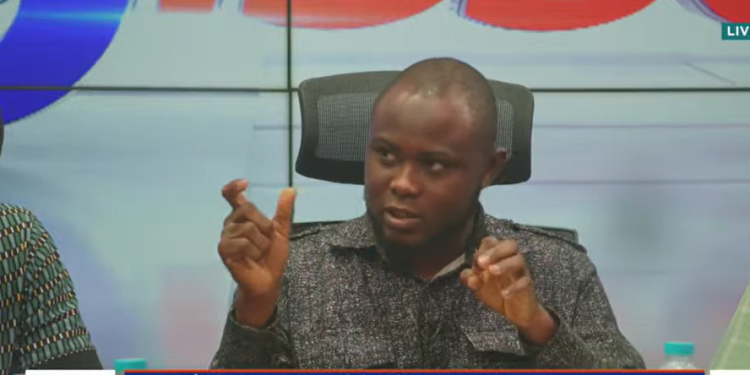
Policy Analyst at ISODEC, Dr Adamu Braimah Abille, believes the initiative presents a significant opportunity to reposition Ghana’s economy, particularly through increased domestic production, job creation and improved livelihoods. However, he insists that the government must provide a clear implementation framework and ensure that financial resources reach the businesses and industries expected to drive the transformation.
His concerns introduce an important dimension to the debate surrounding Mahama’s flagship economic initiative: whether Ghana can move beyond announcing ambitious investment programmes to building the systems that will make them work.
$10bn ambition meets implementation reality
The New Economy programme, unveiled by Finance Minister Dr Cassiel Ato Forson during the presentation of the 2027 Budget Statement and Economic Policy to Parliament on Thursday, November 12, is designed to transform Ghana into a production-driven economy over the next four years.
The US$10 billion initiative is expected to channel investments into eight strategic areas, including macroeconomic stability and affordable finance, commercial agriculture, energy infrastructure, critical minerals value addition, tourism, culture and creative arts, textiles and garments, pharmaceuticals and biomanufacturing, and the technology economy.
These sectors represent some of the most important opportunities for Ghana to reduce its dependence on imports, strengthen domestic industries and create sustainable employment.
Yet, according to Dr Abille, the announcement of a large investment programme does not automatically guarantee economic transformation.
“The New Economy, the intention is very good, we have to say, but how is it going to be implemented?” he asked.
The question strikes at the heart of the government’s economic ambitions. Ghana has witnessed several development initiatives over the years, but translating policy commitments into measurable improvements in production and household incomes has often proved challenging.
Dr Abille’s intervention therefore places implementation, financing and institutional coordination at the centre of the discussion.
Bank lending could become the biggest obstacle
One of the most significant concerns raised by the ISODEC analyst is the allocation of credit within Ghana’s financial system.
He argues that the government must ensure that monetary and fiscal policies work together to direct available financing towards sectors identified as critical to the country’s transformation.
Without that coordination, the New Economy programme could struggle to attract the credit needed to expand agricultural production, manufacturing and other productive activities.
“The government must make sure that the financial system that we are having… [has] coordination between the monetary policy and the fiscal policies to make sure that the credit is actually directed to where it’s supposed to go.”
Policy Analyst at ISODEC, Dr Adamu Braimah Abille
This concern is particularly important because access to affordable financing remains a major challenge for businesses seeking to expand their operations.
Although Ghana’s banking sector plays a central role in mobilising deposits and providing credit, the distribution of loans across economic sectors will determine whether the financial system can support the government’s industrialisation ambitions.
Dr Abille believes that continuing to concentrate bank lending in commerce and trade, rather than productive activities, could undermine the programme’s objectives.
His argument raises a critical question about the role of financial institutions in the government’s proposed economic reset: can Ghana’s banking system become a stronger engine of production rather than primarily financing trading activities?
Agriculture’s 11% credit share raises concern
Agriculture provides perhaps the clearest illustration of the financing challenge identified by the ISODEC analyst.
Despite its importance to food security, employment, rural livelihoods and industrial raw materials, the sector accounts for only 11 per cent of credit to the private sector, according to the figure cited by Dr Abille.
The relatively small share of bank financing going into agriculture raises concerns about the ability of farmers, agribusinesses and agro-processing companies to access the capital required to expand production.
The government’s decision to prioritise commercial agriculture under the New Economy programme could therefore face significant obstacles if financing arrangements remain unchanged.
Large-scale agricultural production requires substantial investments in machinery, irrigation systems, storage facilities, processing infrastructure and modern farming technologies.
Without adequate and affordable credit, businesses operating across the agricultural value chain may struggle to take advantage of the opportunities presented by the programme.
“We have to make sure that a high percentage of [bank lending] goes into the critical sectors that we are talking about currently.”
Policy Analyst at ISODEC, Dr Adamu Braimah Abille
The concern extends beyond agriculture. Manufacturing, pharmaceuticals, textiles and critical minerals processing will also require financing structures that recognise their investment needs and longer development cycles.
Germany offers a possible financing model
Dr Abille also pointed to Germany’s community banking model as an example Ghana could examine in developing a more effective approach to directing credit towards productive economic activities.
In Germany, community-based banking institutions play an important role in supporting businesses and economic development within their respective communities.
Such institutions can help channel financing towards enterprises that contribute to local production, employment and industrial activity.
The ISODEC analyst believes Ghana needs an effective mechanism capable of determining how credit is allocated to businesses operating in priority sectors.
This could become an important consideration as the government develops the financial arrangements underpinning its US$10 billion programme.
The challenge is not simply to make financing available but to ensure that it reaches businesses capable of increasing production, creating jobs and strengthening domestic supply chains.
Can Mahama turn ambition into lasting economic transformation?
The New Economy programme arrives at a time when Ghana is seeking to consolidate macroeconomic stability while accelerating growth and reducing structural weaknesses.
Its focus on production, industrial development and value addition reflects the government’s intention to move the economy beyond excessive dependence on imports and traditional sources of export revenue.
However, the concerns raised by ISODEC highlight the difficult work that lies between policy ambition and economic results.
The success of the initiative will depend on more than the size of its financial commitments. Effective coordination, transparent resource allocation, accessible financing and strong institutional arrangements will be equally important.
Ghana’s businesses and households will ultimately judge the programme by what it delivers, including stronger domestic industries, more employment opportunities, improved agricultural productivity and better livelihoods.
Mahama’s US$10 billion economic gamble could become a defining investment in Ghana’s productive future. But as Dr Abille’s intervention suggests, the real test will be whether the government can build a practical system that turns its promising intentions into investments that genuinely transform the economy.
READ ALSO: Quamina MP Announces New ‘Bronya EP’ for November 27 Release