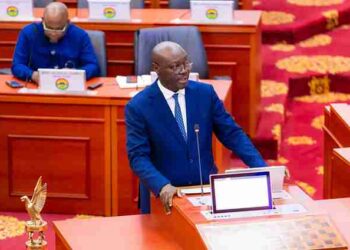
Ghana’s fiscal recovery is gaining momentum, with the government recording a primary surplus of 1.4 per cent of Gross Domestic Product (GDP) in the first ten months of 2026, as Finance Minister Dr Cassiel Ato Forson intensifies efforts to restore fiscal discipline and rein in public expenditure.
The latest provisional fiscal figures, presented by Dr Ato Forson during the presentation of the 2027 Budget Statement in Parliament, reveal a significant improvement in the country’s public finances, with key deficit indicators performing substantially better than government targets.
Between January and October 2026, the primary surplus on a commitment basis reached 1.4 per cent of GDP, bringing the government close to its full-year target of 1.5 per cent.
The development represents an important milestone in Ghana’s fiscal consolidation programme, particularly at a time when the government is under pressure to sustain economic recovery, manage public debt and create room for growth-enhancing investments.
Ato Forson’s Fiscal Discipline Begins to Deliver
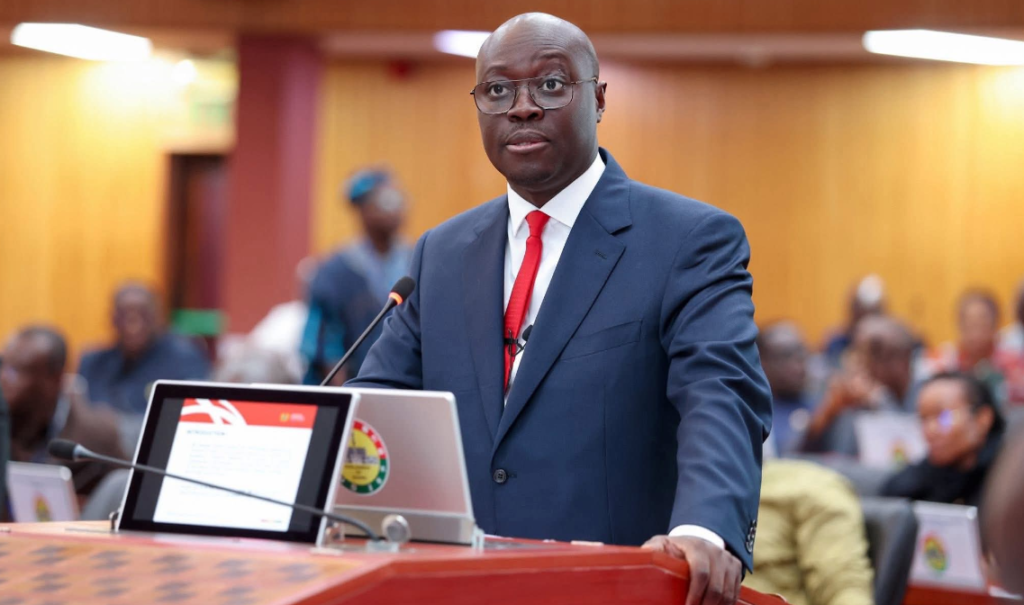
Presenting the figures, Dr Ato Forson highlighted the government’s determination to maintain spending discipline without sacrificing investments needed to stimulate economic activity and improve living conditions.
He told Parliament that the administration had made fiscal discipline a central priority since 2025, focusing on eliminating wasteful expenditure and bringing public spending under control.
“Mr. Speaker, in 2025, our overriding priority was to restore fiscal discipline, eliminate wasteful expenditure, and bring public spending firmly under control.”
Dr Ato Forson
He further argued that the government had demonstrated that fiscal discipline could be maintained while continuing to support economic growth, employment creation and improvements in living standards.
“We have showed that discipline can be sustained while making the necessary investments to stimulate economic growth, create jobs, and improve the lives of Ghanaians.”
Dr Ato Forson
The latest figures provide some evidence of that strategy, with government expenditure coming in below budgeted levels while revenue collections exceeded expectations.
Fiscal Deficit Falls Sharply Below Target
Beyond the primary surplus, Ghana’s overall fiscal position also recorded a stronger-than-anticipated performance during the first ten months of 2026.
The overall fiscal balance on a commitment basis recorded a deficit of 1.0 per cent of GDP, significantly better than the programmed deficit of 3.0 per cent.
On a cash basis, the overall fiscal deficit stood at 2.3 per cent of GDP, against a target of 4.5 per cent.
Even more significant was the performance of the primary balance on a cash basis, which recorded a surplus of 0.1 per cent of GDP, reversing the programmed deficit of 1.3 per cent.
These figures suggest that the government managed to keep its expenditure obligations within a tighter framework than initially anticipated.
The distinction between the commitment and cash balances remains important because the former captures expenditure obligations incurred by the government, while the latter reflects actual cash movements. Both indicators provide different perspectives on the strength of the country’s fiscal position.
GH¢219.3bn Revenue Gives Government Breathing Space
Revenue mobilisation has also emerged as a major contributor to the improved fiscal performance.
Total revenue and grants reached GH¢219.3 billion between January and October 2026, equivalent to 13.7 per cent of GDP.
This exceeded the government’s target of GH¢211.8 billion by 3.5 per cent, representing a year-on-year increase of 26.6 per cent.
By the end of October, the government had achieved 81.8 per cent of its annual revenue target, an indication of the stronger revenue inflows supporting the fiscal consolidation programme.
Domestic revenue accounted for GH¢218.2 billion, also equivalent to 13.7 per cent of GDP. The amount was 4.1 per cent above the target of GH¢209.6 billion and 26.9 per cent higher than the corresponding period in 2025.
However, the performance of tax revenue presented a more complicated picture.
Non-oil tax revenue amounted to GH¢167.2 billion, falling short of the GH¢170 billion target, although it recorded a 21.7 per cent increase compared with the same period in 2025.
The shortfall suggests that despite improvements in overall revenue mobilisation, strengthening the tax base and improving compliance remain important challenges for the government.
Energy Levy Becomes Critical to Debt Reduction
One of the notable developments in the revenue figures is the growing contribution of levies supporting the energy sector.
Other revenue, which includes SSNIT contributions to the National Health Insurance Levy and proceeds from Energy Sector Levies, amounted to GH¢13.8 billion.
This was 27.9 per cent above the target of GH¢10.8 billion and represented a 69.5 per cent increase compared with the same period in 2025.
The Energy Sector Shortfall and Debt Repayment Levy was the dominant contributor, generating GH¢11.9 billion against a target of GH¢8.7 billion.
Dr Ato Forson explained that the levy was helping the government address energy sector financing gaps that previously depended on borrowing and the accumulation of arrears.
“Mr. Speaker, this levy now pays for energy sector shortfalls that were once financed through borrowing and arrears accumulation, and it is breaking the cycle of energy sector debt.”
Dr Ato Forson
The development is particularly important given the longstanding financial difficulties within Ghana’s energy sector, where persistent shortfalls have historically placed pressure on public finances.
Lower Spending and Interest Payments Strengthen Fiscal Position
Government expenditure also remained below programmed levels during the review period.
Total expenditure on a commitment basis stood at 14.7 per cent of GDP, compared with the target of 16.2 per cent.
Primary expenditure, which excludes interest payments, was 12.3 per cent of GDP, below the programmed 13.0 per cent.
Interest payments also amounted to 2.4 per cent of GDP, significantly lower than the target of 3.2 per cent.
These developments suggest that expenditure controls and lower interest costs have provided additional support to the government’s fiscal consolidation efforts.
However, sustaining the improvement will require continued discipline, particularly as government pursues ambitious infrastructure, employment and economic transformation programmes.
Ghana’s ability to maintain the primary surplus, improve tax revenue mobilisation and prevent renewed accumulation of energy sector arrears will be critical in determining whether the current fiscal gains translate into lasting economic stability.
With the 2027 Budget setting the direction for the next phase of economic management, the challenge facing Dr Ato Forson will be to protect these gains while ensuring that fiscal consolidation does not undermine the investments needed to create jobs and accelerate growth.
READ ALSO: 2027 Budget Sets GH¢28bn to Fund Big Push Projects