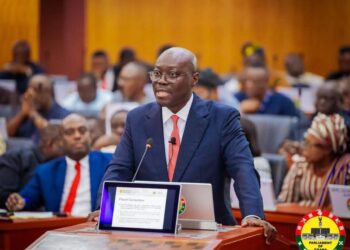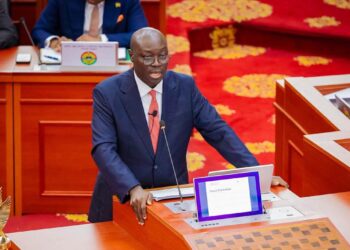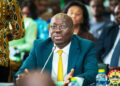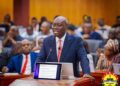
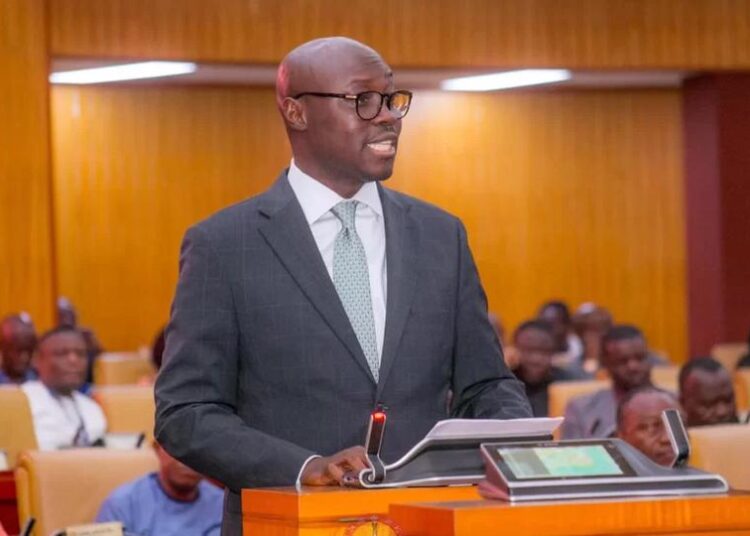
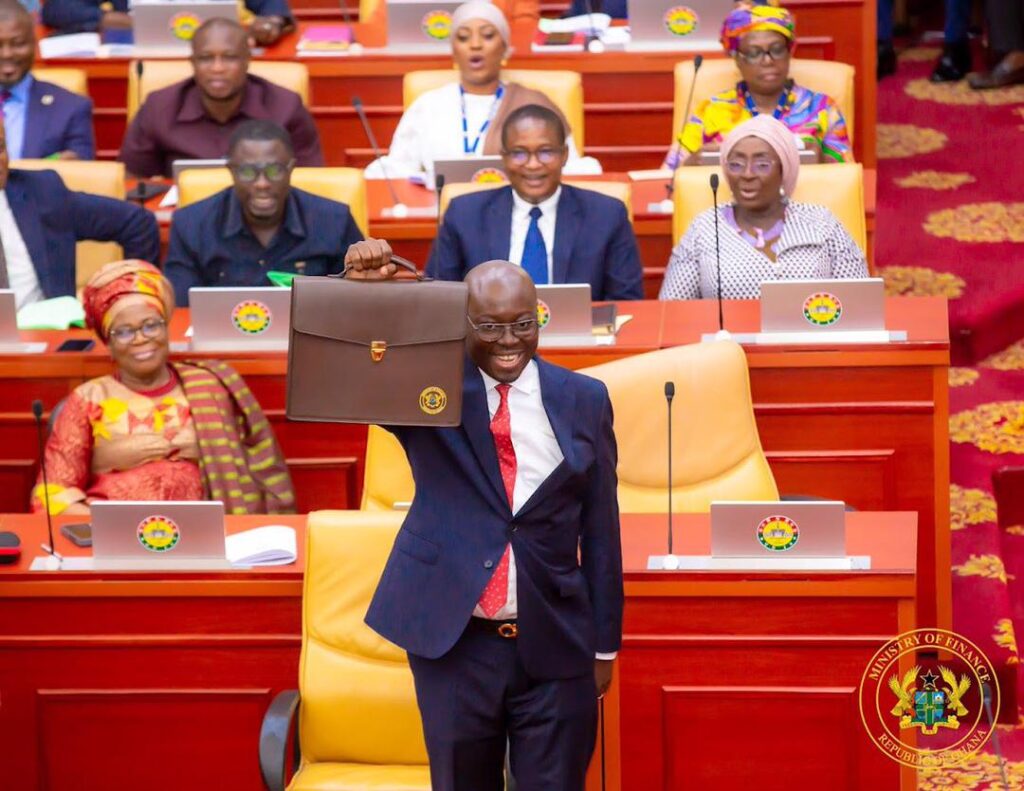
Minister for Finance, Dr. Cassiel Ato Forson, has announced a total budgetary allocation of GH¢1.4 billion to the Ministry of Lands and Natural Resources to strengthen the governance, protection, and sustainable management of Ghana’s land and mineral resources in the 2027 fiscal year.
Delivered during the presentation of the 2027 Budget Statement and Economic Policy in Parliament under the theme “The New Economy, New Ghana, Jobs and Prosperity,” the financial commitment targets environmental restoration, anti-illegal mining enforcement, institutional capacity building, and responsible artisanal mining formalization.
“We have allocated GH¢1.4 billion to the Ministry of Lands and Natural Resources to support the management of our land and natural wealth. This amount is allocated as follows: GH¢400 million for land reclamation.”
Minister for Finance, Dr. Cassiel Ato Forson
A detailed breakdown of the fiscal package reveals targeted disbursements across five priority operational pillars within the extractive and environmental governance framework.
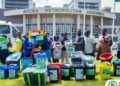
Specifically, the government has dedicated GH¢400 million toward nationwide land reclamation exercises, alongside GH¢200 million for the National Anti-Illegal Mining Operations Secretariat (NAIMOS) to intensify enforcement against unauthorized extraction.
Furthermore, mineral resource institutions will receive GH¢60 million to bolster regulatory oversight, while GH¢30 million is earmarked for the Responsible Cooperative Mining and Skills Development Programme (rCOMSDEP) and GH¢20 million for the Tree for Life reforestation initiative.
Reversing Ecological Degradation and Securing Water Bodies
The substantial allocation of GH¢400 million for land reclamation and GH¢20 million for the Tree for Life initiative underscores the urgent ecological crisis confronting Ghana’s primary mining enclaves.
Over the past decade, unchecked alluvial and surface mining locally termed galamsey has scarred thousands of hectares of arable farmland and degraded critical forest reserves across the Western, Ashanti, Eastern, and Central regions.
By anchoring the largest single component of the earmarked funds in land rehabilitation, the Ministry seeks to restore top-soil fertility, rehabilitate abandoned mining pits, and reintegrate devastated terrains into productive agricultural and forestry ecosystems.
Complementing physical reclamation is the Tree for Life reforestation drive, which has already distributed over 22 million seedlings nationwide to rebuild depleted vegetative cover and protect vital watershed zones.
According to Dr. Forson, safeguarding natural capital is indispensable to sustaining macroeconomic recovery, noting in his broader economic address that “our public purse must nourish” long-term national resilience.
Without aggressive ecological remediation, siltation and heavy-metal contamination of major river basins such as the Pra, Ankobra, and Birim threaten both urban water treatment infrastructure and agricultural export viability.
Balancing Security Enforcement with Cooperative Formalization
A defining feature of the 2027 extractive budget is its dual-track approach to curbing illegal mining, pairing security enforcement with structured economic alternatives.
Having conducted 274 field operations across 58 districts nationwide to disrupt illicit syndicates, NAIMOS receives GH¢200 million to sustain intelligence-led surveillance, logistics, and rapid-response interventions in vulnerable forest corridors.
Industry observers note that consistent operational financing is critical to preventing displaced illegal operators from returning to cleared sites once tactical teams withdraw.
Simultaneously, the GH¢30 million injection into rCOMSDEP addresses the socioeconomic drivers pushing rural youth toward unregulated extraction.
Rather than relying exclusively on punitive measures, the programme equips artisanal and small-scale miners with technical training in geological prospecting, mercury-free gold recovery, and occupational safety.
Sector analysts emphasize that formalizing cooperative groups brings informal operators into the regulatory net, enabling them to access legitimate financing while contributing royalties and taxes to state coffers.
Strengthening Regulatory Institutions for Value Retention
To ensure effective coordination across these interventions, the government has committed GH¢60 million to strengthen core mineral resource institutions, including the Minerals Commission, the Forestry Commission, and the Ghana Geological Survey Authority.
Enhanced institutional funding is expected to accelerate digital cadastre mapping, improve geological data generation for prospective investors, and tighten compliance monitoring across both large-scale and medium-scale concessions.
As Ghana positions its extractive sector to drive domestic value addition and sovereign wealth creation, robust regulatory governance remains the bedrock of investor confidence.
By aligning enforcement, ecological restoration, and institutional modernization under a unified GH¢1.4 billion envelope, the 2027 budget establishes a comprehensive financial framework aimed at transforming Ghana’s mineral endowments into sustainable, broad-based prosperity.
READ ALSO: 2027 Budget: Cedi Loses 10.1% Against Dollar