Ghana is advancing plans to transform its oil palm industry through the development of 100,000 hectares of new plantations, supported by a proposed US$500 million financing facility and an integrated production model expected to create approximately 250,000 jobs across the value chain.
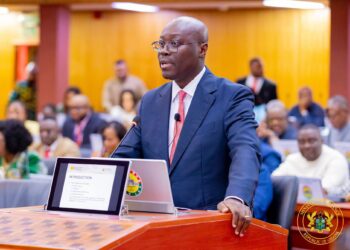
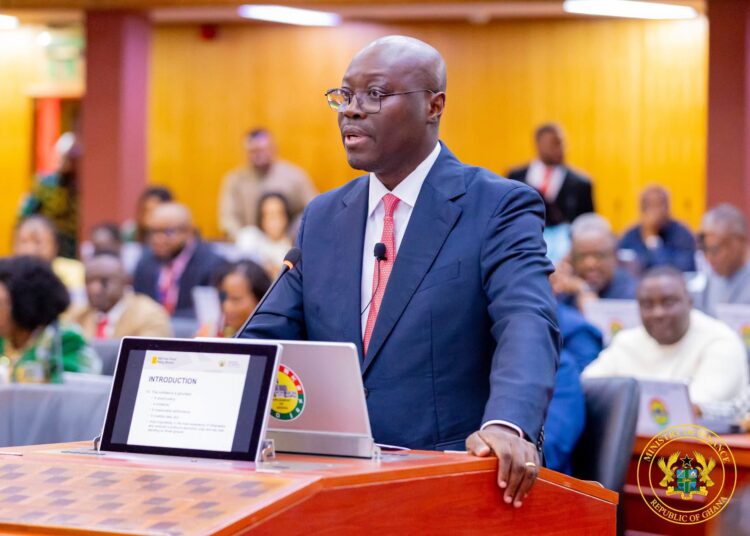
The programme, announced by the Minister for Finance, Dr. Cassiel Ato Forson during the pronouncement of the 2027 budget. As part of its agricultural transformation agenda, to cover five major oil palm producing regions: Western, Central, Eastern, Volta and Ashanti.
It is intended to increase domestic palm oil production, reduce dependence on imports, expand agro-processing and strengthen Ghana’s competitiveness in the regional and international vegetable oil market.
Presenting the government’s agricultural interventions in Parliament, the President said suitable land for the proposed plantations had been identified, while the Ministry of Lands and Natural Resources had begun the acquisition process in accordance with international best practices.
“We will develop 100,000 new hectares across the Western, Central, Eastern, Volta and Ashanti production belt.”
Minister for Finance, Hon. Cassiel Ato Baah Forson
$500m Financing to Drive Plantation Development
A major component of the programme is the establishment of a US$500 million Oil Palm Development Finance Window in collaboration with the World Bank, designed to address the longstanding financing constraints facing commercial tree crop production.
Unlike annual food crops, oil palm requires substantial upfront investment and several years of development before plantations begin generating commercial returns. This makes conventional short-term agricultural lending unsuitable for many investors and smallholder farmers seeking to establish or expand plantations.
The proposed financing facility will therefore provide long-term funding with a five-year moratorium, allowing investors sufficient time to establish plantations before repayment obligations begin.
The government has indicated that the financing agreement with the World Bank has been reached and will be presented to Parliament for consideration.
“A 500 million United States dollars financing window with long tenor and five year moratorium will recognize that a tree crop cannot be financed like short term financing.”
Minister for Finance, Hon. Cassiel Ato Forson
According to the 2026 Budget Statement, the proposed facility is intended to provide long-term, low interest financing, with eligible projects potentially accessing funding covering up to 70 per cent of project costs.
The government’s National Policy on Integrated Oil Palm Development (2026–2032) also identifies sustainable plantation expansion, improved productivity, processing capacity and stronger market linkages as priorities for transforming the industry.
Closing Ghana’s Palm Oil Production Gap
Palm oil is an important raw material for several industries, including food manufacturing, cosmetics, pharmaceuticals, soaps and detergents.
Its domestic availability is therefore critical not only to household consumption but also to the competitiveness of local manufacturing businesses.
The United States Department of Agriculture’s Foreign Agricultural Service, Ghana’s palm oil production for the 2024/25 marketing year was forecast at approximately 360,000 metric tonnes, against domestic consumption estimated at 460,000 metric tonnes.
This represented a potential supply deficit of approximately 100,000 metric tonnes, demonstrating the country’s continuing reliance on imported palm oil to meet domestic requirements.
The USDA also estimated Ghana’s harvested oil palm area at approximately 390,000 hectares for the same marketing year, highlighting the opportunity to improve productivity alongside expanding cultivated land.
“The production gap represents lost opportunities for job creation, industrial growth and farmer incomes, while also putting pressure on the country’s foreign exchange reserves.”
Minister for Finance, Dr. Cassiel Ato Forson
The Tree Crops Development Authority has previously identified a domestic production shortfall of approximately 150,000 metric tonnes, based on annual consumption of about 450,000 metric tonnes and local production of approximately 300,000 metric tonnes.
The model is expected to improve access to quality planting materials, strengthen farm management practices and create more reliable links between producers and processing companies.
It will also provide opportunities to expand local processing capacity, increase value addition and improve the supply of raw materials to industries currently dependent on imported palm oil.
250,000 Jobs Through Integrated Production
The integrated production model is expected to bring smallholder farmers into organised commercial arrangements while enabling larger estates to provide technical support, mechanisation and market access.
The Ministry of Lands and Natural Resources is expected to play a central role in securing suitable land while ensuring that plantation expansion complies with environmental and social standards.
“The 100 thousand hectares of suitable land have now been identified. The Ministry of Lands and Natural Resources is going through the process of acquisition in line with international best practices.”
Minister for Finance, Dr. Cassiel Ato Forson
The initiative also presents an opportunity to strengthen Ghana’s position within the regional palm oil market, particularly as demand for vegetable oils continues to support investment in plantation development and processing across West Africa.
However, its success will depend on how effectively the government translates land identification and financing commitments into actual plantation development, improved yields and commercially viable processing operations.
Also, with the US$500 million financing window expected to support long-term investment and the 100,000 hectare target providing the foundation for expansion, the programme represents a significant step towards reducing import dependence and developing a more competitive domestic oil palm industry.
READ ALSO:Ghana-Nigeria Relations: Mahama Proposes 2028 Joint Commission Session