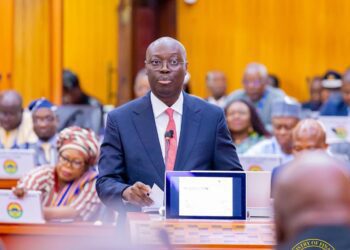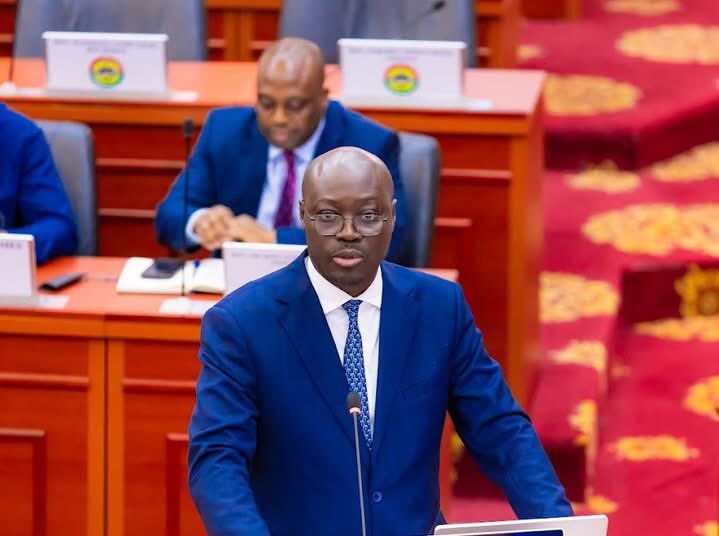
The Minister of Finance, Dr Cassiel Ato Forson, has clarified that the 24-hour economy programme will rely on private-sector investment.
In a post-budget interview on Friday, November 13, the Member of Parliament for Ajumako Enyan Esiam outlined the tax concessions and financing arrangements intended to encourage businesses to expand production and operate under the programme.
“A private sector-led economy is one where the private sector is given the necessary incentives and direction to invest in the economy. Now, unlike the Big Push, or perhaps even the New Economy, where the government says this is going to be a government-driven programme and allocates resources to build power plants and railways, what we are proposing with the 24-hour economy is different. First, the Secretariat will attract investment into the economy through a number of policies. Yesterday, in Parliament, I announced a number of initiatives.”
Dr Cassiel Ato Forson
Dr Forson identified “accelerated depreciation” as one of the principal incentives available to participating businesses. Under the arrangement, qualifying enterprises would be permitted to deduct the full cost of eligible assets over two years, instead of following the longer depreciation periods ordinarily prescribed by tax law.
The concession, he explained, would make it more attractive for businesses to acquire machinery and expand their productive capacity. However, the benefit would be reserved for enterprises enrolled in the 24-hour economy programme.
In addition, the Government intends to “defer import duties, levies and Value Added Tax” on qualifying machinery and inputs brought into the country for the initiative. The payments would be deferred for one year, with businesses expected to settle the amounts in full over two years.
Dr Forson explained that the arrangement would ease the immediate cash-flow burden on companies importing equipment for industrial expansion. He also identified the Ghana Sovereign Wealth Fund as a potential equity partner, providing capital alongside private investors to support qualifying businesses.
Under the proposed arrangement, an enterprise seeking government participation could approach the programme with its investment proposal, after which the Sovereign Wealth Fund could provide an equity contribution.
The Finance Minister used the example of a government taking a 20 percent stake in a private investment to illustrate how the partnership could operate.“The two aren’t the same,” he emphasised, drawing a distinction between the private-sector-led 24-hour economy and the state-funded New Economy Programme.
He further explained that the Government could establish deadlines for publicly financed projects because it controls their budgets and implementation schedules. Private-sector investments, however, depend on the decisions and operational timelines of individual businesses, making it difficult to prescribe uniform completion dates.
Dr Forson also clarified that businesses previously involved in the One District, One Factory initiative “would not automatically qualify for the new incentives.” The programme secretariat would assess each enterprise against specified eligibility requirements.
Government Uncaps Exim Bank And Youth Employment Funds
Alongside the incentives intended to attract private investment, the Government will release the full statutory allocations due to Ghana Exim Bank and the Youth Employment Agency following their removal from the existing funding caps.
“What we are saying is that we will no longer cap that allocation. Exim Bank will receive 100% of its allocation. However, this time, things will be different. We are directing Exim Bank to use the funds to support poultry self-sufficiency. We are therefore saying that, from 2027 to 2030, Exim Bank will receive its full allocation, but 40% of the total amount received must be channelled into the poultry sector.”
Dr Cassiel Ato Forson
The Finance Minister indicated that the uncapping measures would extend the Government’s earlier efforts to restore statutory funds whose allocations have been restricted under the Earmarked Funds (Capping and Realignment) Act. He identified the Ghana Exim Bank levy and the Youth Employment Agency’s allocation as two additional funding streams being released under the 2027 Budget.
Dr Forson traced the funding restrictions to the introduction of the Capping and Realignment Act in 2017, which placed limits on several statutory funds. He recalled that the previous administration capped allocations to institutions including the Ghana Education Trust Fund, National Health Insurance Fund and District Assemblies Common Fund, retaining portions of their revenues to finance other budgetary activities.
The Member of Parliament for Ajumako Enyan Esiam explained that the current Government began reversing some of those restrictions in 2025 by uncapping the National Health Insurance Fund and the Ghana Education Trust Fund. The latest measures, he indicated, would extend the process to two additional institutions.
The Finance Minister indicated that the bank would be responsible for deploying the resources towards this national production target. The arrangement is intended to strengthen local poultry businesses and increase their capacity to meet domestic demand.
Furthermore, the Government will uncap the Youth Employment Agency’s allocation, making “an additional GH¢1 billion available to support its programmes.”
Dr Forson confirmed that the increased funding would facilitate the provision of temporary employment opportunities.When asked whether the additional resources would support employment creation, he affirmed the objective, clarifying that “the jobs would be temporary.”
READ ALSO: Ghana’s Oil Receipts Surge As US$556m Funds Big Push