
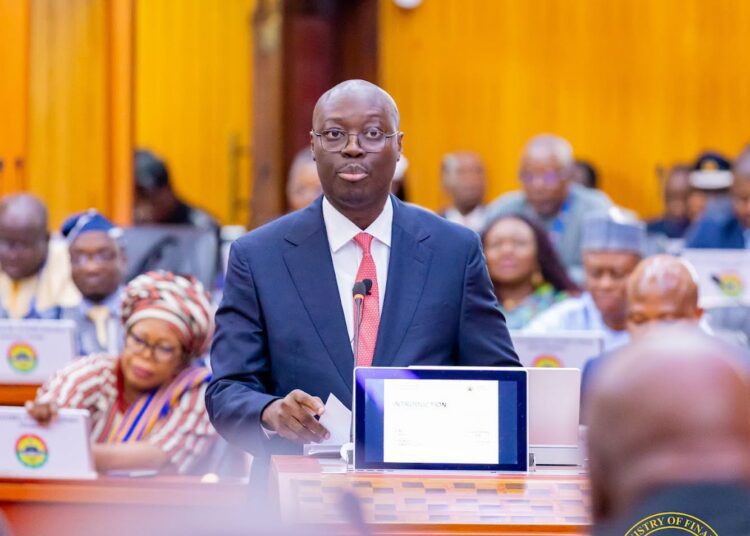
Dr Cassiel Ato Forson, Ghana’s Finance Minister, has told Parliament that the government is building a new integrated financial management system and linking the public payroll to the national identity database. He presented the reforms in the 2027 Budget on Thursday, November 12, 2026.
Forson explained that the measures aim to tighten commitment controls, speed up digital execution and block payroll fraud, including ghost names. The Controller and Accountant-General’s Department (CAGD) and the National Identification Authority (NIA) have already completed the payroll integration and plan to add a self-verification system for employees in 2027.
“2026 is proving to be a defining year for Government’s Public Financial Management (PFM) reform agenda.”
Dr Cassiel Ato Forson, Ghana’s Finance Minister
Dr Forson stated that the government is turning its reform pledges into concrete results. It is strengthening commitment control, accelerating digital execution, modernising the Ghana Integrated Financial Management Information System (GIFMIS) and building the institutional capacity to sustain change across the public sector.
The 2026 work builds on reforms that began in 2025. Together, he argued, they position Ghana for a more integrated, transparent and resilient public financial management environment.
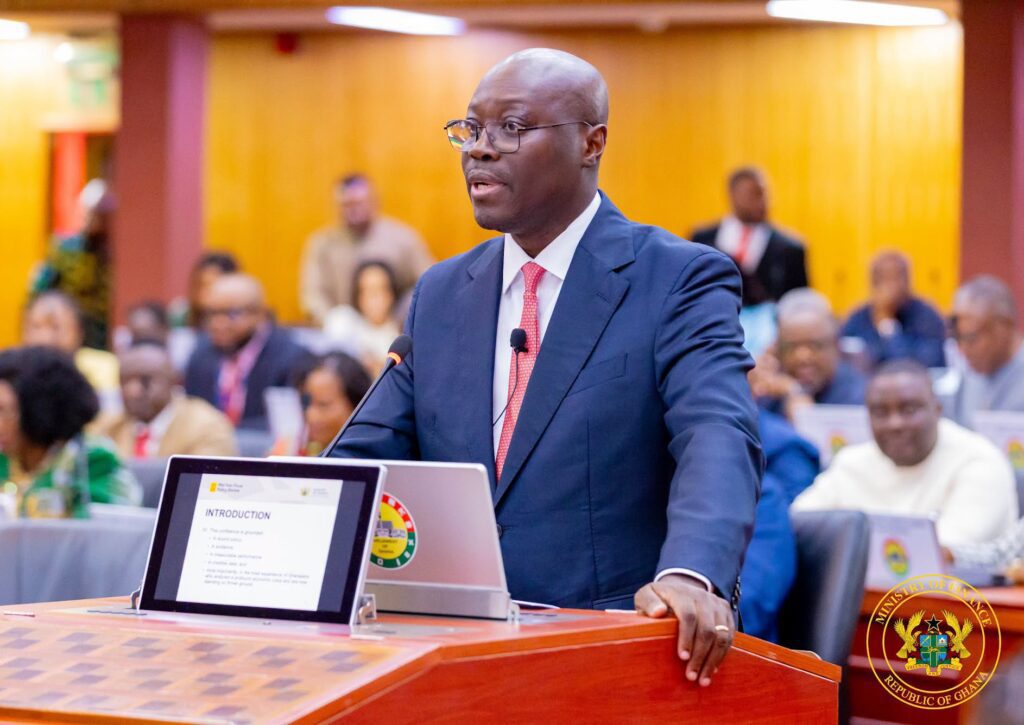
Four Pillars Frame a New System
The government has drawn up a comprehensive roadmap for a new integrated financial management system. Dr Forson set out four pillars that reinforce one another: governance transformation, business process reengineering, technology and data modernisation, and institutional capability development.
Together, he explained, they provide the framework for implementation and long-term sustainability. Looking ahead, the government will deepen its reforms through stronger governance structures, wider system integration, more automation, better data management and greater institutional capacity.
Dr Forson listed what a new generation system should deliver: tighter cash and commitment controls, closer integration with procurement and modernised financial processes. Those changes, he stated, will support a more transparent, efficient and accountable public financial management system that supports fiscal sustainability and better public services.
Treasury Single Account Gets an Upgrade
The government is also advancing reforms to the Treasury Single Account, which aim to consolidate cash and use public resources more efficiently. Dr Forson listed the planned steps: rationalising government bank accounts, making cash more fungible, joining up payment processes and improving bank reconciliation.
He expects these changes to give the government clearer sight of its cash and to make treasury operations more effective.
Payroll Meets the National Identity Database
Dr Forson announced that the CAGD, working with the NIA, has completed the integration of the government payroll system with the NIA database. He framed the step as part of the government’s drive to protect the integrity of the public payroll and end payroll fraud.
The integration lets officials check payroll records against the national identity register, using the Ghana Card Personal Identification Number (PIN) and biometric authentication. Secure electronic data exchange and audit trails support the process, and a test in the live environment has already succeeded.
The step fits a wider push on identity. The NIA has urged biometric verification for secure transactions, and the Interior Minister has said visual checks will no longer suffice for Ghana Card verification. A related call has urged that sensitive data be hosted on secure infrastructure.
What the Link Is Meant to Catch
Once fully operational, the integration will help the government find duplicate or inconsistent identity records, detect impersonation and cut the risk of paying salaries to people whose identities nobody can verify. It adds a layer of assurance on top of existing controls, including the Employee Payment Voucher (EPV) validation process.

Dr Forson drew a line around what the tool does not do. “Identity verification will complement, not replace, employers’ and the CAGD’s responsibility to confirm an employee’s appointment, eligibility, and continued entitlement to salary.”
The CAGD’s role on payroll has recently drawn attention. It processed 52,000 teacher promotions ahead of payments in October, and Eduwatch has proposed a digital system to speed up promotions and payroll placement.
Self Verification Arrives in 2027
The CAGD and the NIA are working to roll out the integration and to introduce a self-verification system in 2027. It will let employees and pensioners start and finish identity checks remotely, without necessarily visiting an office.
Dr Forson expects the system to make verification more convenient, improve compliance and support periodic validation of identities across the public service. He placed it within the government’s wider use of digital technology to promote transparency, accountability, efficiency and value for money, and to eliminate ghost names from the payroll.
The excerpt gives no cost for the new system, no completion date for the roadmap and no count of ghost names or suspected fraud on the payroll. It does not say how many employees the checks will cover or how officials will treat records that fail verification. Parliament will have the chance to press for those details as it examines the budget.
READ ALSO: Ato Forson Unveils Two Tax Incentives to Power 24-Hour Economy