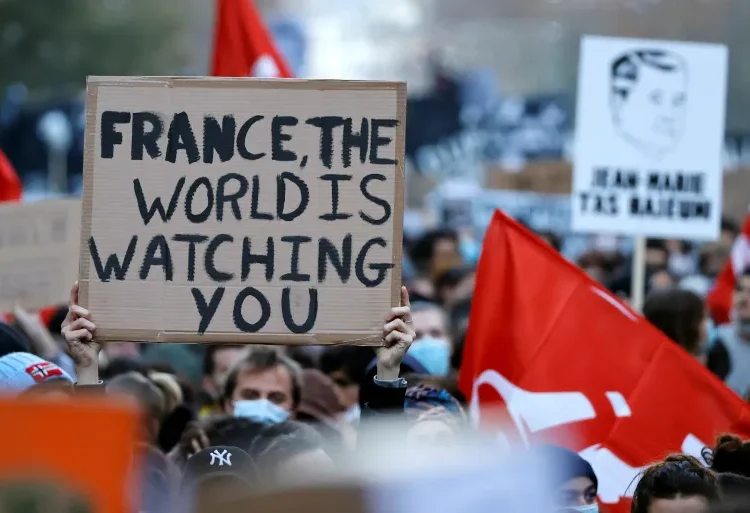
Human Rights Watch (HRW) has warned that a proposed French law seeking to hold protesters financially responsible for property damage could undermine the rights to peaceful assembly and freedom of expression, raising serious concerns about the country’s obligations under international human rights treaties.
The draft legislation, popularly referred to as the “vandals pay” bill, passed its first reading in the French Senate on October 27, 2026, and is now awaiting consideration by the National Assembly.
Although the government has presented the measure as a response to violent disorder and property destruction, Eva Cossé, Senior Europe Researcher at Human Rights Watch, argues that “penalizing people engaged in their right to peaceful protest is the wrong answer to tackling violent disorder in France.”
She added, “Lawmakers in both houses should reject this problematic bill entirely.”
Collective Liability Raises Protest Risks
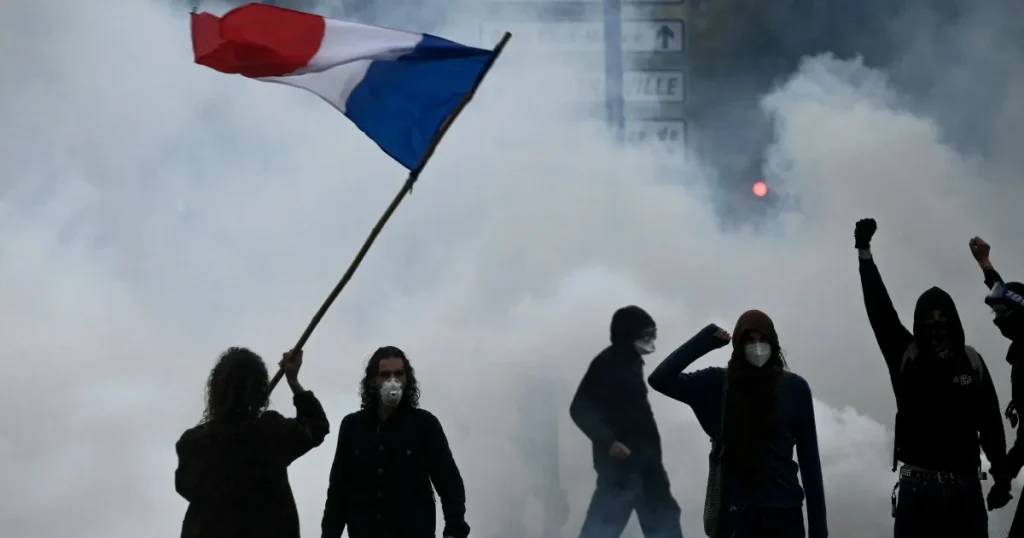
Introduced by the government on September 16 under a fast-track procedure, the bill was significantly toughened by opposition conservative senators following weeks of nationwide high school demonstrations over perceived government under-investment in education.
The legislative push also followed violence during school and cost-of-living protests on October 17, when clashes with law enforcement, looting and property damage were reported across France.
The proposal builds on earlier security legislation adopted in August to address public disorder, including illegal dance parties, football-related violence and street racing.
One of the most contentious provisions introduces joint civil liability for property damage during demonstrations.
Under the proposed arrangement, courts could order individual participants, including parents of children involved in protests, to pay up to €10,000 in damages or undertake community service, regardless of whether they personally engaged in violence or caused the destruction.
The legislation would also expose individuals to penalties for knowingly participating in an unlawful assembly, or failing to disperse after police issue a second order to leave.
French criminal law defines an unlawful assembly as a gathering in a public place or on a public road that is likely to disturb public order.
Human Rights Watch has cautioned that the provisions could subject people to penalties based solely on their presence near a demonstration, rather than any involvement in violent conduct.
Expanded Penalties Extend State Powers

Also, the proposed legislation would introduce tougher criminal sanctions for participation in prohibited demonstrations. Organisers could face up to one year in prison and a €15,000 fine, while participants could receive six months’ imprisonment and a €7,500 fine.
In certain cases, participants could instead be issued a summary fine of €500 to avoid prosecution.
Existing legislation already provides for protest organisers to face up to six months in prison and a €7,500 fine. The proposed law would go further by allowing these penalties to be doubled for individuals who cover their faces during demonstrations.
Another provision would empower prefects to prohibit individuals from attending protests for up to 24 hours without prior judicial oversight.
The bill also introduces penalties affecting social welfare and housing support. Under its provisions, authorities could seize certain benefits paid to parents following a conviction to recover court-ordered damages linked to offences committed by their children under 18.
These include child benefits, family support allowances, back-to-school assistance and other forms of social support.
Human Rights Watch has warned that the measure could disproportionately affect low-income households already dependent on these payments.
Human Rights Obligations at Stake
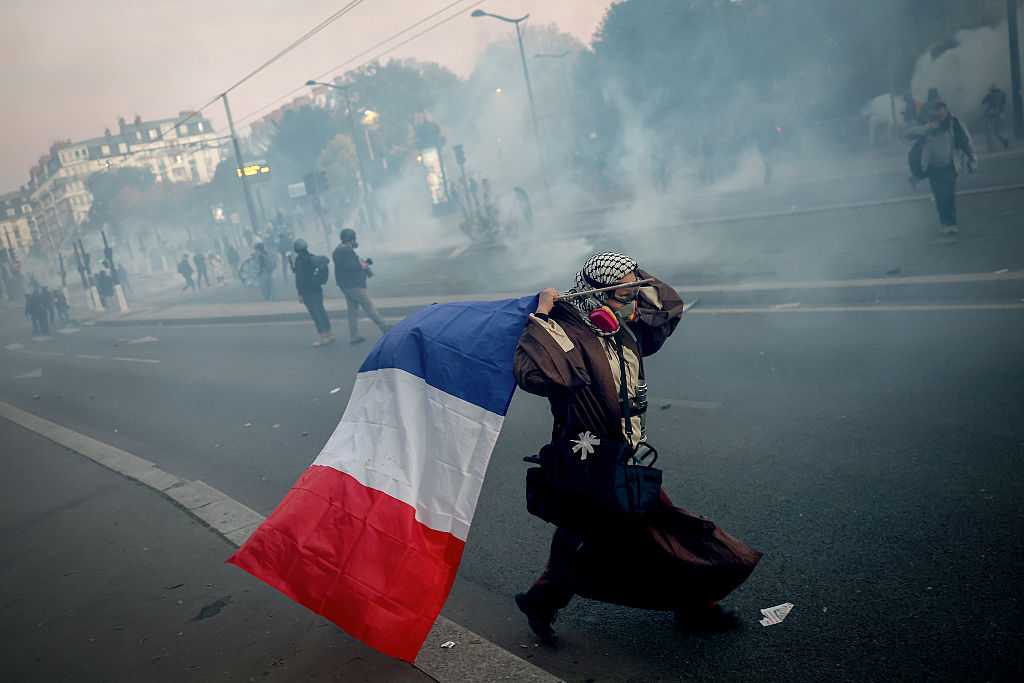
Human Rights Watch argues that the proposed measures form part of a wider deterioration in civic space and the rule of law in France, particularly as authorities seek to expand their powers to regulate public demonstrations.
“This bill is a human rights disaster. It undermines human rights that are central to a functioning democracy, punishes people for the actions of others and not only risks, but seems designed to deter, participation in peaceful protest.”
Eva Cossé
France is bound by the International Covenant on Civil and Political Rights and the European Convention on Human Rights, both of which protect peaceful assembly, freedom of association and freedom of expression.
Although these rights may be subject to certain restrictions, international standards require such measures to meet strict tests of necessity and proportionality.
The European Court of Human Rights has repeatedly emphasised that individuals participating peacefully in demonstrations cannot be held responsible for unlawful acts committed by others, even where a protest results in property damage or public disorder.
The court has previously found France in violation of this principle after ruling against a disciplinary sanction imposed on a protester who had not personally committed any culpable act.
It also stressed that restrictions must not discourage people from expressing their views through peaceful demonstrations out of fear of punishment.
HRW maintains that imposing collective financial liability, criminal sanctions and administrative restrictions on individuals merely for exercising their right to protest would constitute unjustified interference with these fundamental freedoms.
The legislation now faces scrutiny in the National Assembly, where lawmakers will determine whether its provisions advance in their current form.
READ ALSO: Minority to Gov’t: Stability on Paper, Hardship in Ghanaians’ Pockets