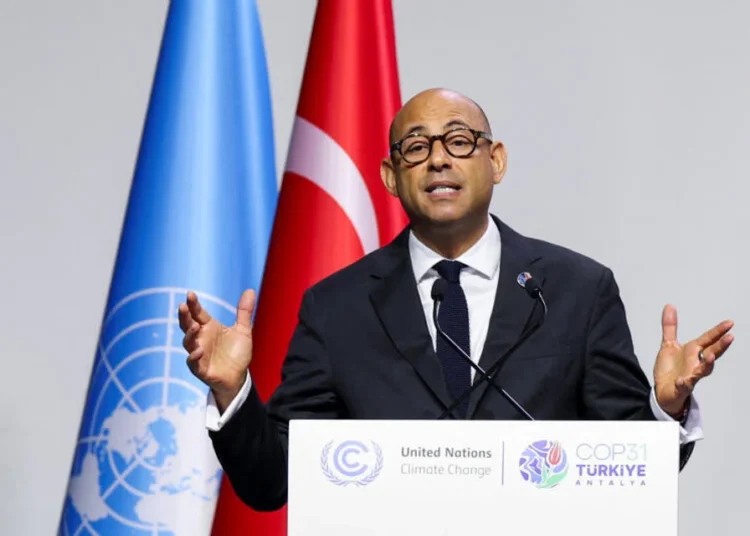
United Nations Climate Change Executive Secretary, Simon Stiell, has urged governments and businesses to accelerate the global transition towards electrification and clean energy, warning that continued dependence on fossil fuels will expose households, businesses and national economies to rising energy costs and economic instability.
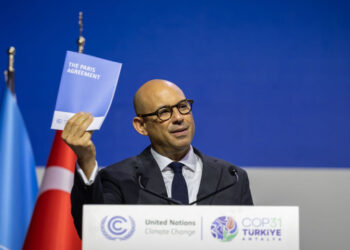
Addressing the COP31 Presidency Press Conference in Antalya, Türkiye, Simon Stiell urged countries to embrace modern electric technologies powered by clean energy.
“Nations now face a choice: electric or shock. Rewire the global economy for the electricity age. Or accept ongoing fossil fuel cost pain for families, firms, and national budgets.”
Simon Stiell
He indicated that efficient electric technologies could reduce pollution while lowering household energy expenditure.
Citing figures from the International Renewable Energy Agency (IRENA), the UN Climate Chief noted that 90 percent of large-scale renewable energy projects are now cheaper than fossil fuel alternatives, demonstrating the growing economic competitiveness of clean energy.
He further observed that renewables have overtaken coal in global electricity generation in the decade since the adoption of the Paris Agreement, marking a significant shift in the global energy landscape.
Despite these developments, UN Climate Change Executive Secretary cautioned that the transition remains uneven, with several countries requiring additional support to expand renewable energy infrastructure and improve access to electricity.
According to Simon Stiell, existing technologies can already support the electrification of up to 75 percent of global energy demand, making accelerated deployment essential to reducing dependence on fossil fuels.
He also highlighted growing private-sector support for the transition, noting that 180 companies with combined revenues of nearly $1.7 trillion are urging COP31 to “seize the electric advantage.”
The COP31 Presidency’s 35 by 35 electrification goal, he added, provides an opportunity to accelerate the transition, urging governments, businesses, cities and states to support the initiative.
COP31 Places Greater Emphasis on Practical Climate Action
Simon Stiell’s electrification call is part of a larger COP31 agenda aimed at turning existing international climate commitments and national plans into actionable steps.
The UN Climate Chief explained that the conference is adopting a different approach by strengthening the connection between formal climate negotiations and the Global Climate Action Agenda, which operate as complementary tracks.
In addition, Simon Stiell acknowledged that the conference is taking place amid mounting global challenges, with climate-related destruction affecting millions of lives and undermining economic growth across different regions.
He underlined that COP31 must build on the advancements made at earlier climate conferences rather than let current pledges go unmet,
“There’s no quick fix to climate. There is a ton of hard work ahead,” Stiell stressed, urging countries to seize the opportunity presented by the conference to accelerate climate solutions.
Climate Change Poses Growing Threat to Global Health — UN Climate Chief
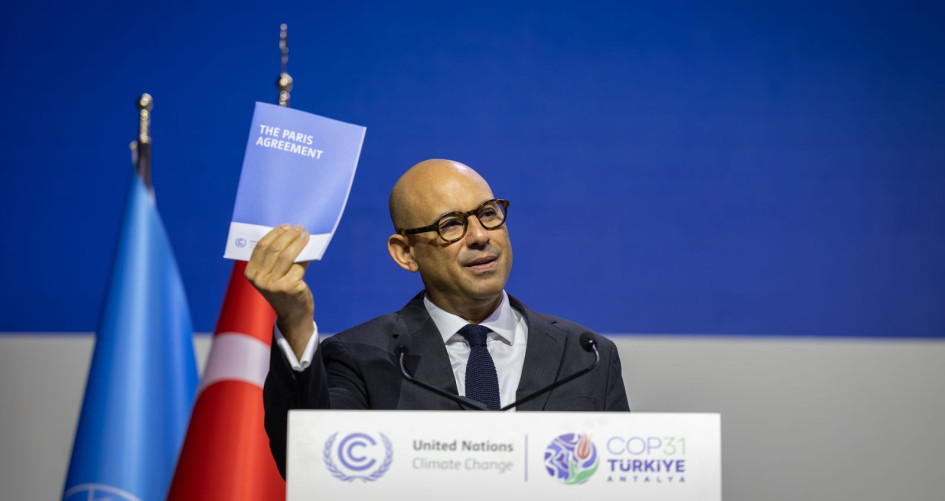
Moreover, United Nations Climate Change Executive Secretary Simon Stiell has warned that extreme weather events can disrupt essential medical services through rising temperatures, electricity outages, contaminated water supplies and damaged transport infrastructure, potentially turning routine healthcare challenges into life-threatening emergencies.
“Health belongs at the heart of climate action. In a fragmenting world, climate cooperation can deliver stability by protecting the systems that people rely on. Countries have already agreed on a clear destination: climate-resilient health services and significantly fewer climate-related illnesses and deaths, particularly in the most vulnerable communities.”
Simon Stiell
Simon Stiell referenced findings from Wellcome indicating that almost every maternal-health professional surveyed across several countries had cared for a pregnant woman or baby whose health they believed had been affected by extreme heat.
He described pregnancy and childbirth as an emerging vulnerability in the climate crisis, particularly in communities where access to cooling facilities and reliable healthcare remains limited, urging governments to integrate health ministries into national adaptation planning, strengthen climate-resilient healthcare infrastructure and improve access to clean electricity, safe water, disease surveillance and early-warning systems.
Simon Stiell also called for increased adaptation financing, insisting that the commitment made at COP30 to at least triple adaptation finance by 2035 must translate into actual financial support for countries facing the greatest climate vulnerabilities.
However, he cautioned that adaptation alone would not protect healthcare systems against the consequences of continued global warming, reinforcing the need to accelerate the transition away from fossil fuels, triple renewable energy capacity and double energy efficiency.
READ ALSO: BoG Sells GH¢12.57bn Bills as Short-Term Funding Rate Hits 10.50%