

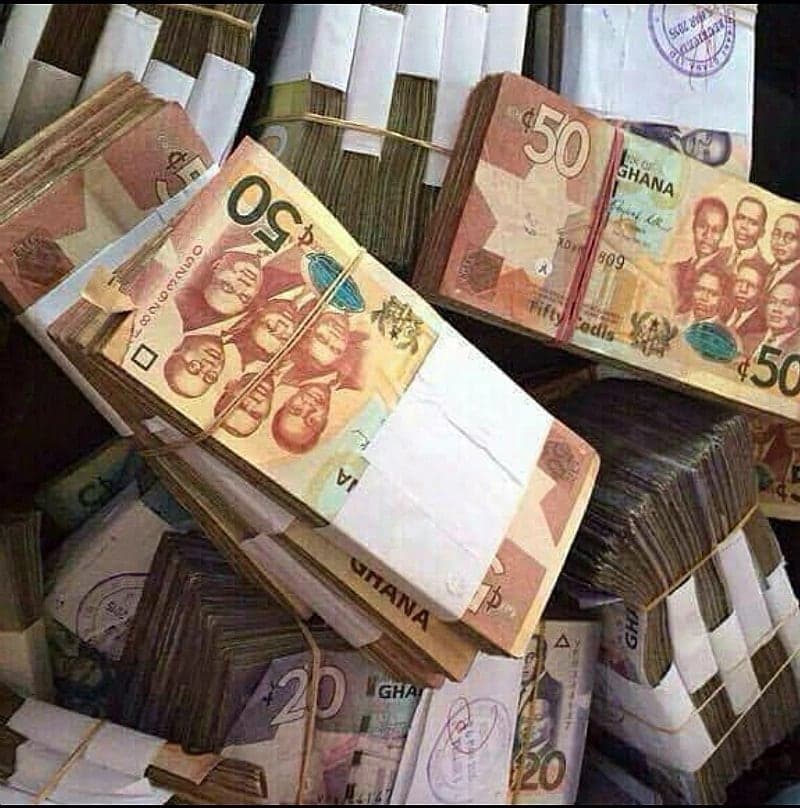
The Bank of Ghana (BoG) has attracted GH¢12.57 billion through its latest 14-day bill tender, with successful bids carrying a weighted average annualised interest rate of 10.50%, highlighting another major liquidity management operation by the central bank.
The latest transaction, identified as Bank of Ghana Securities Tender 887, saw the central bank sell GH¢12,569.88 million in short-term securities, providing a fresh indication of the rates at which funds were attracted from the financial system.
The sale represents a substantial volume of short-term funding mobilised through the central bank’s own securities, although the available auction notice leaves important questions about the strength of investor demand and the extent of participation.
The 10.50% annualised interest rate is particularly significant because it provides a reference point for the cost of funds committed to the 14-day instrument.
However, the figure should not be mistaken for the actual return investors will earn over the two-week holding period.
GH¢12.57bn Mobilised Through 14-Day Securities
The latest tender involved a single instrument, a 14-day Bank of Ghana bill, through which the central bank attracted GH¢12.57 billion in accepted bids.
According to the auction results, the accepted discount rates ranged between 10.4577% and 10.4578% per annum, while the corresponding interest rates ranged between 10.4999% and 10.5000%.
The weighted average discount rate stood at 10.46%, compared with a weighted average interest rate of 10.50%.
Although the difference between the two measures appears small, they represent different methods of expressing the pricing of the securities. The interest rate reflects the annualised return measure, while the discount rate expresses the discount applied to the bill’s face value.
The narrow range of accepted rates is also noteworthy. With only 0.0001 percentage points separating the lowest and highest reported rates under each measure, successful bids were priced remarkably close to one another.
This suggests that investors whose bids were accepted were operating within an extremely tight pricing range.
The tender notice further indicates that the bid rates were “allotted in full”, meaning bids submitted at the listed rates were accepted in full.
Nevertheless, the central bank has not disclosed the number of participating institutions or the total amount of bids submitted.
Investor Demand Remains a Major Missing Piece
Despite the GH¢12.57 billion recorded in sales, the latest auction results do not provide sufficient information to determine whether investor demand was particularly strong.
The missing figures are important because the amount sold alone does not reveal whether the central bank received bids exceeding its intended issuance target.
In a typical securities auction, the relationship between the amount offered and total bids received provides an important measure of market appetite.
A tender that attracts bids substantially above the amount offered could indicate strong investor interest, while a sale that merely meets the central bank’s issuance target may present a different picture.
However, the Bank of Ghana’s latest notice does not disclose the amount offered for sale or the total bids submitted.
Consequently, calculating the bid-to-cover ratio or establishing whether Tender 887 was oversubscribed is not possible.
This leaves market observers with a substantial sales figure but an incomplete picture of the appetite for the central bank’s short-term securities.
The distinction matters because GH¢12.57 billion in accepted bids should not automatically be interpreted as evidence of exceptional investor confidence or overwhelming demand.
BoG Deepens Its Short-Term Liquidity Management Operations
Beyond the headline sales figure, the transaction highlights the role of Bank of Ghana bills in managing liquidity within the financial system.
The central bank uses its own securities to absorb funds temporarily from the banking system and other eligible investors.
When financial institutions purchase these bills, the funds committed to the securities become tied up for the duration of the investment rather than remaining immediately available for alternative uses.
This makes the instrument an important component of the Bank’s liquidity management operations.
The 14-day maturity is particularly relevant because it allows the central bank to absorb liquidity over a relatively short period without committing investors to longer-term securities.
However, the temporary nature of the arrangement also means that the liquidity absorbed does not disappear permanently.
As the securities approach maturity, the central bank must consider the implications of repayments and whether additional operations will be necessary to manage the funds returning to the financial system.
The latest tender notice does not provide the maturity date, the volume of previous bills approaching maturity or the Bank’s plans for replacing the securities.
These details would be necessary to establish the broader impact of the transaction on liquidity conditions.
Is the 10.50% Rate Rising or Falling?
The 10.50% weighted average annualised interest rate also raises questions about the direction of short-term funding costs.
However, the latest auction result does not provide a previous tender rate against which the figure can be compared.
Without historical results covering similar instruments and maturities, it would be premature to conclude that the cost of short-term funding is increasing or declining.
The rate should also not be interpreted in isolation as evidence of a shift in the central bank’s monetary policy direction.
The Bank of Ghana’s policy rate and the rates attached to its short-term securities serve different purposes, even though both form part of the broader monetary and financial environment.
Investors will therefore need to examine subsequent tenders to determine whether the 10.50% rate represents a temporary pricing outcome or part of a broader movement in short-term market rates.
Transparency Could Strengthen Market Analysis
The latest GH¢12.57 billion sale reinforces the importance of regular liquidity management operations, but greater disclosure would make the results more meaningful to financial market participants.
Publishing the total amount offered, bids received, accepted bids and the number of participating institutions would provide a clearer understanding of investor appetite.
A consistent comparison with previous tenders would also help establish whether the central bank is attracting funds at increasingly higher or lower rates.
Ultimately, Tender 887 confirms that the Bank of Ghana sold GH¢12.57 billion in 14-day bills at a weighted average annualised interest rate of 10.50%.
READ ALSO: Ato Forson Redirects Fiscal Surplus to Fund $10bn New Economy