Ghana’s cryptocurrency market has reached an impressive $5.1 billion, attracting growing attention from international digital finance players seeking to tap into the country’s rapidly expanding digital asset economy.
The latest figures, which represent an 80% year-on-year increase between July 2025 and June 2026, are reinforcing Ghana’s position as one of the most significant cryptocurrency markets in sub-Saharan Africa. However, as trading activity accelerates, the next big battle is shifting towards turning digital asset adoption into practical economic benefits.
Global cryptocurrency exchange WhiteBIT is positioning itself to be part of that transformation, urging Ghana to look beyond cryptocurrency trading and explore how blockchain technology could reshape payments, investment opportunities, property ownership and capital markets.
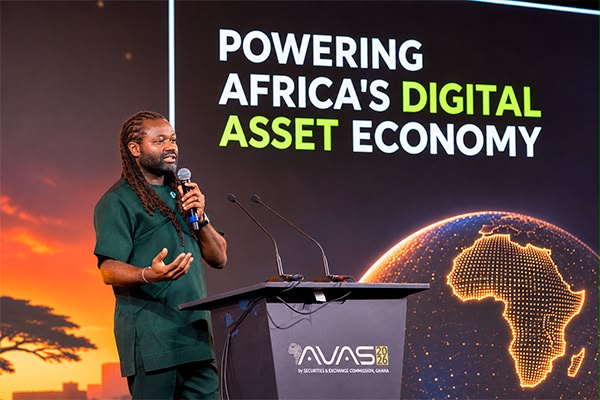
The company made its position known at the AVAS 2026 Summit, where it served as the headline sponsor. Its Country Manager, Fred Frimpong, highlighted the opportunities available to Ghana as the country advances its regulatory framework for digital assets.
“Crypto adoption is only the beginning. The real opportunity for Ghana lies in exploring how digital assets can support businesses, expand access to investment, and make financial services more efficient. Achieving this requires not only technology, but also collaboration between industry participants, financial institutions, and regulators.”
Manager Fred Frimpong
Ghana’s $5.1bn Crypto Market Attracts Global Attention
Ghana’s growing cryptocurrency market is becoming increasingly difficult for international digital finance companies to ignore.
According to Chainalysis’ 2026 Geography of Cryptocurrency Report, the country’s crypto economy expanded by 80% year-on-year to $5.1 billion during the July 2025 to June 2026 period.
The expansion reflects rising activity across centralised and decentralised cryptocurrency exchanges, highlighting the increasing role digital assets are playing in the country’s financial ecosystem.
The growth also places Ghana within a rapidly expanding regional market. Cryptocurrency activity across sub-Saharan Africa reached $101 billion, representing annual growth of 13.4% and making the region the world’s fastest-growing cryptocurrency market during the period.
The International Monetary Fund’s September 2026 report further identified Ghana as the fifth-largest cryptocurrency market in sub-Saharan Africa.
An estimated 8% to 17% of Ghana’s population have bought or sold digital assets, while annual cryptocurrency transactions are estimated at approximately $21 billion.
These figures present an attractive opportunity for companies such as WhiteBIT, which are seeking to deepen their presence in emerging digital financial markets.
WhiteBIT serves approximately 10 million users globally, while its broader W Group ecosystem reaches more than 40 million users across businesses covering digital asset trading, blockchain infrastructure, payments and financial services.
WhiteBIT Wants Blockchain to Transform Ghana’s Financial System
While cryptocurrency trading has been a major driver of digital asset adoption, WhiteBIT believes the country’s next opportunity lies in applying blockchain technology to everyday economic activities.
At the AVAS 2026 Summit, Frimpong outlined how blockchain-based infrastructure could help address some of the challenges confronting businesses, particularly those involved in international trade.
One example involved an importer in Accra purchasing goods from Istanbul.
Under the scenario presented, the importer could face settlement periods of three to five business days, alongside currency conversion costs reaching as much as 10%.
Such delays and transaction expenses can put pressure on businesses, particularly small and medium-sized enterprises that depend on reliable access to working capital.
Blockchain-based payment infrastructure could potentially reduce settlement periods, lower transaction costs and improve the movement of money across borders.
WhiteBIT’s institutional trading and over-the-counter liquidity services, alongside its digital asset payment infrastructure, offer technological capabilities that could support the exploration of these opportunities.
The potential implications extend beyond international payments, particularly as Ghana continues to seek more efficient ways of connecting businesses to global markets.
Property, Gold and Cocoa Could Enter the Tokenisation Market
Perhaps one of the more intriguing opportunities highlighted by WhiteBIT is real-world asset tokenisation, a technology that could fundamentally change how individuals participate in investment markets.
Tokenisation involves representing ownership interests or rights associated with physical assets through digital tokens recorded on a blockchain.
The technology could potentially allow individuals to participate in commercial real estate investment with smaller amounts of money, including contributions as low as GHS 500 through fractional ownership.
This could open investment opportunities that have traditionally been accessible mainly to individuals and institutions with substantial financial resources.
The possibilities could also extend to Ghana’s gold and cocoa industries, where tokenisation could create alternative financing structures and new investment opportunities.
WhiteBIT also highlighted potential applications in property ownership verification, tokenised bonds, automated financial processes and more efficient regulatory reporting.
These developments could become particularly significant in a country where access to investment opportunities, efficient property transactions and alternative business financing remain important economic priorities.
Whitechain, W Group’s blockchain network, provides infrastructure relevant to exploring some of these applications. However, their implementation would depend on regulatory requirements, institutional partnerships and the readiness of the local market.
SEC Sandbox Admission Positions WhiteBIT for Ghana’s Digital Future
WhiteBIT’s growing interest in Ghana comes against the backdrop of the country’s efforts to establish a more structured regulatory environment for digital assets.
In March 2026, WhiteBIT Ghana was admitted into the Securities and Exchange Commission’s virtual asset regulatory sandbox, marking an important step in the company’s engagement with the country’s developing digital asset ecosystem.
The regulatory sandbox provides an avenue for engagement with emerging financial technologies within the SEC’s regulatory framework.
As Ghana strengthens oversight of virtual asset activities, collaboration between regulators, financial institutions and technology providers will be crucial in determining how quickly blockchain-based financial services can gain wider acceptance.
The challenge will be ensuring that innovation does not outpace consumer protection, market integrity and financial stability.
The Bigger Battle Is Turning Adoption Into Economic Value
Ghana’s $5.1 billion cryptocurrency market demonstrates the growing appetite for digital assets, but expanding transaction volumes alone will not determine the sector’s long-term contribution to economic development.
The real test will be whether blockchain technology can deliver cheaper international payments, broaden access to investment, support businesses and create more efficient financial services.
WhiteBIT’s participation at AVAS 2026 signals its interest in being part of that emerging opportunity.
As Ghana’s digital asset regulatory framework develops, the country’s ability to attract credible international technology providers while building strong local partnerships could shape the next phase of its financial transformation.
The opportunity is no longer limited to buying and selling cryptocurrencies. Ghana is increasingly being presented with the possibility of using digital assets to change how money moves, how investments are accessed and how businesses raise capital.
READ ALSO: Gov’t Losses $6.56bn Potential Revenue in Mining Sector Yearly – IFS